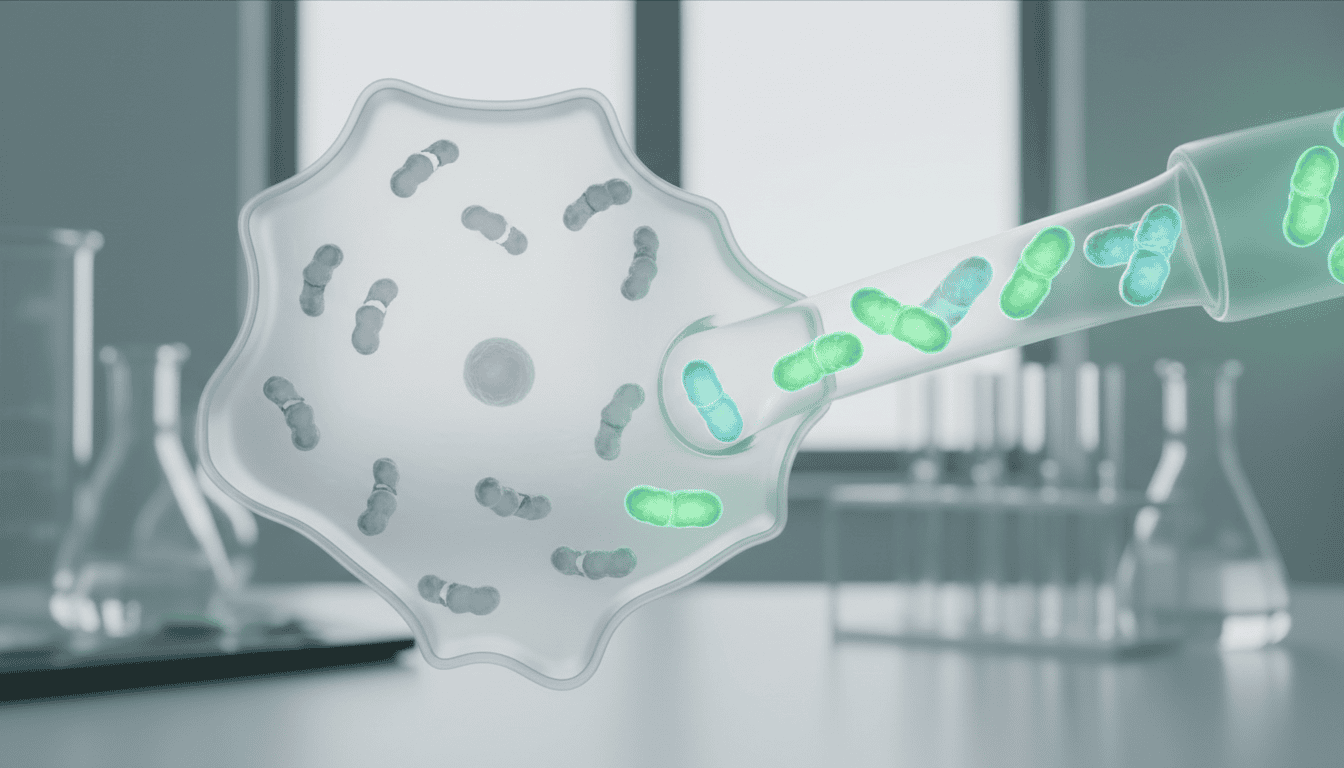
Your cells are running on power plants that are essentially 1.5 billion years old. Mitochondria are ancient bacteria that got adopted into our cells so long ago we forgot they weren’t ours to begin with. Normally this arrangement works fine. But when those power plants break down, cells start dying faster than a laptop on 1% battery. Now researchers are asking a wild question: what if we just put new mitochondria in?
What is mitochondrial transplantation
Mitochondria are the organelles that convert food and oxygen into energy currency called ATP. Think of them as microscopic power stations scattered throughout your cell. A single cell can contain anywhere from a few hundred to several thousand of them, depending on how much energy that cell needs. Muscle cells pack them in tight. Liver cells too. Even your brain cells are full of them.
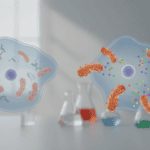
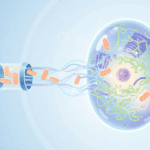
Mitochondrial transplantation is exactly what it sounds like: taking healthy mitochondria and physically placing them into cells with damaged or dysfunctional ones. The procedure involves isolating mitochondria from donor cells, then introducing them into recipient cells through various delivery methods. Some researchers use direct injection. Others use electroporation, which essentially opens tiny pores in the cell membrane to let mitochondria slip through. Still others are experimenting with nanoparticles that can carry mitochondria across cell membranes.
The appeal is obvious. If you can restore a cell’s energy production, you might restore its function. That logic drives research in stroke recovery, muscle disease, and conditions where mitochondrial function collapses.
What the research shows
Laboratory work over the past decade has demonstrated that transplanted mitochondria actually do work. When researchers introduce healthy mitochondria into damaged cells in a dish, those cells start producing more ATP. They show improved survival rates. They recover some of their basic functions.
The most striking evidence comes from animal models of acute injuries. In stroke studies, researchers have transplanted mitochondria directly into brain tissue just after blood flow is cut off. The transplanted mitochondria appear to reduce cell death in the injured area and improve neurological outcomes in the treated animals. Similar results have emerged from research in heart tissue damage and muscle injury.
What’s particularly interesting is that transplanted mitochondria don’t just sit there providing energy. They actually integrate into the recipient cell’s energy system. The cell can use them alongside its own damaged mitochondria. In some cases, the introduced mitochondria appear to trigger the cell’s own defence and repair mechanisms, suggesting they’re signalling the cell that help has arrived.
The challenge starts when you move from cells in a dish to living organisms. Timing matters enormously. Mitochondria are fragile. Outside of a cell, they start deteriorating within minutes. Getting them into the right tissue at the right moment is technically difficult. Researchers have managed it in small animal models by transplanting mitochondria within hours of an injury, before the damage cascade becomes irreversible.
Why cells need this
Mitochondria damage accumulates for several reasons. Oxidative stress from normal metabolism produces reactive molecules that can damage mitochondrial DNA and proteins. Ageing gradually reduces the cell’s ability to repair or replace broken mitochondria. Acute injuries like stroke or trauma create an energy crisis so severe that damaged mitochondria can’t keep up.
Here’s the evolutionary logic: your cells already have mechanisms to deal with slightly damaged mitochondria. They can repair them through a process called mitophagy, which is essentially cellular recycling. They can also divide existing healthy mitochondria to increase energy production. But when damage is severe and sudden, these systems get overwhelmed. The cell dies not because it’s fundamentally broken, but because it ran out of power before its repair crews could respond.
Mitochondrial transplantation essentially gives the cell a buffer. It provides immediate energy while the cell’s own repair systems have time to stabilise and respond. This is particularly relevant in acute injuries where the window for intervention is measured in hours.
What affects mitochondrial transplant effectiveness
Donor quality matters. Mitochondria from young, healthy tissues work better than those from aged or diseased tissues. This makes sense: you’re not just transplanting energy production capacity, you’re potentially transplanting the mitochondrial DNA that came along in the packet. If that DNA is already damaged, you’re not solving the problem.
Timing is critical. Transplanting mitochondria into cells days after an injury produces minimal benefit. The cell is already committed to dying. But transplanting within hours of injury shows much stronger effects in animal models. This constraint shapes what conditions could realistically be treated.
The recipient cell’s overall condition matters too. A cell that’s still alive but injured responds better to mitochondrial transplantation than a cell that’s already started the death cascade. This suggests the approach works best as an emergency intervention rather than a repair tool for chronic damage.
Environmental factors like temperature and oxygen levels affect how well transplanted mitochondria survive the procedure and integrate into new cells. Researchers are still mapping out the optimal conditions.
What remains unknown
The big question is scalability. Laboratory success with direct injection into small areas of tissue doesn’t necessarily translate to treating larger damaged regions in human patients. How do you deliver mitochondria to thousands of injured cells efficiently? Current methods work well for targeted delivery to specific tissues but would need significant refinement for widespread application.
We don’t fully understand the long-term consequences either. If you transplant mitochondria into a cell, what happens weeks or months later? Does the cell eventually clear them out and return to its original energy deficit? Do they divide and integrate permanently? Do they ever cause problems? These questions are mostly unanswered in living systems.
The immune response is also unclear. When you introduce mitochondria from a donor, the recipient’s immune system might recognise them as foreign and attack them. Some mitochondria transplantation research uses mitochondria from the same tissue or same individual to avoid this, but in clinical scenarios you might not have that luxury.
There’s also the question of whether transplanting mitochondria addresses the root problem. Many conditions that damage mitochondria are systemic. If the underlying cause is still active, new mitochondria might just get damaged the same way the old ones did.
Your cells contain the oldest organelles in your body, inherited through an extraordinary evolutionary partnership that goes back further than multicellular life itself. When those ancient power plants fail, cells follow quickly. Mitochondrial transplantation represents a direct attempt to restore that lost capacity rather than trying to work around it. The science shows it can work in controlled settings. Whether it can work in actual human patients, at scale, with lasting benefit, is the next frontier of this research.

Matt Elliott is the editor of Redox News Today, an independent publication covering peer-reviewed research on cellular health, redox signalling, and related biomedical science.