
When a virus invades your body, your immune cells need to spring into action within minutes. But here’s what’s remarkable: they’ve actually been preparing for this moment for hours or even days beforehand. Their mitochondria have been quietly reshaping their internal machinery, stockpiling the molecular fuel needed to mount a rapid and powerful defence.
What is immune cell metabolic priming
Think of immune cells like emergency responders who need different equipment for different crises. A fire requires different tools than a flood. Similarly, immune cells must rapidly transform their internal machinery when they encounter pathogens.
This transformation happens at the mitochondrial level. These cellular powerhouses don’t just make energy. They orchestrate a complete metabolic overhaul that determines how quickly and effectively immune cells can respond to threats.
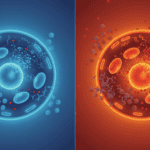
When immune cells sense danger signals, their mitochondria switch from a resting state to what researchers call a ‘primed’ state. The organelles change their shape, increase their numbers, and fundamentally alter how they process nutrients. Instead of efficiently burning glucose for steady energy, they shift towards rapid fuel consumption that supports explosive cellular activity.
This metabolic switch affects everything from how quickly cells can multiply to how much inflammatory signalling they can sustain. The mitochondria essentially rewire the cell’s entire operation manual.
What the research shows
Scientists have observed dramatic changes in mitochondrial behaviour when immune cells encounter pathogen signals. Within hours of detecting bacterial or viral components, immune cells increase their mitochondrial mass by up to 40%.
The mitochondria also change their internal structure. They develop more cristae, the folded membranes where energy production happens. This architectural shift allows them to produce ATP much more rapidly when needed.
Researchers tracking real-time metabolic activity have found that primed immune cells can increase their energy output by 10-fold within minutes of encountering an actual pathogen. Unprimed cells simply can’t match this response speed.
Studies using metabolic tracers show that primed cells shift their fuel preferences too. They become more dependent on glutamine and fatty acid oxidation, while reducing their reliance on glucose. This metabolic flexibility appears crucial for sustaining prolonged immune responses.
Perhaps most intriguingly, the mitochondrial changes persist for days or weeks after the initial priming signal disappears. The cells maintain a heightened state of metabolic readiness, like soldiers remaining on alert after receiving intelligence about potential threats.
Why cells need this metabolic preparation
Speed matters in immune defence. Pathogens can replicate exponentially, so even a few hours’ delay in mounting an effective response can mean the difference between containing an infection and losing control of it.
Building new mitochondria and restructuring existing ones takes time. If immune cells waited until they encountered pathogens to begin this process, they’d be too slow to matter. The priming system allows them to prepare their metabolic machinery in advance, based on early warning signals.
This preparation serves multiple functions. Primed mitochondria can rapidly fuel cell division, allowing immune cells to multiply quickly at infection sites. They can also support the intensive protein synthesis required to produce antibodies and inflammatory molecules.
The metabolic changes also help immune cells survive in harsh environments. Infection sites often have low oxygen and high acidity. The altered mitochondrial metabolism helps cells function effectively under these challenging conditions.
Evolution likely preserved this system because it provides a crucial survival advantage. Organisms with more responsive immune cell metabolism would have been better equipped to survive infectious diseases.
What affects mitochondrial immune priming
Age significantly impacts this metabolic preparation system. Older immune cells show reduced mitochondrial flexibility and slower priming responses. Their mitochondria don’t reorganise as efficiently and take longer to increase energy output.
Nutrient availability plays a major role too. Cells need adequate supplies of amino acids, particularly glutamine, to fuel the metabolic changes. Severe nutrient restriction can impair the priming process.
Previous infections leave lasting marks on mitochondrial behaviour. Immune cells that have encountered certain pathogens before often maintain some degree of metabolic priming, contributing to what researchers call ‘trained immunity’.
Chronic inflammation disrupts normal priming patterns. When inflammatory signals persist for months or years, mitochondria can become stuck in altered states that compromise their ability to respond appropriately to new threats.
Exercise appears to enhance mitochondrial flexibility in immune cells, though researchers are still working out the precise mechanisms. Regular physical activity seems to help maintain the organelles’ ability to rapidly reorganise when needed.
What remains unknown
Scientists still don’t fully understand how immune cells decide when to begin metabolic priming. The signals that trigger this preparation are complex and likely involve multiple pathways that researchers are still mapping.
The relationship between different types of mitochondrial changes and specific immune functions remains unclear. Do certain metabolic shifts prepare cells for viral threats while others prepare for bacterial infections? The specificity of these responses needs more investigation.
Researchers also don’t know why some people’s immune cells prime more effectively than others. Genetic factors likely play a role, but environmental influences and their interactions with genes require much more study.
The long-term consequences of repeated metabolic priming cycles aren’t well understood either. Does frequent activation of these pathways eventually exhaust the mitochondria? Or does it strengthen their responsiveness over time?
How other cellular components coordinate with mitochondrial changes during priming also needs clarification. The nucleus, endoplasmic reticulum, and other organelles likely play supporting roles that scientists are just beginning to identify.
This intricate dance between metabolism and immunity reveals how deeply interconnected our cellular systems really are. The mitochondria that power our cells also serve as strategic command centres, making split-second decisions about energy allocation that can determine the outcome of infections. Understanding these processes better may eventually help explain why some people mount more effective immune responses than others, and why these responses change as we age. For now, it’s a reminder that even our smallest cellular components are far more sophisticated than they first appear.

Matt Elliott is the editor of Redox News Today, an independent publication covering peer-reviewed research on cellular health, redox signalling, and related biomedical science.