Your brain produces hydrogen sulfide, the same gas that makes rotten eggs smell terrible. Far from being cellular waste, this toxic molecule acts as a surprisingly sophisticated protector against the oxidative damage that characterises Alzheimer’s disease.
What is hydrogen sulfide signalling
Hydrogen sulfide belongs to a family of molecules called gasotransmitters. These are gases that cells produce deliberately to communicate with each other, joining nitric oxide and carbon monoxide in this unusual signalling system.
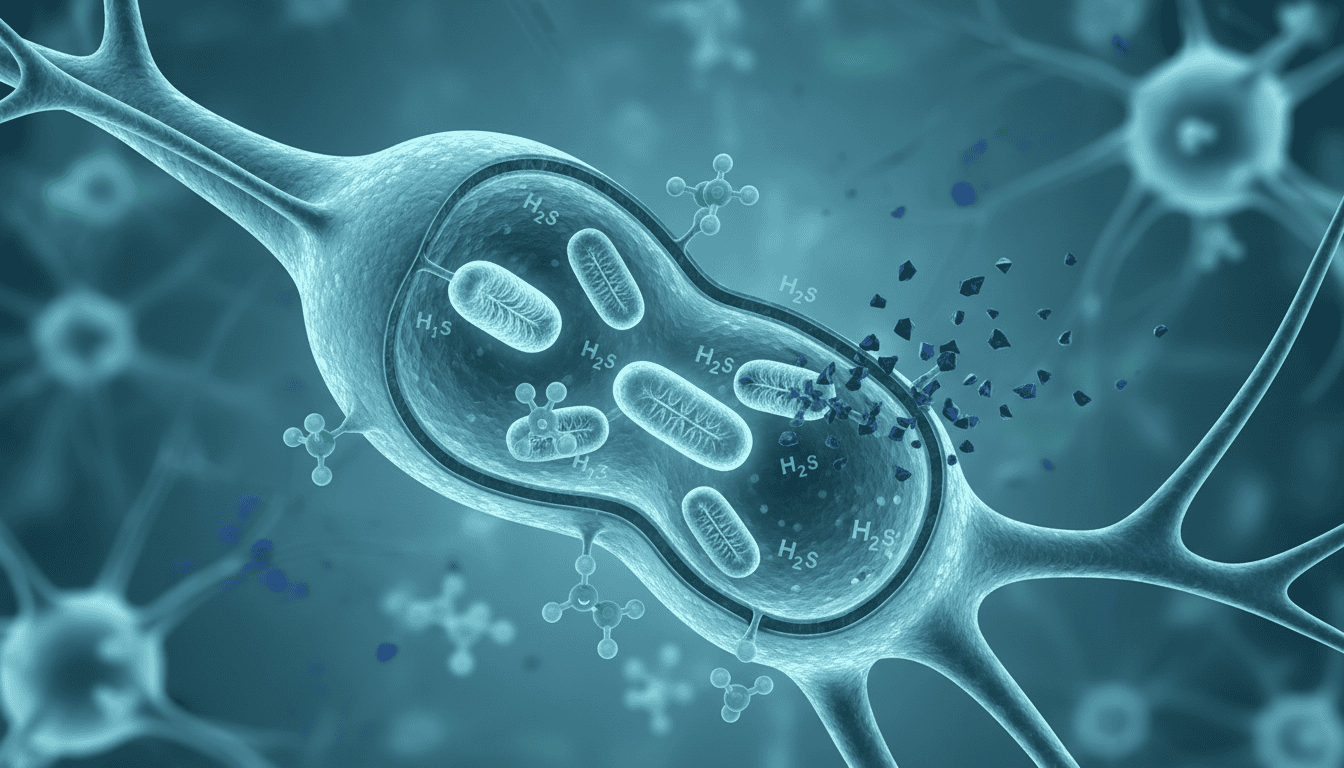
Brain cells manufacture hydrogen sulfide using three main enzymes: CBS, CSE, and 3MST. Each enzyme works in different cellular locations and responds to different triggers. CBS operates primarily in the cytoplasm, while 3MST works in mitochondria, the cell’s energy factories.
Once produced, hydrogen sulfide doesn’t stick around long. It dissolves quickly into cellular fluids and modifies proteins through a process called sulfhydration. This chemical modification changes how proteins behave, often switching on protective pathways that help cells survive stress.
The gas can also directly neutralise certain reactive oxygen species. Unlike many antioxidants that work by donating electrons, hydrogen sulfide chemically combines with oxidising molecules to render them harmless.
What the research shows
Studies using brain tissue from Alzheimer’s patients reveal consistently lower levels of hydrogen sulfide compared to healthy controls. The enzymes that produce this gas also show reduced activity, particularly in brain regions most affected by the disease.
When researchers expose cultured brain cells to amyloid beta, the protein that forms plaques in Alzheimer’s disease, hydrogen sulfide production drops dramatically. The cells simultaneously show increased markers of oxidative stress and begin dying at higher rates.
Animal studies paint a clearer picture of cause and effect. Mice genetically modified to produce less hydrogen sulfide develop more severe memory problems when researchers induce Alzheimer’s-like pathology. Their brain cells accumulate more oxidative damage and show greater inflammation.
Conversely, treatments that boost hydrogen sulfide levels protect brain cells in laboratory experiments. Cells exposed to hydrogen sulfide donors maintain better mitochondrial function and show less DNA damage when challenged with oxidative stress.
Brain imaging studies in humans suggest that regions with lower hydrogen sulfide signalling correlate with areas showing the most pronounced metabolic changes in early Alzheimer’s disease.
Why cells need this protection
Brain cells face unique oxidative challenges that make hydrogen sulfide particularly valuable. Neurons consume enormous amounts of energy relative to their size, generating reactive oxygen species as an inevitable byproduct of metabolism.
The brain also contains high concentrations of easily oxidised fatty acids. These molecules are essential for membrane function but create vulnerability when oxidative stress overwhelms cellular defences.
Hydrogen sulfide offers several protective advantages. It works rapidly, neutralising damage within seconds rather than the minutes required for enzyme-based antioxidant systems to respond. The gas also penetrates cellular membranes easily, reaching compartments that water-soluble antioxidants cannot access.
This signalling system appears to act as a first-line defence, buying time for longer-term protective mechanisms to activate. When hydrogen sulfide levels drop, cells become more vulnerable to the oxidative cascade that can lead to neuronal death.
Evolution preserved this system across many species, suggesting it provides crucial survival advantages. Even simple organisms produce hydrogen sulfide for cellular protection, indicating this mechanism emerged early in evolutionary history.
What affects hydrogen sulfide production
Age significantly impacts the brain’s ability to produce hydrogen sulfide. Older adults show decreased expression of the key enzymes responsible for synthesis, particularly CBS and CSE.
Dietary factors influence production through the availability of sulfur-containing amino acids like cysteine and methionine. These molecules serve as raw materials for hydrogen sulfide synthesis, though the relationship between dietary intake and brain levels remains complex.
Chronic inflammation suppresses hydrogen sulfide production. Research shows that inflammatory cytokines can reduce the activity of synthesising enzymes, creating a potential vicious cycle where inflammation reduces protection, leading to more oxidative damage and further inflammation.
Certain medications affect hydrogen sulfide signalling. Some blood pressure medications appear to enhance production, while others may reduce it, though clinical implications remain unclear.
Sleep disruption and chronic stress also influence hydrogen sulfide levels. Sleep-deprived animals show reduced production, which may contribute to the increased oxidative stress observed with insufficient rest.
What remains unknown
Scientists still debate whether reduced hydrogen sulfide is a cause or consequence of Alzheimer’s pathology. While evidence suggests it contributes to disease progression, the initial triggers for decreased production remain unclear.
The optimal levels for brain protection are unknown. Too little clearly creates vulnerability, but excessive hydrogen sulfide can be toxic. Finding the therapeutic window presents a significant challenge for potential treatments.
Researchers are still mapping exactly which proteins hydrogen sulfide modifies and how these changes translate into cellular protection. The signalling networks involved appear extensive but remain incompletely understood.
The interaction between hydrogen sulfide and other brain signalling systems needs clarification. How this gas coordinates with traditional neurotransmitters and other gasotransmitters represents an active area of investigation.
Whether increasing hydrogen sulfide production could meaningfully slow cognitive decline in humans remains an open question requiring careful clinical research.
This research reveals how cells employ unlikely molecules for essential protective functions. Understanding hydrogen sulfide signalling opens new perspectives on how the brain maintains itself against oxidative damage, showing that even the most unpleasant-smelling molecules can serve vital biological purposes.

Matt Elliott is the editor of Redox News Today, an independent publication covering peer-reviewed research on cellular health, redox signalling, and related biomedical science.