
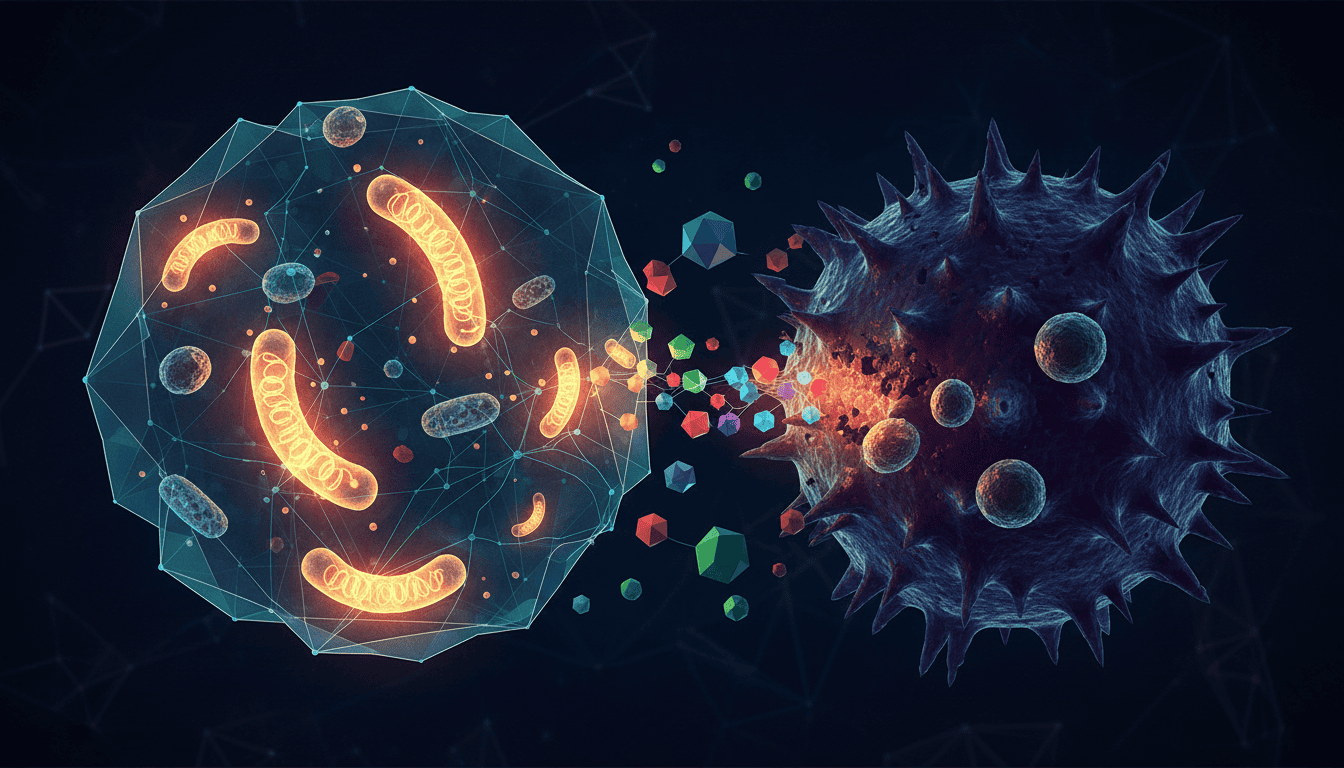
Your immune system’s most aggressive cancer hunters need enormous amounts of energy to do their job. Natural killer cells patrol your bloodstream like cellular assassins, tracking down and destroying cancer cells before they can spread. But when their internal power plants start failing, these elite warriors become sluggish and ineffective.
What are natural killer cells and mitochondrial function
Natural killer cells represent your immune system’s rapid response team against cancer. Unlike other immune cells that need time to learn what to attack, NK cells come pre-programmed to recognise and eliminate abnormal cells. They work by punching holes in cancer cell membranes and injecting toxic proteins that trigger cell death.
This aggressive approach demands massive energy. NK cells rely on mitochondria, the microscopic power plants inside every cell, to generate the ATP they need for surveillance, movement, and attack. Each NK cell contains hundreds of mitochondria that work around the clock, converting nutrients into usable energy through a process called oxidative phosphorylation.
When mitochondria function properly, they produce ATP efficiently while maintaining low levels of harmful reactive oxygen species. But when these cellular engines start to malfunction, the consequences ripple through every aspect of NK cell performance.
What the research shows
Studies examining NK cells from cancer patients reveal a consistent pattern of mitochondrial dysfunction. Researchers have observed that these cells show reduced ATP production, altered mitochondrial structure, and impaired calcium signalling compared to NK cells from healthy individuals.
Scientists have measured specific defects in the electron transport chain, the molecular machinery responsible for ATP generation. NK cells with damaged mitochondria produce less energy and accumulate more oxidative stress. This creates a vicious cycle where energy-starved cells cannot properly maintain their mitochondria, leading to further dysfunction.
Laboratory experiments demonstrate how mitochondrial problems translate into functional failures. NK cells with compromised mitochondria move more slowly through tissues, release fewer toxic granules when they encounter cancer cells, and show reduced ability to multiply when needed. They also struggle to maintain the sustained activity required for effective immune surveillance.
Perhaps most tellingly, researchers have found that NK cells can recover some function when their mitochondrial health improves through experimental interventions. This suggests the relationship between cellular energy and immune performance operates as a direct cause-and-effect mechanism.
Why cells need this energy system
Evolution shaped NK cells to be metabolic powerhouses because cancer surveillance requires enormous resources. These cells must constantly patrol vast networks of blood vessels and tissues, maintain high-energy weapons systems, and respond instantly when threats appear.
The killing process itself consumes significant energy. NK cells must rapidly reorganise their internal structure, move toxic granules to the cell surface, and maintain the cellular machinery needed to inject lethal proteins into target cells. This burst activity can increase energy demands by several hundred percent within minutes.
NK cells also need energy for communication. They produce chemical signals called cytokines that coordinate broader immune responses and recruit additional immune cells to cancer sites. This signalling network helps amplify the initial NK cell response into a comprehensive anti-cancer immune attack.
The evolutionary logic becomes clear when you consider that organisms with more effective cancer surveillance systems survive longer and reproduce more successfully. Natural selection favoured immune cells capable of sustained high-energy performance because cancer represents an existential threat to multicellular life.
What affects mitochondrial function in NK cells
Age represents the primary driver of mitochondrial decline in NK cells. Research shows that mitochondrial DNA accumulates mutations over time, while the cellular systems responsible for maintaining and repairing these organelles become less efficient. This age-related deterioration explains why cancer rates increase dramatically in older populations.
Chronic inflammation creates another major stress on NK cell mitochondria. Inflammatory environments flood cells with reactive oxygen species that damage mitochondrial membranes and DNA. Cancer patients often experience systemic inflammation that compounds these problems.
Metabolic factors also influence mitochondrial health. High glucose levels can impair mitochondrial function, while certain nutrients support optimal energy production. The availability of key cofactors needed for mitochondrial enzymes affects how efficiently these organelles can generate ATP.
Cancer treatments themselves sometimes damage mitochondria. Chemotherapy and radiation can create oxidative stress that overwhelms cellular repair systems. This creates a therapeutic paradox where treatments designed to fight cancer may temporarily weaken the immune cells needed for long-term cancer control.
What remains unknown
Scientists still debate exactly which mitochondrial defects matter most for NK cell function. While research clearly shows connections between energy production and immune performance, the specific molecular pathways involved remain incompletely understood. Different studies sometimes identify different mitochondrial problems as the primary culprits.
The timing of mitochondrial dysfunction during cancer progression poses another puzzle. Researchers are working to determine whether mitochondrial problems contribute to cancer development or primarily result from the presence of cancer. This chicken-and-egg question has major implications for prevention strategies.
Individual variation in mitochondrial genetics adds another layer of complexity. People inherit different versions of mitochondrial genes that may influence their NK cell performance and cancer susceptibility. Scientists are still mapping these genetic influences and determining how much they matter compared to environmental factors.
Perhaps most intriguingly, researchers are exploring whether mitochondrial dysfunction in NK cells might be partially reversible. Early experiments suggest possibilities, but the mechanisms and practical applications remain largely theoretical.
This emerging understanding of cellular energy and immune function reveals how deeply interconnected our biological systems really are. The same mitochondria that power our daily activities also fuel the cellular warriors protecting us from cancer. As research continues to unravel these connections, we gain deeper appreciation for the elegant complexity underlying immune surveillance and the fundamental importance of cellular health in disease resistance.

Matt Elliott is the editor of Redox News Today, an independent publication covering peer-reviewed research on cellular health, redox signalling, and related biomedical science.


