
Every breath you take carries more than just oxygen into your lungs. Mixed in with that life-giving air are thousands of chemical compounds from car exhaust, industrial emissions, cleaning products, and wildfire smoke. Your lung cells face this chemical assault 20,000 times a day, yet most people never develop immediate lung damage from routine exposure. How do these delicate tissues survive?
What is oxidative stress in lung tissue
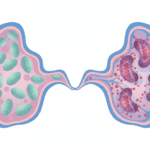
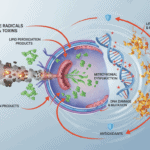
When airborne chemicals hit the wet surfaces of your airways, many transform into reactive oxygen species. These molecular troublemakers steal electrons from whatever they encounter first. Usually, that’s the cell membranes, proteins, and DNA of your lung tissue.
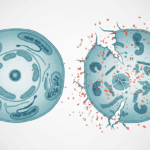
This electron theft creates a cascade effect. Each damaged molecule becomes unstable and reactive, seeking to steal electrons from its neighbours. Within minutes, a single pollutant particle can trigger thousands of damaging reactions throughout lung cells.
Your cells don’t just sit there and take it. The moment oxidative stress begins, lung cells activate an ancient defence system. Proteins called stress sensors detect the chemical chaos and flip genetic switches that produce antioxidant enzymes. These cellular firefighters work to neutralise reactive molecules before they can cause permanent damage.
What the research shows
Scientists studying lung tissue exposed to air pollutants observe a predictable sequence of events. Within the first hour of chemical exposure, cells ramp up production of glutathione, their primary antioxidant defence. This small molecule acts like a molecular bodyguard, intercepting reactive species before they reach critical cellular machinery.
Researchers tracking individual lung cells during pollutant exposure found that healthy cells can increase their antioxidant capacity by up to 400 percent within hours. The cells literally reshape their internal chemistry to match the threat level.
But this defence system has limits. Studies show that when chemical exposure exceeds the cell’s antioxidant capacity, a different program kicks in. Cells begin producing inflammatory signals that recruit immune cells to the lungs. This inflammation helps clear damaged tissue but also causes the coughing, wheezing, and tissue irritation people experience during heavy pollution episodes.
Laboratory experiments reveal that different airborne chemicals trigger distinct patterns of oxidative stress. Ozone creates a sharp, intense burst of reactive oxygen species. Particulate matter from diesel exhaust creates longer-lasting, moderate oxidative stress. Volatile organic compounds from household products tend to target specific cellular components like mitochondria.
Why cells need this defence system
Your lungs occupy a unique position in your body. They’re the only internal organs directly exposed to the external environment with every breath. Evolution had to solve a tricky engineering problem: create tissue thin enough for efficient gas exchange but tough enough to handle whatever the atmosphere throws at it.
The oxidative stress response system represents millions of years of evolutionary refinement. Early life forms that couldn’t handle oxygen toxicity went extinct when photosynthetic organisms first flooded Earth’s atmosphere with this reactive gas. The survivors developed increasingly sophisticated antioxidant systems.
Modern lung tissue inherited these ancient defence mechanisms and added new layers of protection. The branching structure of your airways creates a gradient of chemical exposure, with the nose and upper airways taking the biggest hit while deeper lung tissue stays relatively protected. Each level has specialised cells optimised for their specific chemical environment.
What affects lung oxidative stress
Age significantly impacts how well lung cells handle chemical exposure. Children and elderly adults show heightened oxidative stress responses to the same pollutant levels that barely affect healthy adults. Children’s developing lung tissue has fewer mature antioxidant systems, while ageing reduces the efficiency of existing defences.
Exercise creates an interesting paradox. Physical activity temporarily increases oxidative stress in lung tissue as you breathe harder and deeper. But regular exercise also strengthens the antioxidant systems, making lungs more resilient to chemical exposure over time. Athletes often show enhanced oxidative stress recovery compared to sedentary people.
Diet influences lung defence capacity more than most people realise. Research shows that people with higher dietary antioxidant intake maintain better lung function during pollution episodes. The vitamins and plant compounds from food provide raw materials for cellular antioxidant production.
Genetics play a role too. Some people inherit more efficient versions of antioxidant enzymes, while others have genetic variants that make them more susceptible to airborne chemical damage. This helps explain why identical exposure levels affect people so differently.
What remains unknown
Scientists still don’t fully understand how lung cells decide between ramping up antioxidant defences or triggering inflammation. The cellular decision-making process appears more sophisticated than a simple on-off switch, but researchers haven’t mapped out all the factors involved.
The long-term effects of repeated low-level chemical exposure remain unclear. Most research focuses on acute high-dose exposure or chronic high-dose exposure. But what happens to lung tissue after decades of moderate chemical stress? The answer could reshape how we think about urban air quality standards.
Another puzzle involves chemical interactions. Real-world air contains hundreds of different compounds that could interact in unexpected ways. Laboratory studies typically test single chemicals, but nobody knows how these interactions affect oxidative stress responses in lung tissue.
Researchers are still working out why some chemicals cause lasting changes to lung cell behaviour even after exposure ends. This suggests that oxidative stress might reprogram cellular responses in ways that persist long after the initial damage heals.
Understanding how lung tissue handles airborne chemicals reveals the remarkable resilience built into our respiratory system. Every breath represents a successful negotiation between your cellular defences and environmental challenges. This ongoing molecular battle, fought largely below the threshold of conscious awareness, keeps the gas exchange that powers complex life running smoothly in an imperfect world.

Matt Elliott is the editor of Redox News Today, an independent publication covering peer-reviewed research on cellular health, redox signalling, and related biomedical science.