
Your eye lens contains some of the oldest cells in your body. These transparent fibres, formed during embryonic development, must remain clear and functional for decades without replacement. Now laboratory research reveals that metformin, the diabetes medication taken by millions worldwide, can protect these irreplaceable lens cells from the oxidative damage that clouds vision over time.
What is oxidative damage in lens cells
The eye lens works like a living camera lens, bending light to focus images on the retina. Unlike other body tissues, lens cells cannot regenerate once damaged. They’re essentially trapped in a transparent prison, maintaining their clarity through a delicate balance of proteins and protective mechanisms.
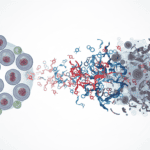
Oxidative stress disrupts this balance. Free radicals attack lens proteins, causing them to clump together and scatter light instead of transmitting it clearly. This process resembles what happens when you cook an egg white. The normally transparent proteins become opaque and cloudy.
The lens sits in a particularly hostile environment. UV radiation from sunlight penetrates the eye, generating reactive oxygen species directly inside lens cells. Meanwhile, the high oxygen concentration in eye fluids creates perfect conditions for oxidative reactions. Lens cells must defend themselves using antioxidant systems that work continuously throughout a person’s lifetime.
What the research shows
Laboratory studies using cultured lens cells reveal that metformin acts as a cellular bodyguard against oxidative attack. When researchers expose lens cells to hydrogen peroxide or other oxidising agents, the cells typically suffer widespread damage and death. But pretreating these same cells with metformin dramatically reduces the destruction.
The protection works through multiple pathways. Metformin activates AMPK, an enzyme that acts like a cellular energy sensor. This activation triggers a cascade of protective responses, including increased production of antioxidant enzymes like catalase and superoxide dismutase.
Scientists have also observed that metformin helps lens cells maintain their protein quality control systems. These cellular housekeeping mechanisms normally identify and remove damaged proteins before they can aggregate into vision-blocking clumps. Under oxidative stress, this quality control often fails, but metformin appears to keep it functioning longer.
The medication also influences autophagy, the process by which cells digest their own damaged components. In lens cells treated with metformin, this cellular recycling system remains more active during oxidative stress, helping to clear away molecular debris that could otherwise impair transparency.
Why cells need this protection
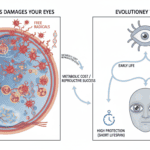
Evolution faced a unique challenge in designing the eye lens. These cells needed to remain completely transparent while surviving for decades in a high-oxygen, radiation-exposed environment. The solution involved creating cells with extraordinary protective capabilities but at the cost of regenerative ability.
Most body tissues handle oxidative damage through cell replacement. Skin cells turn over every few weeks, and even heart muscle can regenerate to some degree. But lens cells cannot be replaced without destroying the organ’s optical properties. Once formed, they must survive using only their internal defence systems.
This evolutionary constraint explains why lens cells contain unusually high concentrations of antioxidants like glutathione and vitamin C. They also express elevated levels of protective enzymes and heat shock proteins. Despite these defences, oxidative damage gradually accumulates over time, which is why age-related changes in lens clarity are nearly universal in humans who live long enough.
What affects lens cell protection
Age represents the primary factor influencing lens cell vulnerability. Young lens cells maintain robust antioxidant systems and efficient protein repair mechanisms. But these protective systems gradually decline with time, making older lens cells increasingly susceptible to oxidative damage.
Environmental factors also play significant roles. UV radiation exposure directly generates free radicals within lens cells. Smoking introduces additional oxidising compounds into the bloodstream that reach eye tissues. High blood sugar levels, common in diabetes, can overwhelm cellular antioxidant systems through a process called glycation.
Nutrition influences lens cell protection as well. Antioxidant vitamins like C and E help support cellular defence systems. Certain compounds found in coloured vegetables, particularly lutein and zeaxanthin, accumulate in eye tissues and provide additional protection against light-induced damage.
Interestingly, caloric restriction appears to enhance lens cell survival in laboratory animals. This effect may work through the same AMPK pathway that metformin activates, suggesting a connection between cellular energy sensing and oxidative stress resistance.
What remains unknown
While laboratory results look promising, researchers still don’t know whether metformin’s lens-protective effects translate to real-world benefits in humans. Test tube studies provide valuable mechanistic insights but cannot capture the full complexity of how drugs behave in living organisms.
The optimal dosing and timing for lens protection remain unclear. Current research uses metformin concentrations that might not be achievable in human eye tissues at standard diabetic treatment doses. Scientists need to determine what levels actually reach the lens and whether they’re sufficient for meaningful protection.
Researchers also don’t understand how metformin’s multiple mechanisms of action interact with each other in lens cells. The drug simultaneously affects energy metabolism, autophagy, protein quality control, and antioxidant enzyme production. These pathways likely influence each other in ways that current studies haven’t fully mapped.
Long-term effects present another puzzle. While metformin appears protective in short-term laboratory experiments, no one knows how chronic treatment might alter lens cell behaviour over decades of use.
The lens cell research adds another layer to our understanding of how cellular protection systems work throughout the body. These studies reveal that the same pathways involved in ageing and metabolism also influence how cells defend against environmental damage. Whether this knowledge leads to new therapeutic approaches remains to be seen, but it demonstrates how fundamental cellular mechanisms connect seemingly different aspects of biology, from blood sugar control to vision preservation.

Matt Elliott is the editor of Redox News Today, an independent publication covering peer-reviewed research on cellular health, redox signalling, and related biomedical science.