A human egg cell waits. Unlike the rapid turnover of skin or blood cells, these reproductive cells can remain dormant for decades. A 40-year-old woman’s eggs have been sitting in her ovaries since before she was born, accumulating damage from reactive oxygen species like molecular rust building up on cellular machinery.
What is oxidative damage in egg cells
Oxidative damage occurs when reactive oxygen species overwhelm cellular defences. Think of it like iron rusting, but happening to the delicate proteins, lipids, and DNA inside cells.
Egg cells face a unique challenge. Most cells in your body replace themselves regularly. Your stomach lining renews every few days. Your red blood cells last about four months. But egg cells are different. They form during foetal development and then enter a state called meiotic arrest, essentially pausing their development until ovulation.
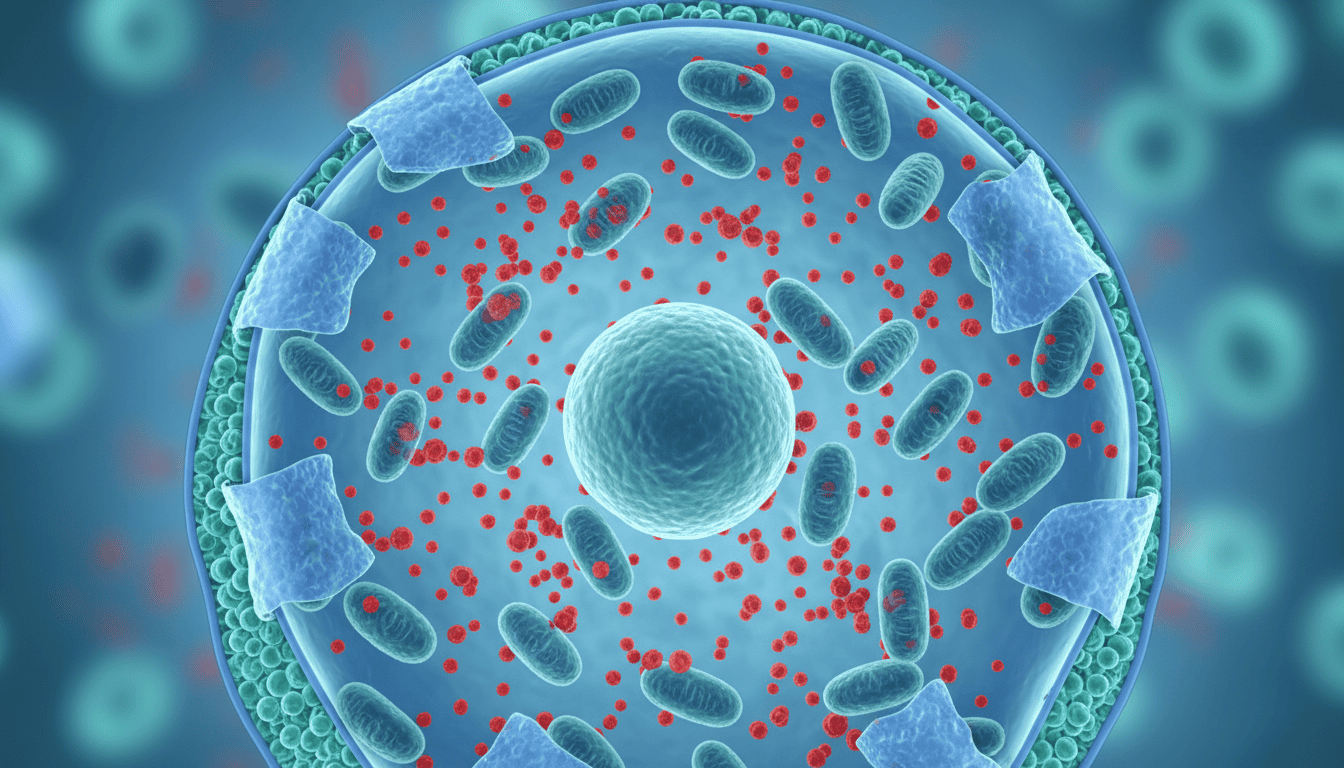
This extended dormancy creates problems. While paused, egg cells must maintain their cellular machinery for years or even decades. Mitochondria keep producing energy, but they also leak reactive oxygen species as a byproduct. Antioxidant systems work to neutralise these molecules, but they’re fighting a battle of attrition.
The most critical targets are the egg’s mitochondria and chromosomes. Mitochondrial DNA sits close to where reactive oxygen species form, making it particularly vulnerable. Chromosomal proteins that hold sister chromatids together also degrade over time, leading to separation errors during the eventual completion of meiosis.
What the research shows
Studies comparing egg quality across different ages reveal clear patterns of oxidative damage accumulation. Researchers have found that older eggs contain more damaged mitochondrial DNA, altered protein structures, and compromised antioxidant defences.
Laboratory experiments demonstrate how oxidative stress affects egg development. When researchers expose egg cells to controlled levels of reactive oxygen species, they observe reduced fertilisation rates and increased chromosomal abnormalities. The eggs’ ability to complete meiosis properly deteriorates under oxidative pressure.
Perhaps most telling are studies of mitochondrial function in eggs from women of different ages. Younger eggs show robust energy production and efficient cellular respiration. Older eggs display sluggish mitochondrial performance and higher levels of oxidative byproducts.
Animal studies provide additional evidence. When researchers manipulate antioxidant levels in laboratory animals, egg quality changes predictably. Enhanced antioxidant protection improves outcomes, while depleted defences accelerate damage patterns typically seen with ageing.
Why cells need protection from oxidative damage
The biological logic is straightforward. Egg cells carry half the genetic blueprint for the next generation. Any damage to their DNA or cellular machinery gets passed directly to offspring or prevents successful reproduction entirely.
Evolution has equipped egg cells with several protective mechanisms. They contain high concentrations of antioxidants like glutathione and vitamin C. Specialised enzymes like superoxide dismutase and catalase work constantly to neutralise reactive oxygen species. The surrounding follicle cells also contribute protective factors.
But these defences face limitations. The sheer duration of meiotic arrest in humans creates an unprecedented challenge. Most mammals reproduce much earlier and more frequently than humans do in modern societies. Our extended lifespan and delayed reproduction push egg cells far beyond their evolutionary design parameters.
The metabolic demands of maintaining cellular function during this extended pause require continuous energy production. More energy production means more reactive oxygen species. It’s an unavoidable trade-off built into cellular respiration.
What affects oxidative damage in egg cells
Age represents the most significant factor. Research consistently shows that oxidative damage markers increase progressively with maternal age. The relationship isn’t linear though. Damage accelerates more rapidly after age 35, corresponding to clinically observed fertility declines.
Environmental exposures matter too. Studies have identified associations between air pollution, smoking, and markers of oxidative stress in reproductive tissues. Chemical exposures from pesticides and industrial compounds can overwhelm cellular antioxidant systems.
Metabolic health influences oxidative balance. Women with diabetes or metabolic syndrome show higher levels of systemic oxidative stress, which affects reproductive tissues. Obesity creates chronic low-level inflammation that contributes to reactive oxygen species production.
Lifestyle factors play measurable roles. Regular exercise generally improves antioxidant defences, but extreme physical stress can temporarily increase oxidative load. Sleep deprivation and chronic psychological stress both elevate markers of cellular damage.
Nutritional status affects antioxidant availability. Diets rich in vitamins C and E, selenium, and other antioxidant compounds support cellular defences. Conversely, diets high in processed foods and low in protective nutrients may compromise oxidative balance.
What remains unknown
Scientists still debate which specific types of oxidative damage matter most for egg quality. While DNA damage gets significant attention, protein modifications and lipid peroxidation may be equally important. The relative contributions remain unclear.
The timing of damage accumulation poses another puzzle. Does oxidative damage occur steadily over time, or do certain life stages create vulnerability windows? Some research suggests that damage might accelerate during specific hormonal transitions.
Researchers don’t fully understand why some women maintain better egg quality longer than others. Genetic variations in antioxidant enzyme activity probably play roles, but the specific genes and mechanisms need more investigation.
The potential for damage reversal remains an open question. Some cellular damage appears permanent, while other types might be repairable under the right conditions. Understanding which category different forms of oxidative damage fall into could inform intervention strategies.
Perhaps most intriguingly, scientists are still discovering how egg cells communicate with their surrounding environment. The follicle cells that support developing eggs might provide more protection than previously recognised, but the mechanisms remain poorly understood.
This research highlights a fundamental tension in cellular biology. The same oxygen-dependent metabolism that powers complex life also generates molecules that damage cellular structures. Understanding how egg cells navigate this challenge reveals broader principles about cellular maintenance, ageing, and the biological constraints that shape reproductive strategies across species.

Matt Elliott is the editor of Redox News Today, an independent publication covering peer-reviewed research on cellular health, redox signalling, and related biomedical science.