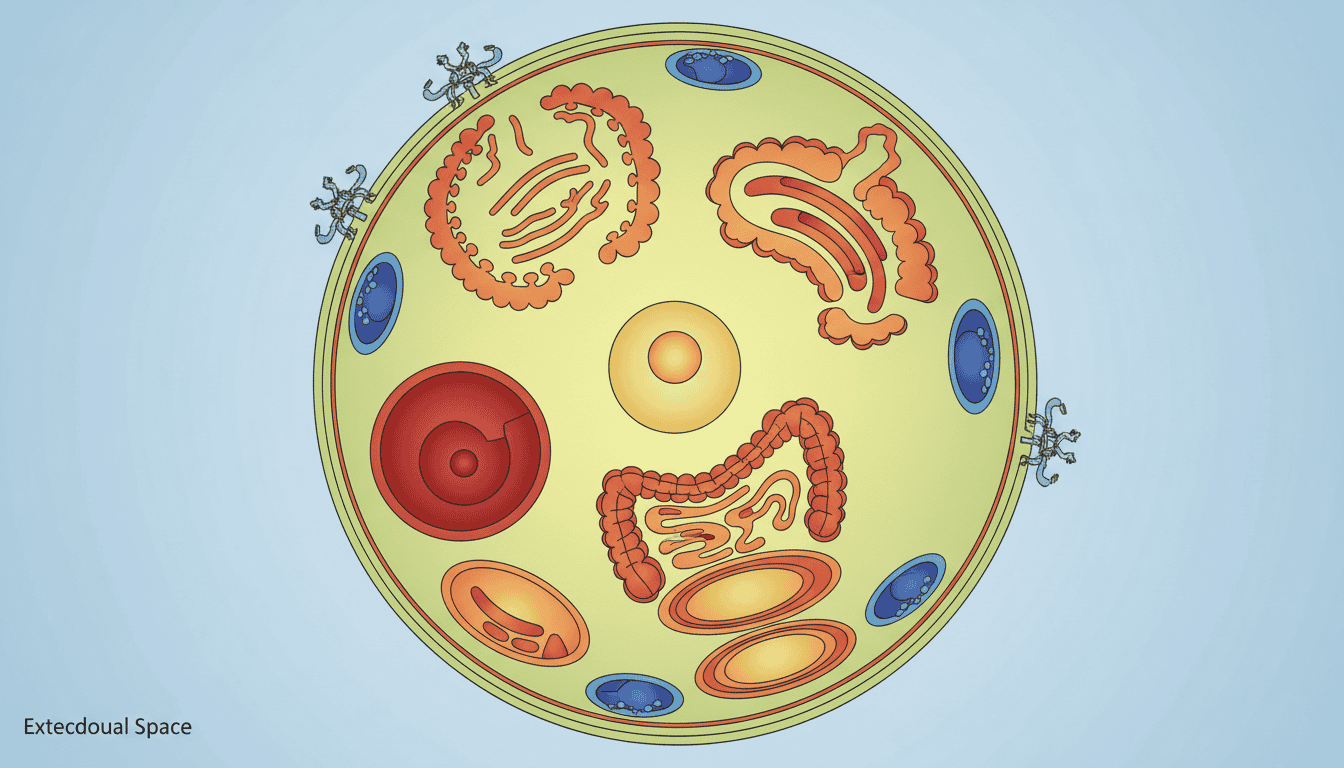
Your cells live in a chemical world where being off by just 0.2 pH units can mean the difference between life and death. While you go about your day, trillions of cells are performing an invisible balancing act, maintaining their internal pH within razor-thin margins. Even the slightest shift towards too acidic or too alkaline can stop essential proteins from working, halting the chemical reactions that keep you alive.
What is cellular pH balance
pH measures how acidic or alkaline something is on a scale from 0 to 14. Pure water sits at neutral 7, while lemon juice clocks in around 2 and household bleach around 12. Your cells maintain their internal pH between 7.0 and 7.4, a narrow window that took billions of years of evolution to perfect.
This precision matters because every protein in your cells has been sculpted by evolution to work at a specific pH. Think of proteins like molecular machines with moving parts. When pH shifts, these parts change shape. Enzymes that normally speed up chemical reactions can slow to a crawl or stop entirely. Channels that transport nutrients across cell membranes can slam shut.
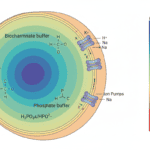
Cells don’t just passively maintain this balance. They actively work to keep pH stable using three main strategies: buffer systems that absorb excess acid or base, ion pumps that move charged particles in and out of cells, and metabolic adjustments that reduce acid production when needed.
What the research shows
Scientists have discovered that cells use sophisticated buffer systems, much like the chemical buffers in swimming pools, but far more elegant. The bicarbonate system acts as the primary buffer, soaking up excess hydrogen ions when cells become too acidic and releasing them when cells drift towards alkaline.
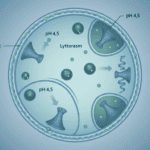
Research reveals that mitochondria, the cell’s power plants, play a central role in pH regulation. As they produce energy, they also generate acids as waste products. These cellular powerhouses have their own internal pH management systems, maintaining different pH levels in their various compartments. The space between mitochondrial membranes stays more acidic than the interior, creating the chemical gradient needed to produce ATP, the cell’s energy currency.
Studies show that cells can rapidly respond to pH changes through ion channels and pumps embedded in their membranes. When cellular pH drops, sodium-hydrogen exchangers kick into action, pumping out excess acid in exchange for sodium ions. Meanwhile, other pumps work to maintain the delicate balance of potassium, chloride, and other ions that influence pH.
Researchers have also found that different cell types have varying pH requirements. Muscle cells, for instance, must cope with dramatic acid production during intense exercise, while brain cells maintain tighter pH control to preserve sensitive neural functions.
Why cells need this precise pH control
Evolution preserved this tight pH regulation because cellular chemistry depends on it. Proteins fold into specific three-dimensional shapes that determine their function, and pH changes can unfold these molecular sculptures. When a protein loses its shape, it loses its ability to do its job.
Enzymes, the cellular workers that facilitate thousands of chemical reactions, are particularly pH-sensitive. Each enzyme has an optimal pH range where it works most efficiently. Pepsin, the stomach enzyme that breaks down proteins, thrives in highly acidic conditions around pH 2. But move that same enzyme to a neutral pH environment, and it becomes useless.
DNA repair mechanisms also depend on proper pH. The enzymes that fix damaged genetic material need specific conditions to recognise and repair DNA breaks. When cellular pH shifts too far from normal, these quality control systems can fail, potentially allowing mutations to accumulate.
Cell division requires precise pH control too. As cells prepare to divide, they must duplicate their entire genetic library and distribute it accurately to daughter cells. This process involves hundreds of proteins working in concert, each requiring optimal pH conditions to function properly.
What affects cellular pH balance
Age gradually weakens the cellular machinery responsible for pH regulation. Older cells often struggle to maintain the ion gradients needed for proper pH control, partly explaining why cellular function declines with age.
Exercise creates one of the most dramatic challenges to cellular pH balance. During intense physical activity, muscle cells produce lactic acid faster than they can clear it, causing temporary acidification. Well-trained athletes develop better buffering systems and more efficient acid clearance mechanisms.
Diet influences cellular pH through the metabolic byproducts of food breakdown. Protein metabolism generates acids, while fruits and vegetables typically produce alkaline metabolites. However, cells have robust systems to handle normal dietary variations.
Disease can disrupt pH regulation in various ways. Diabetes affects cellular metabolism in ways that can alter acid production. Kidney disease impairs the body’s ability to eliminate acids through urine. Cancer cells often have altered pH regulation, sometimes making their surroundings more acidic than healthy tissue.
Environmental toxins can interfere with the ion pumps and channels that cells use to regulate pH. Some pollutants can damage mitochondria, affecting both energy production and pH control.
What remains unknown
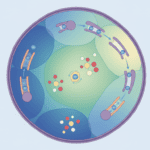
Scientists are still working out exactly how cells coordinate pH regulation across different cellular compartments. Each organelle within a cell maintains its own pH environment, but researchers don’t fully understand how these various pH zones communicate and influence each other.
The relationship between cellular pH and ageing remains an active area of investigation. While researchers know that pH regulation becomes less efficient with age, they’re still determining whether this decline drives other aspects of cellular ageing or results from them.
How different cell types maintain their unique pH requirements while sharing the same blood supply puzzles researchers. Muscle cells, nerve cells, and liver cells all have different pH needs, yet they must all function in the same bodily environment.
The role of cellular pH in disease development needs more research. Scientists suspect that pH dysregulation might contribute to various conditions, but distinguishing cause from effect proves challenging.
Researchers are also exploring how cellular pH regulation might be targeted therapeutically, though this remains largely experimental territory.
The story of cellular pH reveals the elegant precision underlying life itself. Every cell in your body maintains this chemical balance through systems more sophisticated than any human-built technology. Understanding this fundamental process illuminates how cells preserve the conditions necessary for the countless reactions that sustain life, reminding us that even the most basic cellular functions represent millions of years of evolutionary refinement.

Matt Elliott is the editor of Redox News Today, an independent publication covering peer-reviewed research on cellular health, redox signalling, and related biomedical science.