Drop a single drop of lemon juice into a glass of water and the pH barely budges. But shift your cellular pH by just 0.2 units and you could die within hours. Every cell in your body operates within an incredibly narrow pH range, typically between 7.2 and 7.4, and maintaining this balance requires some of the most sophisticated chemical machinery evolution has ever produced.
What is cellular pH balance
pH measures how acidic or basic a solution is on a scale from 0 to 14. Pure water sits at 7, which we call neutral. Anything below 7 is acidic, anything above is basic or alkaline.
Your cells live in a world of constant chemical reactions. Proteins fold and unfold, enzymes catalyse reactions, and DNA gets transcribed into RNA. All of these processes are exquisitely sensitive to pH. A protein that works perfectly at pH 7.3 might completely lose its shape and function at pH 6.8.
Think of pH like the temperature setting in a laboratory. You can have all the right ingredients and equipment, but if the temperature is wrong, nothing works properly. Cellular pH operates the same way, except the tolerance is even tighter than most lab experiments.
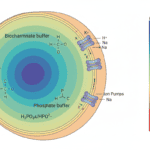
Cells maintain their pH through multiple overlapping systems. Buffer systems act like chemical shock absorbers, immediately neutralising small pH changes. Transport proteins actively pump hydrogen ions in and out of cells. Even the cell’s powerhouses, the mitochondria, play a crucial role by managing the pH gradients that drive energy production.
What the research shows
Scientists have discovered that cells use at least four major buffering systems to maintain pH stability. The bicarbonate buffer system handles most of the heavy lifting, converting strong acids into weaker ones that cells can manage more easily.
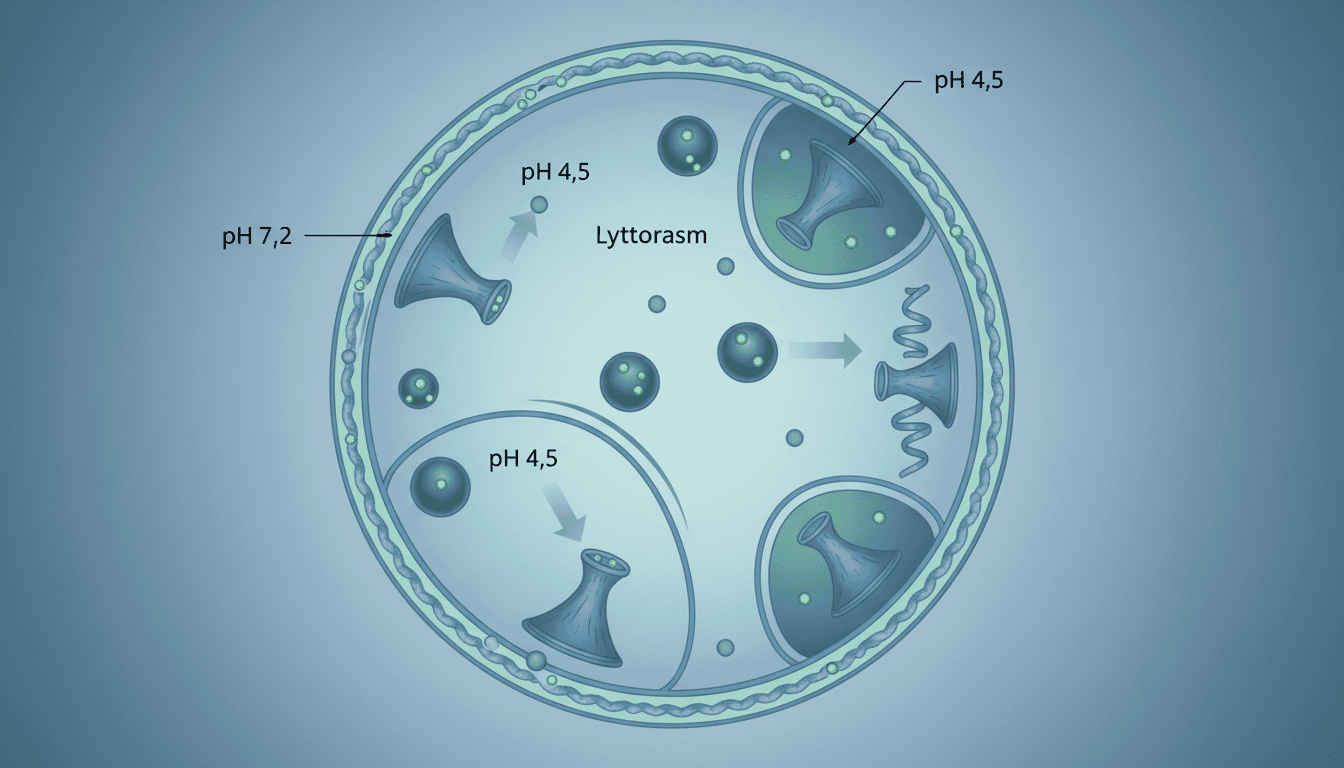
Research reveals that different cellular compartments maintain distinct pH levels. The cytoplasm typically sits around pH 7.2, while lysosomes maintain a much more acidic environment at pH 4.5 to 5.0. This acidic environment allows lysosomes to break down cellular waste and worn-out components.
Studies using pH-sensitive fluorescent probes show that cells can detect pH changes within seconds. When researchers artificially acidify cells, they observe rapid activation of pH regulatory mechanisms. Sodium-hydrogen exchangers ramp up their activity, pumping excess hydrogen ions out of the cell.
Exercise physiology research demonstrates how quickly pH regulation can be overwhelmed. During intense exercise, muscle cells produce lactic acid faster than buffering systems can neutralise it. The resulting pH drop impairs muscle contraction and contributes to fatigue.
Cancer research has revealed that tumour cells often manipulate their pH environment. Many cancer cells maintain a more alkaline internal pH while acidifying their surrounding environment, potentially helping them survive and spread.
Why cells need this precise pH control
Enzymes are the workhorses of cellular metabolism, and they absolutely require specific pH conditions to function. Each enzyme has an optimal pH range where its active site maintains exactly the right shape to bind substrates and catalyse reactions.
Even small pH shifts can alter protein structure. Hydrogen ions can bind to amino acids in proteins, changing their electrical charge and forcing them into different shapes. A protein that loses its proper shape loses its function, sometimes permanently.
DNA and RNA are also pH sensitive. The hydrogen bonds that hold the double helix together can be disrupted by pH changes. Cells that can’t maintain proper pH lose the ability to replicate their genetic material accurately.
Evolution preserved these pH control mechanisms because they solve a fundamental problem. As cells evolved more complex biochemistry, they needed increasingly precise chemical environments. The cells that developed better pH regulation could support more sophisticated metabolism and outcompeted those that couldn’t.
Membrane function depends critically on pH balance. Many transport proteins and ion channels change their behaviour based on pH levels. The electrical gradients that power cellular processes can be disrupted when pH regulation fails.
What affects cellular pH regulation
Age appears to impact pH regulation capacity. Studies suggest that older cells may have reduced buffering capacity and slower responses to pH challenges, though the mechanisms behind this decline remain under investigation.
Physical activity creates one of the biggest challenges to cellular pH balance. High-intensity exercise floods muscle cells with acid-producing metabolic byproducts. Regular training appears to enhance cellular buffering capacity over time.
Kidney and lung function profoundly influence cellular pH. The kidneys regulate bicarbonate levels in blood, while the lungs control carbon dioxide elimination. When either system falters, cellular pH regulation becomes more difficult.
Certain medications can disrupt pH balance. Diuretics affect electrolyte balance, which influences buffering capacity. Some diabetes medications can occasionally trigger dangerous pH shifts in susceptible individuals.
Research indicates that chronic inflammation may interfere with normal pH regulation. Inflammatory processes produce acidic compounds that can overwhelm local buffering systems.
What remains unknown
Scientists still don’t fully understand how different cell types fine-tune their pH regulation systems. Why do some cells tolerate pH variations better than others? The mechanisms behind this cellular resilience remain largely mysterious.
The relationship between cellular pH and ageing presents many unanswered questions. Do pH regulation problems contribute to age-related cellular dysfunction, or are they merely a consequence of other ageing processes?
Researchers are still mapping the complex signalling networks that coordinate pH regulation across different cellular compartments. How does a cell simultaneously maintain different pH levels in its various organelles while keeping everything coordinated?
The role of pH in cellular communication remains poorly understood. Some evidence suggests that pH changes might serve as signalling mechanisms between cells, but the extent and importance of this pH-based cellular communication system is unclear.
Cancer research has revealed altered pH regulation in tumours, but scientists are still working out whether these changes drive cancer progression or simply reflect the altered metabolism of cancer cells.
Understanding cellular pH regulation illuminates one of biology’s most elegant solutions to a universal problem. Every living cell must maintain chemical stability while carrying out thousands of simultaneous reactions. The pH control systems that evolved to solve this challenge represent some of the most sophisticated regulatory mechanisms in biology, operating continuously and largely invisibly to keep our cellular chemistry running smoothly.

Matt Elliott is the editor of Redox News Today, an independent publication covering peer-reviewed research on cellular health, redox signalling, and related biomedical science.