Your cells have a master switch for dealing with damage. When it works properly, this switch activates dozens of protective genes the moment trouble appears. But what happens when that switch gets jammed in the off position? Scientists studying accelerated ageing have found that chronic suppression of NRF2, your cell’s primary defence coordinator, creates a cascade of problems that makes tissues age faster than they should.
What is NRF2 suppression
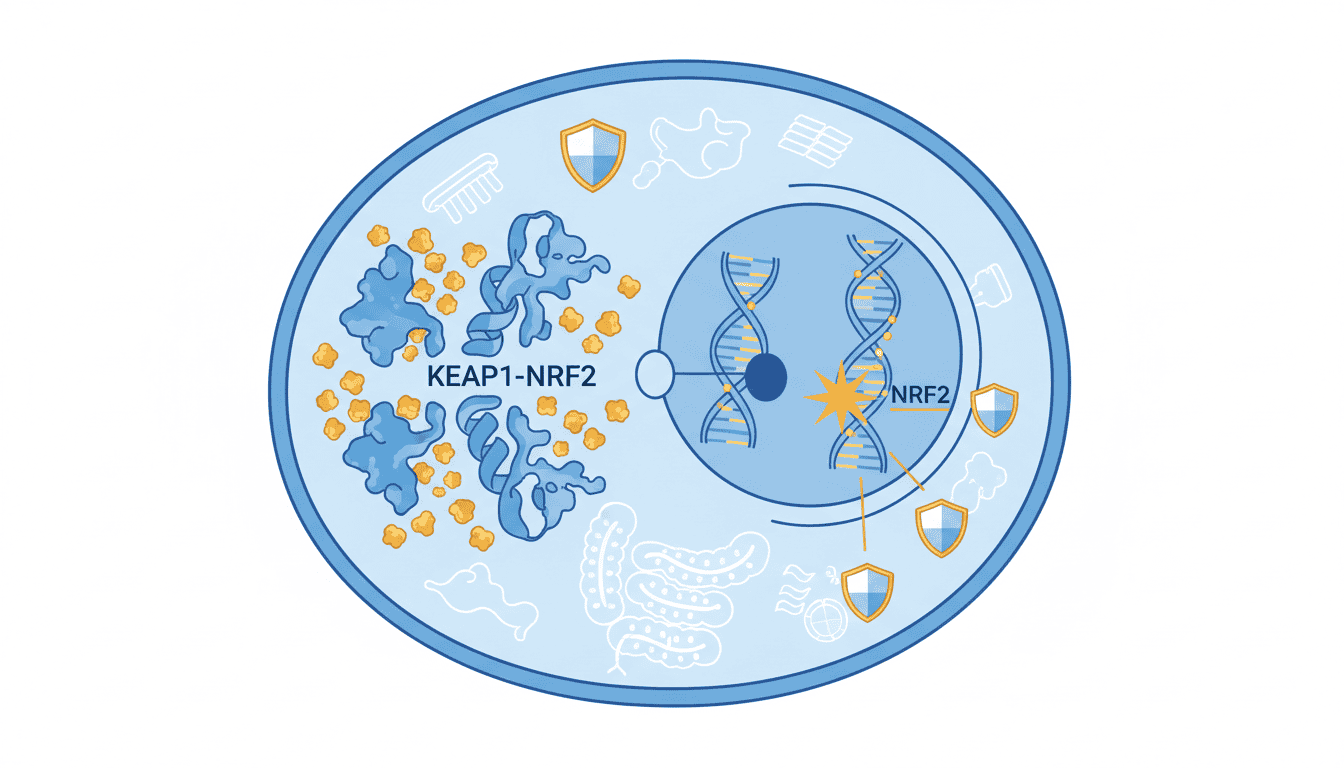
NRF2 stands for Nuclear factor erythroid 2-related factor 2, a protein that acts like a cellular fire chief. Under normal conditions, NRF2 sits quietly in the cytoplasm, held in check by another protein called KEAP1. When cells detect oxidative stress, damaged proteins, or toxic compounds, KEAP1 releases its grip. NRF2 then rushes into the nucleus and switches on genes that produce antioxidant enzymes, detoxification proteins, and repair mechanisms.
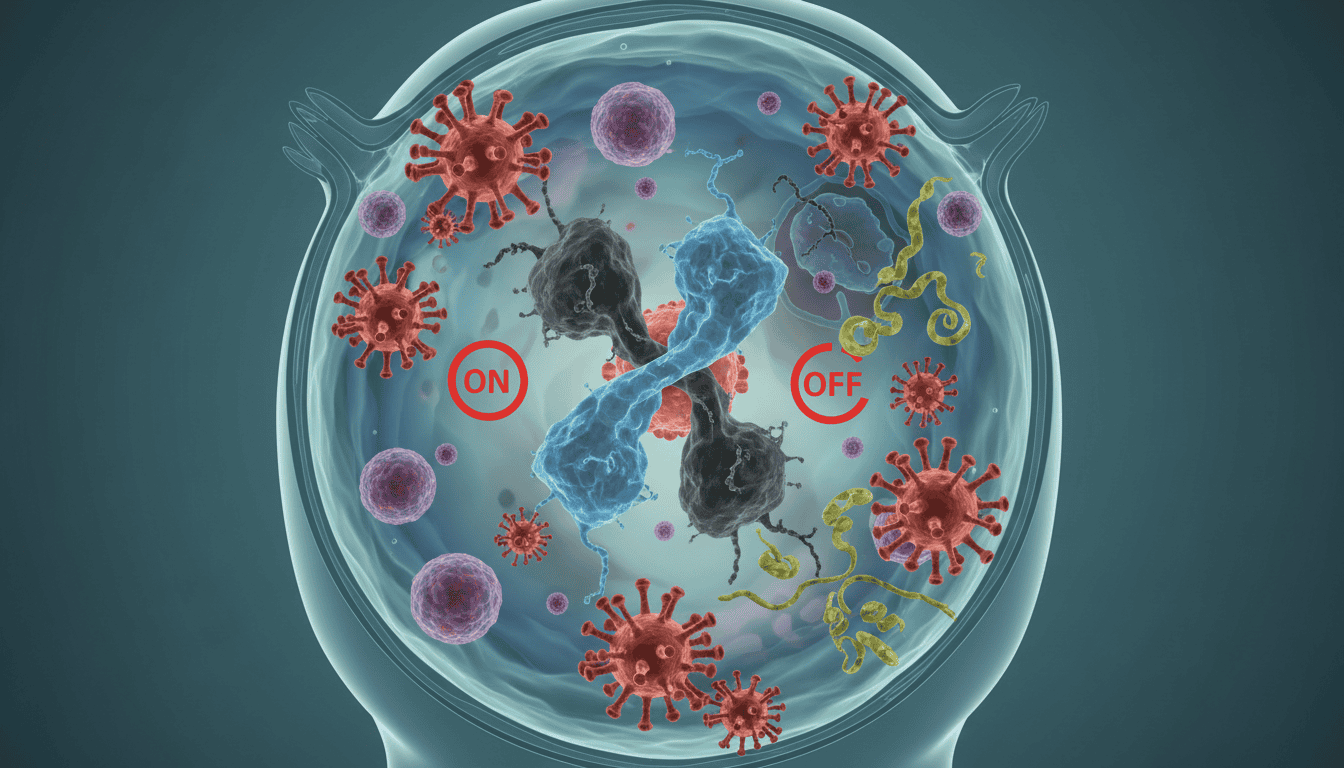
Chronic NRF2 suppression occurs when this system fails to respond properly to cellular stress. The switch stays off even when cells desperately need those protective genes. This can happen through several mechanisms: persistent inflammation keeps NRF2 locked down, genetic variations reduce its effectiveness, or chronic exposure to toxins overwhelms the system entirely.
Think of it like a smoke detector with dead batteries. The fire department never gets called, even when the house is burning.
What the research shows
Studies using NRF2 knockout mice reveal what happens when cells lose this protective mechanism entirely. These animals age faster across multiple organ systems. Their skin develops wrinkles earlier, their muscles weaken more quickly, and their organs accumulate damage at an accelerated rate.
Researchers have observed specific markers of premature ageing in cells with suppressed NRF2 activity. Mitochondria, the cell’s power plants, become dysfunctional more rapidly. DNA damage accumulates because repair systems aren’t properly activated. Cellular garbage builds up because the cleanup crews never get the signal to mobilise.
The skin provides particularly clear evidence. When NRF2 signalling is chronically suppressed, skin cells show increased cross-linking of collagen proteins, reduced elasticity, and accelerated formation of advanced glycation end products. These are the same changes seen in normal ageing, but they happen much faster.
Laboratory studies show that restoring NRF2 function in aged cells can partially reverse some of these changes. The cells begin producing protective enzymes again, clearing accumulated damage, and functioning more like younger cells.
Why cells need this defence system
Living generates damage. Every breath you take produces reactive oxygen species as mitochondria burn fuel for energy. Environmental toxins slip past your body’s outer defences. Normal cellular processes create waste products that can harm DNA and proteins if left unchecked.
Evolution solved this problem by creating an adaptive response system. Rather than running expensive protective mechanisms constantly, cells wait for trouble signals, then rapidly deploy exactly the defences they need. NRF2 coordinates this response, ensuring that antioxidant production, detoxification, and repair mechanisms all activate together.
This system works brilliantly when it functions properly. Cells can handle significant stress without sustaining permanent damage. But when NRF2 suppression disrupts this coordination, cells lose their ability to adapt to challenges. Small stresses that should be easily managed instead cause cumulative damage that accelerates ageing.
The energy savings are substantial too. Producing high levels of protective enzymes all the time would be metabolically expensive. The NRF2 system allows cells to invest energy in growth and repair most of the time, switching to defence mode only when necessary.
What affects NRF2 signalling
Age itself tends to reduce NRF2 activity. Older cells show weaker responses to stress signals, producing fewer protective enzymes even when the pathway is activated. This creates a vicious cycle where age-related damage accumulates faster because the cellular defence system becomes less effective.
Chronic inflammation suppresses NRF2 through multiple pathways. Inflammatory molecules can prevent NRF2 from reaching the nucleus or interfere with its ability to activate genes once it gets there. This helps explain why inflammatory diseases often involve accelerated ageing of affected tissues.
Environmental factors play a significant role. Air pollution, cigarette smoke, and certain industrial chemicals can overwhelm NRF2 signalling or directly suppress the pathway. Ultraviolet radiation damages the proteins involved in NRF2 regulation, which contributes to accelerated skin ageing.
Genetic variations influence how effectively people can activate NRF2. Some individuals have naturally higher baseline activity, while others have reduced capacity to respond to cellular stress. These differences may help explain why some people seem to age more slowly than others under similar environmental conditions.
Certain lifestyle factors appear to support healthy NRF2 function. Physical exercise activates the pathway through controlled oxidative stress. Some dietary compounds, particularly those found in cruciferous vegetables, can stimulate NRF2 signalling.
What remains unknown
Scientists still don’t fully understand why NRF2 activity declines with age in the first place. Is this decline an unavoidable consequence of cellular ageing, or could it be prevented or reversed? Research is ongoing to determine whether age-related NRF2 suppression is a cause of ageing or simply another symptom.
The relationship between chronic NRF2 activation and cancer risk complicates the picture. While NRF2 suppression clearly accelerates ageing, some cancers hijack NRF2 signalling to protect themselves from chemotherapy. Researchers are working to understand how to maintain healthy NRF2 function without creating cancer-friendly conditions.
Individual variation in NRF2 response remains poorly understood. Why do some people maintain robust NRF2 signalling into old age while others show early decline? Genetic studies are beginning to identify relevant variants, but environmental and lifestyle interactions add layers of complexity.
The timing and duration of NRF2 activation may matter more than scientists initially realised. Brief, intense activation might be more beneficial than sustained moderate activation, but optimal patterns haven’t been determined.
Understanding NRF2 suppression reveals something profound about how our cells balance protection with function. This isn’t just about preventing damage, but about maintaining the cellular flexibility needed to respond to an unpredictable world. As research continues to unravel these mechanisms, we’re getting a clearer picture of why some tissues age gracefully while others deteriorate rapidly. The NRF2 system represents one of evolution’s most elegant solutions to the challenge of staying alive in a world full of molecular hazards.

Matt Elliott is the editor of Redox News Today, an independent publication covering peer-reviewed research on cellular health, redox signalling, and related biomedical science.