Your eyes generate more oxidative stress per gram of tissue than almost any other part of your body. The reason is brutal in its simplicity: eyes need light to function, but light creates reactive oxygen species that attack cellular components. It’s like having a high-performance engine that produces more exhaust than its filters can handle.
What is oxidative stress in the eye
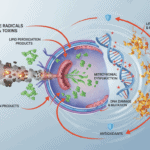
Oxidative stress occurs when cells produce more reactive oxygen species than their antioxidant systems can neutralise. The retina faces this challenge constantly because vision requires a chemical reaction that splits light-sensitive molecules millions of times per second.
Each time a photon hits a rod or cone cell, it triggers a cascade of molecular events. This process, called phototransduction, generates reactive oxygen species as an inevitable byproduct. The retina also has one of the highest metabolic rates in the body, requiring massive amounts of oxygen to power vision. More oxygen means more opportunities for things to go wrong.
The macula, responsible for sharp central vision, bears the heaviest burden. Blue light penetrates deep into retinal tissue here, creating particularly damaging reactive oxygen species. Meanwhile, the retinal pigment epithelium works overtime to recycle visual pigments and clean up cellular debris, generating even more oxidative stress in the process.
What the research shows
Studies reveal that retinal cells accumulate oxidative damage throughout life, particularly in the photoreceptor outer segments where light absorption occurs. Researchers have found lipofuscin deposits, essentially cellular garbage created by oxidative damage, building up steadily in retinal pigment epithelial cells as people age.
The lens demonstrates another pattern of oxidative stress accumulation. Scientists have observed that lens proteins, which must last a lifetime without replacement, show increasing oxidative modifications over decades. These proteins cross-link and aggregate, reducing lens transparency and flexibility.
Laboratory studies show that exposing retinal cells to bright light rapidly increases markers of oxidative stress within hours. The damage appears cumulative, with cells showing progressively less ability to recover from oxidative insults as they age. Researchers have documented this by measuring specific biomarkers like 4-hydroxynonenal and malondialdehyde in eye tissues.
Animal studies reveal that eyes with compromised antioxidant systems suffer accelerated damage when exposed to normal lighting conditions. Conversely, boosting cellular antioxidant capacity through genetic modification protects against light-induced retinal damage in laboratory models.
Why cells need this protection
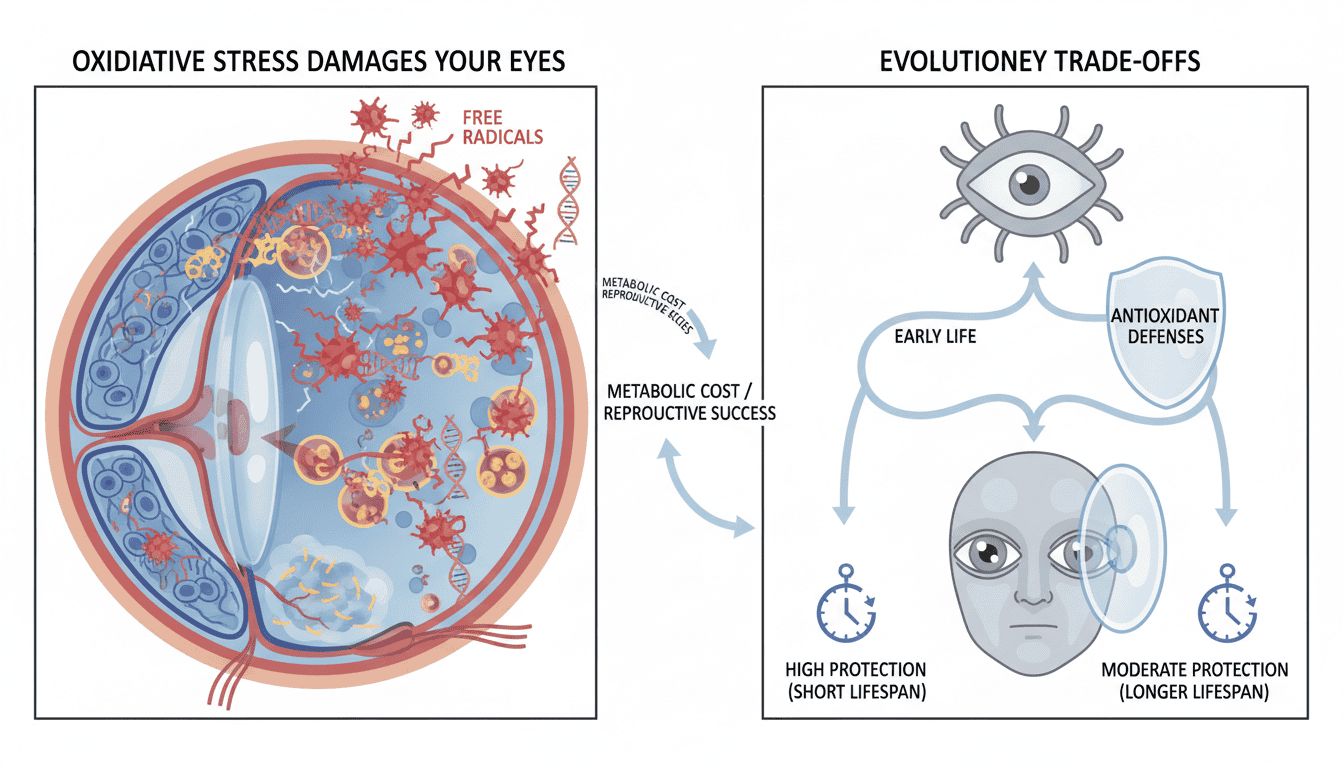
Evolution faced an impossible trade-off with vision. To detect light, cells must contain molecules that change structure when photons hit them. But this same property makes these molecules prone to generating reactive oxygen species. There’s no way to have sensitive light detection without oxidative stress.
The retina developed multiple defence systems to manage this challenge. Photoreceptor outer segments, where most light damage occurs, are completely replaced every 10 days. The retinal pigment epithelium contains high concentrations of melanin, which absorbs excess light energy and neutralises free radicals. Blood vessels are positioned to minimise light scattering while delivering antioxidant nutrients.
The macula concentrates carotenoid pigments that filter blue light before it reaches photoreceptors. These pigments, lutein and zeaxanthin, cannot be synthesised by human cells and must come from diet. Their presence represents an evolutionary adaptation to protect the most critical area for human vision.
Tears contain antioxidant enzymes that protect the corneal surface. The lens avoids blood vessels entirely to maintain transparency, relying instead on the aqueous humour to deliver antioxidant nutrients and remove waste products.
What affects oxidative stress in eyes
Light exposure drives oxidative stress in eye tissues more than any other factor. Blue light creates more reactive oxygen species than red light, explaining why bright screens and LED lighting may pose particular challenges. Research shows that people living at high altitudes, where UV exposure is intense, show accelerated retinal ageing.
Age progressively weakens cellular antioxidant systems while accumulated damage reduces their efficiency. The lens crystallins that begin forming before birth show extensive oxidative modifications by age 60. Retinal pigment epithelial cells, which don’t divide in healthy adults, must cope with decades of oxidative stress without replacement.
Smoking dramatically increases oxidative stress throughout the body, including eye tissues. Studies consistently show smokers develop age-related macular degeneration at higher rates and younger ages. The mechanism involves both increased free radical production and depletion of antioxidant nutrients like vitamin C.
Diabetes accelerates oxidative stress in retinal blood vessels through multiple pathways. High glucose levels directly generate reactive oxygen species while disrupting normal antioxidant enzyme function. This explains why diabetic retinopathy often develops even when blood sugar control seems adequate.
Diet influences the availability of antioxidant nutrients that eye tissues require for protection. Vitamin E protects cell membranes, vitamin C regenerates other antioxidants, and zinc is essential for antioxidant enzyme function.
What remains unknown
Scientists still don’t fully understand why some people’s eyes resist oxidative damage while others develop problems relatively early in life. Genetic variations clearly play a role, but researchers are only beginning to identify the specific genes involved in ocular antioxidant defence.
The relationship between different types of light exposure and cumulative eye damage remains unclear. While laboratory studies show blue light creates more immediate oxidative stress, the long-term effects of various light spectra on human eyes are difficult to measure directly.
Researchers are investigating whether the brain’s visual processing areas also experience oxidative stress related to vision. Early evidence suggests that retinal damage might trigger secondary oxidative stress in visual cortex neurons, but this connection needs more study.
The timing and triggers for age-related changes in ocular antioxidant systems aren’t well characterised. Some people maintain excellent vision into their 90s while others develop problems in their 50s, suggesting important but unidentified protective factors.
Questions remain about whether dietary antioxidants can effectively reach eye tissues in therapeutic concentrations and whether timing of supplementation matters for preventing oxidative damage.
The eye’s vulnerability to oxidative stress illustrates a fundamental principle of biology: evolution optimises for reproductive success, not longevity. Our visual system works brilliantly for the first few decades of life, when survival and reproduction matter most. The gradual accumulation of oxidative damage in later years reveals the limits of biological design when confronted with chemistry’s basic rules. Understanding this process helps explain why maintaining cellular health becomes increasingly important as we age, and why supporting the body’s natural antioxidant systems makes biological sense.

Matt Elliott is the editor of Redox News Today, an independent publication covering peer-reviewed research on cellular health, redox signalling, and related biomedical science.