The Fundamental Energy Systems at Work
When we exercise, our cells undergo dramatic changes in how they produce energy. The distinction between aerobic and anaerobic exercise isn’t just about breathing patterns or exercise intensity; it reflects profound differences in cellular metabolism and energy production pathways. Understanding these cellular mechanisms provides insight into why different types of exercise produce varying physiological adaptations and why both forms are essential for optimal health.
Every cell in our body requires adenosine triphosphate (ATP) to function, and this cellular currency must be continuously replenished during physical activity. The method by which cells generate ATP depends largely on the availability of oxygen and the duration and intensity of the exercise being performed.
Cellular Respiration During Aerobic Exercise
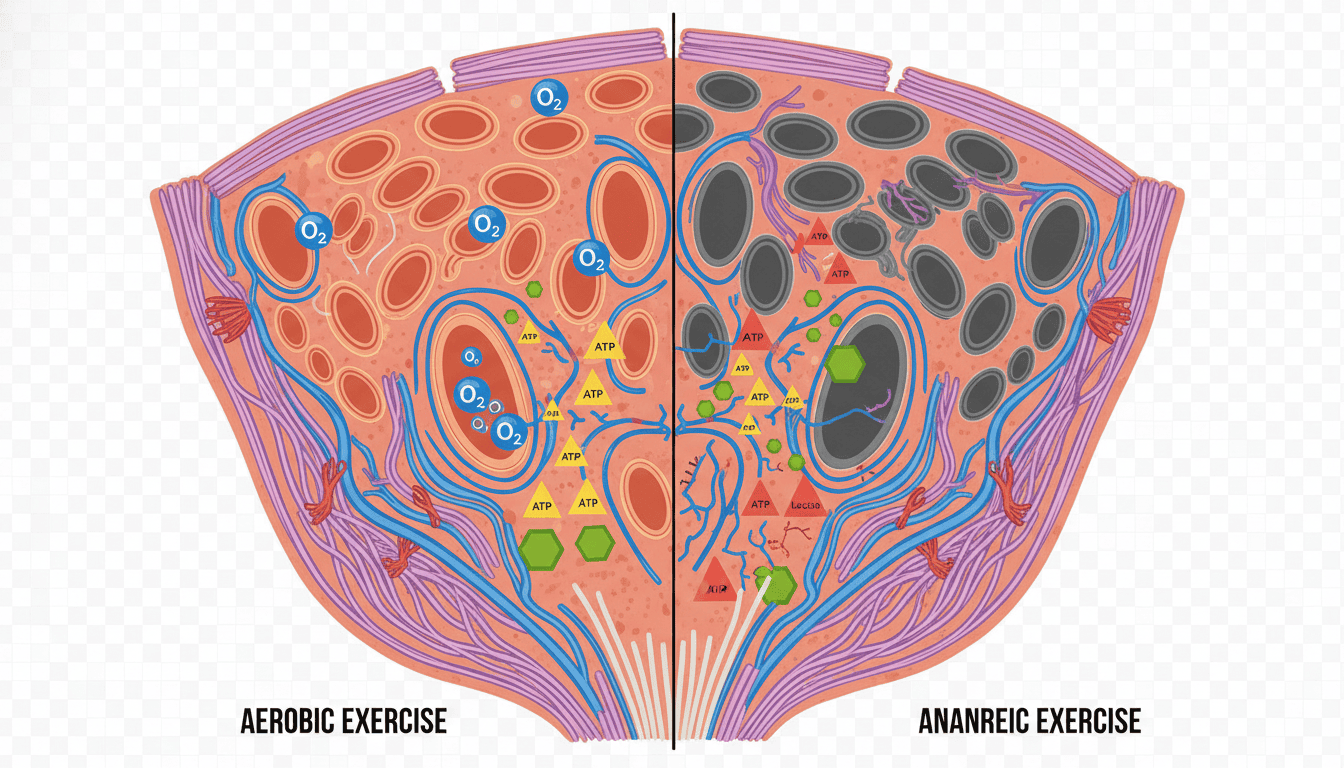
During aerobic exercise, cells have sufficient oxygen to support complete oxidative metabolism. This process occurs primarily within the mitochondria, often called the powerhouses of the cell. The aerobic pathway involves the complete breakdown of glucose through glycolysis, the citric acid cycle, and the electron transport chain.
This oxygen dependent process is remarkably efficient, producing approximately 36 to 38 molecules of ATP from a single glucose molecule. The mitochondria work at capacity during sustained aerobic activity, utilising both glucose and fatty acids as fuel sources. As exercise intensity remains moderate, oxygen delivery keeps pace with cellular demand, allowing for this efficient energy production to continue.
The cellular environment during aerobic exercise remains relatively stable in terms of pH and lactate levels. This stability allows for sustained activity without the rapid fatigue associated with anaerobic exercise. Mitochondrial enzymes function optimally under these conditions, supporting the continuous production of ATP through oxidative phosphorylation.
Anaerobic Metabolism and Cellular Adaptation
When exercise intensity exceeds the body’s ability to deliver sufficient oxygen to working muscles, cells must rely on anaerobic metabolism. This shift represents a fundamental change in cellular energy production, moving from the mitochondria back to the cytoplasm where glycolysis can occur without oxygen.
Anaerobic glycolysis breaks down glucose or glycogen rapidly, but produces only 2 molecules of ATP per glucose molecule. While significantly less efficient than aerobic metabolism, this pathway can generate ATP much more quickly, supporting high intensity activities that require immediate energy.
The cellular consequence of anaerobic metabolism is the production of lactate as a byproduct. Contrary to popular belief, lactate itself isn’t the cause of muscle fatigue. Instead, the cellular accumulation of hydrogen ions and the resulting decrease in cellular pH creates the challenging environment that limits continued high intensity exercise.
Mitochondrial Responses to Different Exercise Types
The mitochondria respond differently to aerobic versus anaerobic training stimuli. Aerobic exercise promotes mitochondrial biogenesis, the process by which cells create new mitochondria. This adaptation increases the cell’s oxidative capacity and improves the efficiency of oxygen utilisation.
Regular aerobic training also enhances mitochondrial enzyme activity, particularly those involved in fatty acid oxidation. These adaptations allow trained individuals to utilise fat as fuel more effectively, sparing glycogen stores for when they’re most needed.
Anaerobic exercise, whilst not directly stimulating mitochondrial biogenesis to the same extent, creates different cellular adaptations. High intensity exercise improves the capacity and efficiency of anaerobic energy systems, enhancing the cell’s ability to rapidly produce ATP without oxygen. This includes improvements in phosphocreatine stores and glycolytic enzyme activity.
Redox Signalling and Exercise Adaptation
Both aerobic and anaerobic exercise create distinct redox signalling environments within cells. During aerobic exercise, the controlled production of reactive oxygen species serves as important cellular signals that promote adaptive responses. These redox signals activate pathways involved in mitochondrial biogenesis, antioxidant defence systems, and cellular repair mechanisms.
Anaerobic exercise generates different redox signalling patterns, often creating more pronounced oxidative stress in shorter periods. This intense redox signalling can stimulate adaptations in cellular stress response systems and may contribute to improvements in cellular resilience.
The balance between oxidant production and antioxidant defence systems shifts differently depending on exercise type. Aerobic exercise typically promotes a measured increase in antioxidant capacity that matches the oxidative challenge. High intensity anaerobic exercise may create more dramatic shifts in cellular redox balance, requiring robust recovery and adaptation mechanisms.
Cellular Recovery and Long Term Adaptations
The cellular recovery process following aerobic and anaerobic exercise reflects the different metabolic stresses imposed. After anaerobic exercise, cells must clear accumulated lactate, restore pH balance, and replenish energy stores. This process involves the conversion of lactate back to glucose in other tissues and the restoration of phosphocreatine levels.
Following aerobic exercise, cellular recovery focuses more on replenishing glycogen stores and managing the oxidative stress from prolonged mitochondrial activity. The recovery process also involves protein synthesis to support the structural adaptations stimulated by exercise.
Long term cellular adaptations differ markedly between exercise types. Aerobic training creates cells that are more efficient at oxygen utilisation and fat oxidation, whilst anaerobic training develops cells that can rapidly generate energy and tolerate challenging metabolic conditions.
Understanding these cellular differences highlights why both aerobic and anaerobic exercise are valuable for comprehensive cellular health. Each type of exercise stimulates unique adaptations that contribute to cellular resilience, energy efficiency, and overall metabolic flexibility. This knowledge reinforces the importance of varied exercise approaches in supporting the complex cellular processes that underpin human health and performance.

Matt Elliott is the editor of Redox News Today, an independent publication covering peer-reviewed research on cellular health, redox signalling, and related biomedical science.