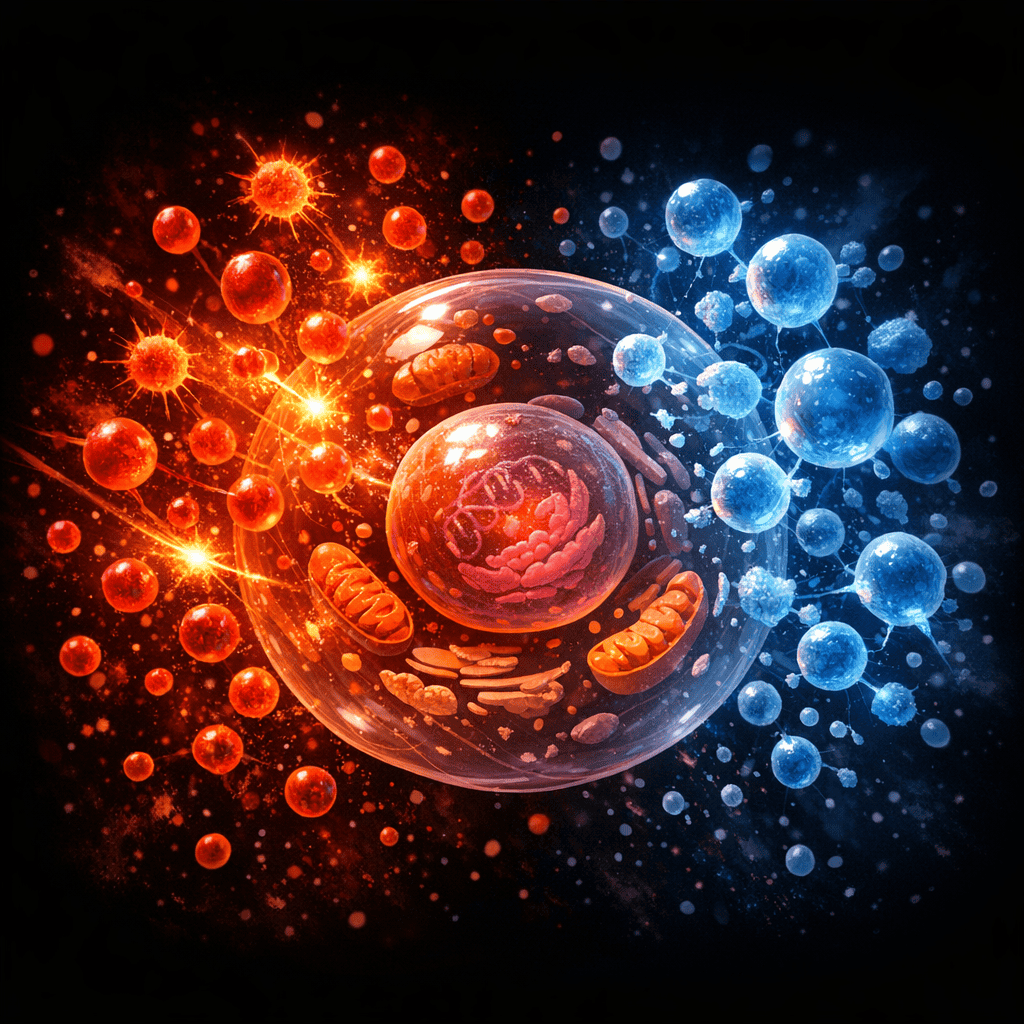
Your cells are constantly under attack. Not from invaders, but from their own chemical reactions. Every time a mitochondrion converts glucose into energy, it releases free radicals as a byproduct. These unstable molecules can damage DNA, proteins, and fats if left unchecked. Yet most of us live into old age without our cells falling apart. That’s because cells have evolved sophisticated ways to neutralise this damage. One of the newest discoveries involves a piece of RNA that forms a perfect circle, and it appears to play a direct role in managing this chemical defence system.
What is circular RNA and why does one live in your mitochondria
Circular RNAs are strange molecules. Unlike the linear strands of messenger RNA that cells use to make proteins, circular RNAs fold back on themselves, creating a loop with no beginning or end. Scientists dismissed them as junk for years, assuming they were just errors in RNA processing. That changed when researchers realised these circles stick around longer than linear RNA and resist being broken down by cellular machinery designed to degrade RNA.
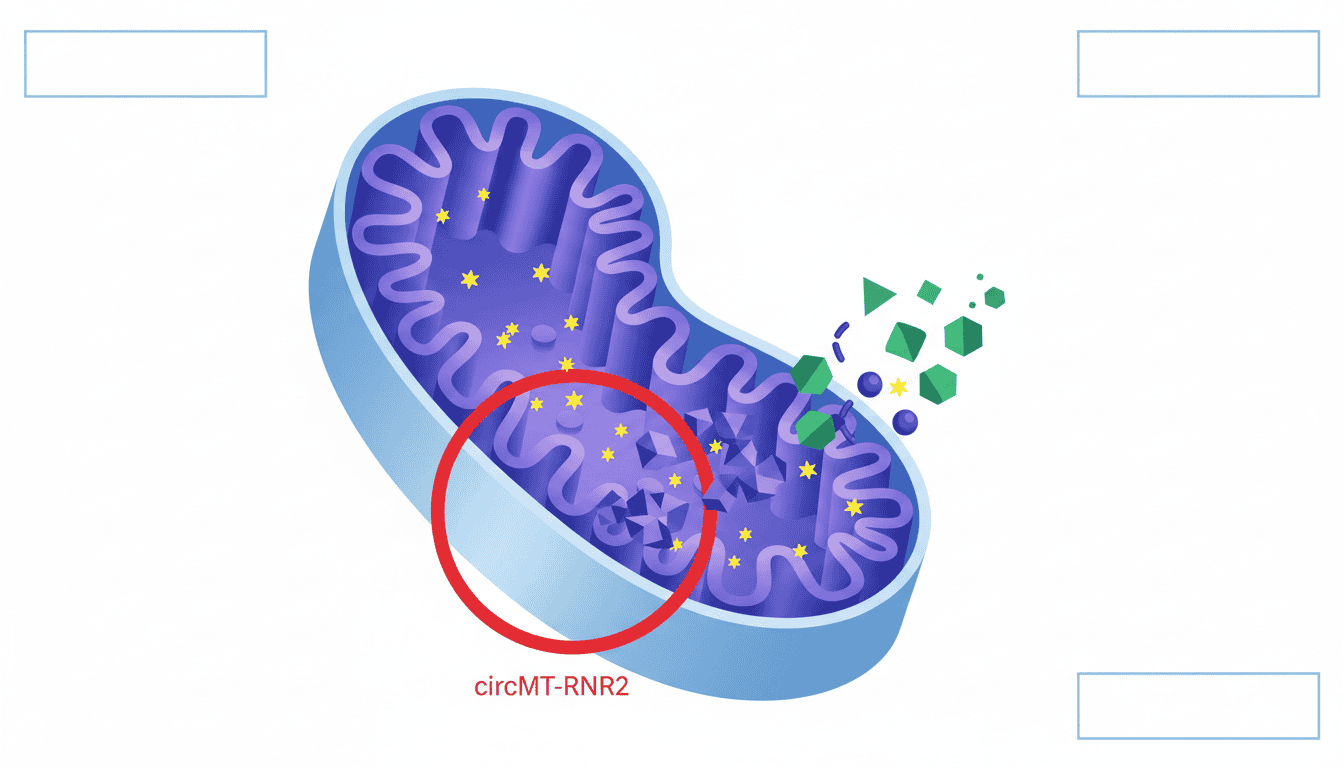
CircMT-RNR2 is one of these circular RNAs, and it lives inside mitochondria. The name reflects its origin: it’s circular (circ), mitochondrial (MT), derived from the ribosomal RNA gene (RNR2). Unlike most circular RNAs found floating around the nucleus, this one stays put in the power plant of the cell. That location matters because mitochondria generate the bulk of a cell’s reactive oxygen species, the problematic free radicals we mentioned. A molecule that can regulate antioxidant defences right where oxidative stress happens most is potentially very useful.
What the research shows
When researchers examine cells under oxidative stress, they observe something straightforward: circMT-RNR2 levels rise. The cell recognises danger and produces more of this circular RNA. More interesting is what happens next. This RNA appears to interact with proteins that regulate antioxidant enzymes, particularly those controlling systems like superoxide dismutase and catalase. Think of it as a molecular signal that tells the cell “we need more chemical shields right now.”
In experiments where circMT-RNR2 is artificially reduced, cells lose some of their ability to mount an antioxidant response. They accumulate more reactive oxygen species and show signs of stress. Conversely, when circMT-RNR2 is increased, cells show improved defence capacity. The effect isn’t dramatic enough to transform a severely damaged cell into a healthy one, but it’s consistent and measurable. Researchers observe this pattern across different cell types and stress conditions.
One mechanism researchers have identified involves the way circMT-RNR2 influences protein synthesis within mitochondria itself. Mitochondria contain their own ribosomes and produce their own proteins, separate from the rest of the cell. By affecting how efficiently these mitochondrial ribosomes work, circMT-RNR2 can influence the production of key antioxidant enzymes right at the site where they’re most needed.
Why cells need this system
The existence of circMT-RNR2 suggests evolution has invested in a local, responsive antioxidant defence system. Waiting for signals to travel from the nucleus to the mitochondria takes time. By the time nuclear gene expression responds and new proteins are synthesised, more damage might have occurred. A circular RNA that’s already present in mitochondria and can be rapidly mobilised offers something valuable: speed.
Moreover, this system appears tuned to the actual demands of energy production. When a cell is working hard, mitochondria burn more fuel and produce more oxidative stress. CircMT-RNR2 responds to these conditions directly, ramping up local defences in proportion to the danger. This is efficient biology. Rather than maintaining defences at maximum capacity all the time, which would waste energy, the cell produces them on demand.
There’s also the matter of ageing. Oxidative stress accumulates over a lifetime, and the efficiency of antioxidant systems declines with age. By understanding how circMT-RNR2 contributes to this defence, researchers gain insight into why cellular defence mechanisms become less effective as organisms grow older.
What affects circMT-RNR2 levels and function
Physical activity appears to influence circMT-RNR2 expression. Exercise increases metabolic demand on mitochondria, creating oxidative stress, and research suggests this triggers upregulation of antioxidant circular RNAs. This may explain part of why regular physical activity supports cellular health at the molecular level.
Diet also plays a role. Cells exposed to high glucose or altered fatty acid metabolism show different patterns of circMT-RNR2 expression compared to cells in balanced metabolic states. Environmental stressors like heat, toxins, or hypoxia (low oxygen) trigger changes in circRNA levels as well. Even sleep disruption and psychological stress show effects, though the evidence is still developing.
Age is perhaps the most significant factor. In older cells, circMT-RNR2 levels decline, and the capacity to upregulate it in response to stress diminishes. This loss of responsiveness may contribute to the accumulation of oxidative damage observed in ageing tissues. Temperature also matters. Cells under heat stress show rapid mobilisation of circMT-RNR2, suggesting this system is part of the broader heat shock response.
What remains unknown
The biggest question is still mechanism. Researchers understand that circMT-RNR2 influences antioxidant defence, but the precise molecular interactions remain incompletely mapped. Does it bind directly to regulatory proteins, or does it work through an intermediary? Does it affect transcription of mitochondrial genes, or purely translational control? These details matter for understanding how cells could potentially modulate this system.
The specificity question is also open. CircMT-RNR2 isn’t the only circular RNA involved in redox signalling. How does this particular circle coordinate with others? Do different circular RNAs respond to different types of oxidative stress, or do they work redundantly? If one fails, can others compensate?
Finally, researchers don’t yet know whether circMT-RNR2 function changes in disease states. Does this system malfunction in cancer, diabetes, or neurodegenerative diseases? If so, could modulating circMT-RNR2 be relevant to understanding disease progression? These are early-stage questions, but they’re the ones that might eventually bridge basic cellular biology to clinical relevance.
The story of circMT-RNR2 reveals something deeper about how cells manage stress. Evolution didn’t rely on a single master switch. Instead, cells deployed multiple layers of response, including systems like this one that operate right where the problem occurs. Understanding these local, responsive mechanisms points to a picture of cellular life far more nuanced than older models suggested. Cells aren’t passive victims of oxidative damage. They’re active managers of their own chemical environment, using molecules we’re only now beginning to recognise.

Matt Elliott is the editor of Redox News Today, an independent publication covering peer-reviewed research on cellular health, redox signalling, and related biomedical science.