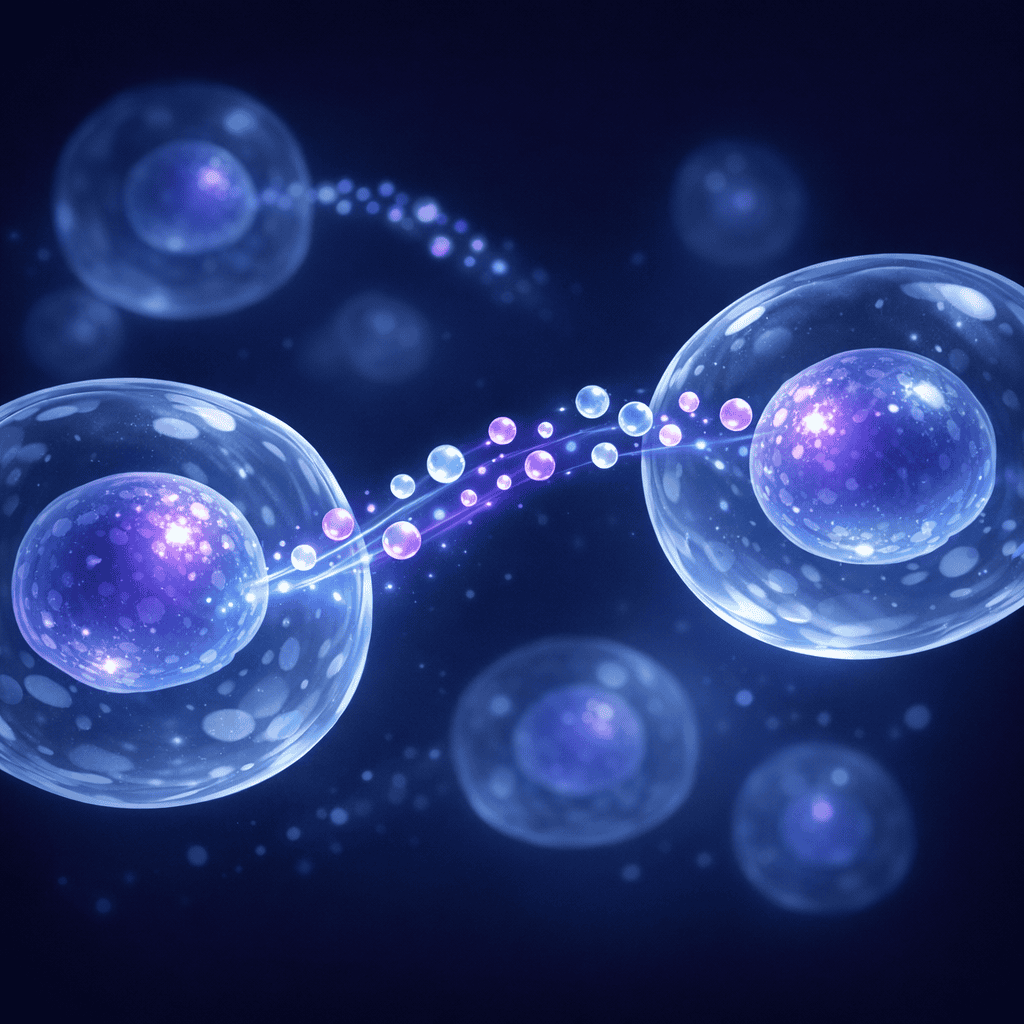

Your cells are under constant attack. Every time they burn fuel or encounter environmental stress, they generate reactive molecules that damage proteins, fats, and DNA. Yet most people never think about the molecule that stands between their cells and this chaos: glutathione. It’s your cells’ primary antioxidant defence, but here’s the catch. Your body can’t absorb glutathione from food or supplements effectively. So cells must manufacture it themselves, using a precursor that actually works. That precursor is N-acetylcysteine, and understanding how it enables glutathione production reveals something elegant about cellular chemistry.
What is glutathione and why cells depend on it
Glutathione is a tripeptide, just three amino acids linked together: cysteine, glycine, and glutamate. Its superpower lies in a single sulphur-containing bond that acts like a cellular sponge for reactive oxygen species. When a free radical threatens a protein or membrane, glutathione sacrifices itself, neutralising the threat and becoming oxidised in the process. This is why researchers call it the cell’s master antioxidant.
The catch is that glutathione synthesis requires cysteine, which is the limiting ingredient. Cells can make glycine and glutamate easily enough, but cysteine is harder to come by. This is where N-acetylcysteine enters the picture. It’s a modified form of cysteine with an acetyl group attached, and it crosses cell membranes readily. Once inside, enzymes strip away that acetyl group, releasing free cysteine that cells can use to build fresh glutathione. It’s a back door that makes cysteine bioavailable when cells need it most.
This system is ancient. Every organism from bacteria to humans has maintained glutathione as a redox buffer, suggesting that balancing oxidation and reduction reactions became non-negotiable somewhere in early evolution. Cells without adequate glutathione cannot handle oxidative stress, cannot regulate signalling properly, and eventually die.
What the research shows
Studies consistently demonstrate that N-acetylcysteine increases intracellular cysteine availability and boosts glutathione synthesis in various cell types. When researchers expose cells to oxidative stressors like hydrogen peroxide or heavy metals, pre-treatment with N-acetylcysteine preserves glutathione pools and reduces damage to cellular components. The effect is dose-dependent: more N-acetylcysteine means more glutathione production, up to a point.
In tissue culture experiments, cells treated with N-acetylcysteine recover their redox balance faster after oxidative insult than untreated controls. Researchers have observed this in hepatocytes, neuronal cells, endothelial cells, and immune cells. The mechanism is straightforward: N-acetylcysteine provides the raw material, and glutathione synthase enzymes do the rest.
What’s interesting is the timing. Glutathione regenerates quickly, within hours of N-acetylcysteine availability. This rapid turnover explains why glutathione is so effective as a defence system. It doesn’t persist in cells for days; it works constantly, getting oxidised and then reduced back to active form using electrons from NADPH. N-acetylcysteine essentially keeps this cycle running by maintaining the cysteine supply that the system needs.
Researchers have also measured effects on specific redox-sensitive proteins. Thioredoxin reductase, a key enzyme that recycles other protective molecules, shows improved activity when glutathione levels are adequate. Similarly, cells maintain better function of mitochondrial proteins when glutathione synthesis is supported.
Why cells need this system
The redox balance inside a cell is not some abstract biochemical concept. It’s a practical matter of survival. Reactive oxygen species are produced constantly by mitochondria as a byproduct of energy production, and occasionally as signals during immune responses or growth signalling. Without antioxidant defence, these species would cascade through the cell like a chemical fire, cross-linking proteins, oxidising lipids in membranes, and fragmenting DNA.
But cells don’t want to eliminate reactive oxygen entirely. Some of these molecules act as signalling messengers that regulate inflammation, cell division, and stress responses. The trick is maintaining the right balance: enough reactive species to send signals, not so many that they cause damage. Glutathione is the primary tool for this calibration.
Evolution settled on glutathione for good reasons. Its sulphur chemistry is particularly well-suited to electron transfer. The cysteine residue, with its reactive thiol group, can donate electrons to reactive oxygen species or accept electrons from reducing molecules. And because glutathione is small, it diffuses throughout the cell easily, reaching mitochondria, cytoplasm, and nucleus. Any other antioxidant system would need to be larger, slower, or more metabolically expensive.
The fact that cysteine is the rate-limiting step in glutathione synthesis tells us something about cellular priorities. Cells evolved to regulate glutathione production by controlling cysteine availability, not by controlling the synthesis enzymes themselves. This suggests that maintaining adequate cysteine supply became critical for survival, especially during oxidative stress. That’s why the capacity to use N-acetylcysteine, when available, provides a meaningful advantage.
What affects glutathione production
Age matters. Glutathione levels decline gradually over the lifespan in most tissues. This isn’t because older cells lose the ability to synthesise glutathione, but because the supply of cysteine diminishes and because cells accumulate oxidative damage that consumes glutathione faster than it can be rebuilt. Supporting cysteine availability through N-acetylcysteine becomes more relevant as we age.
Exercise alters redox balance acutely. Intense physical activity generates oxidative stress as muscle cells work harder, and this triggers an adaptive response that upregulates glutathione synthesis and antioxidant enzyme expression over time. This adaptation is part of why regular exercise enhances cellular defence mechanisms.
Diet influences cysteine availability. Protein quality matters because cysteine is found in animal proteins and some plant proteins. Cruciferous vegetables contain compounds that indirectly support glutathione synthesis by activating protective signalling pathways. Conversely, diets high in processed foods and refined carbohydrates tend to generate more oxidative stress without providing the precursors cells need to respond.
Environmental exposures change the demand for glutathione. Pollution, heavy metals, certain medications, and chronic infections all deplete glutathione as cells work to neutralise threats. Chronic inflammation also consumes glutathione because immune cells use it for their own redox regulation.
Sleep and stress both affect glutathione indirectly. Poor sleep impairs metabolic function and increases oxidative stress generally. Psychological stress triggers inflammatory responses that consume antioxidant reserves. Recovery from either of these stressors depends partly on having adequate substrates to rebuild glutathione.
What remains unknown
We don’t fully understand why cysteine bioavailability became such a bottleneck in glutathione synthesis. It seems like cells would have evolved stronger mechanisms to extract cysteine from dietary protein or to recycle it more efficiently. That they didn’t suggests there may be regulatory advantages to having cysteine as the limiting step, but researchers haven’t completely worked this out.
The long-term effects of chronically elevated N-acetylcysteine supplementation remain unclear. Most research examines acute or short-term treatment. What happens if cells have access to excess cysteine for months or years? Do they adapt by downregulating glutathione synthesis? Does this affect the balance of other redox molecules?
We also don’t know the optimal redox state for different cell types. Neurons might function best at a different glutathione level than immune cells or muscle cells. Finding these optima is difficult because cells regulate their own redox balance actively, and pushing too hard in one direction can trigger unexpected consequences.
Individual variation in glutathione metabolism hasn’t been thoroughly characterised. Some people may synthesise glutathione more efficiently than others due to genetic differences in enzyme expression or activity. These differences could affect how responsive someone’s cells are to changes in cysteine availability.
What this points to
Understanding how N-acetylcysteine supports glutathione production illustrates a basic principle in cellular biology: life operates through elegant constraints. Cells don’t need unlimited antioxidant capacity; they need the right tools to maintain balance under changing conditions. Glutathione does that job. N-acetylcysteine just makes sure cells have the building blocks when demand increases.
This reveals something important about cellular ageing and stress resilience. The ability to synthesise protective molecules isn’t fixed. It responds to substrate availability, to signals from the environment, to the history of demands the cell has faced. By understanding these mechanisms, we get closer to understanding what makes some cells robust and others fragile, and what determines whether a tissue can adapt to stress or begins to fail.

Matt Elliott is the editor of Redox News Today, an independent publication covering peer-reviewed research on cellular health, redox signalling, and related biomedical science.