
The Cellular Response to Mechanical Stress
When you lift weights or perform resistance exercises, your muscles experience mechanical stress that triggers a cascade of cellular responses far beyond what meets the eye. This mechanical loading doesn’t just make muscles bigger; it fundamentally alters the molecular machinery within muscle fibres, setting off intricate signalling pathways that reshape cellular structure and function.
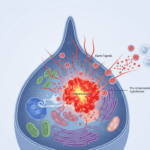
At the cellular level, resistance training creates microscopic tears in muscle fibres and generates mechanical tension that muscle cells interpret as a signal for adaptation. This mechanical stress activates specialised proteins called mechanosensors, which detect physical forces and convert them into biochemical signals. These mechanosensors, including integrins and stretch-activated ion channels, serve as the initial communication link between the physical demands placed on muscle and the cellular responses that follow.
The mechanical stress also disrupts cellular homeostasis, creating an environment where muscle cells must adapt or become less functional. This disruption triggers protective mechanisms and repair processes that ultimately lead to stronger, more resilient muscle tissue. The cellular response is remarkably sophisticated, involving changes in gene expression, protein synthesis, and cellular structure that can persist for hours or even days after a single training session.
Protein Synthesis and Cellular Remodelling
Following resistance exercise, muscle cells dramatically increase their production of new proteins through a process called protein synthesis. This cellular response typically peaks within a few hours after training and can remain elevated for up to 48 hours. The increased protein synthesis serves to repair damaged muscle fibres and build additional contractile proteins, leading to stronger and often larger muscle fibres over time.
The process involves complex signalling pathways, particularly the mechanistic target of rapamycin (mTOR) pathway, which acts as a central regulator of protein synthesis in response to mechanical stress, nutrient availability, and growth factors. When activated, mTOR coordinates the cellular machinery responsible for building new proteins, including ribosomes, which serve as the protein manufacturing centres within cells.
Simultaneously, resistance training influences the balance between protein synthesis and protein breakdown within muscle cells. While protein synthesis increases significantly, the rate of protein degradation also changes, though typically to a lesser degree. This shift in the protein turnover balance favours the accumulation of new contractile proteins, contributing to improvements in muscle strength and size over time.
Mitochondrial Adaptations and Energy Systems
Resistance training also prompts significant changes in cellular energy production systems, particularly within the mitochondria. These cellular powerhouses must adapt to meet the increased energy demands of more frequent and intense muscle contractions. While resistance training is primarily anaerobic, it still stimulates mitochondrial adaptations, though these differ from those seen with endurance exercise.
The mitochondria in resistance-trained muscles become more efficient at producing energy through both aerobic and anaerobic pathways. This includes improvements in the cellular machinery responsible for regenerating adenosine triphosphate (ATP), the primary energy currency of cells. The adaptations help muscle cells recover more quickly between sets and training sessions.
Research has shown that resistance training can increase mitochondrial enzyme activity and improve the muscle’s ability to clear metabolic byproducts such as lactate. These adaptations occur at the cellular level through changes in gene expression that increase the production of key enzymes involved in energy metabolism. The result is muscle cells that are better equipped to handle the metabolic demands of resistance exercise.
Calcium Signalling and Muscle Contraction
The cellular mechanisms controlling muscle contraction also undergo important adaptations with resistance training. Calcium ions play a crucial role in muscle contraction by triggering the interaction between contractile proteins. Resistance training improves the muscle cell’s ability to handle calcium, making contractions more efficient and potentially more powerful.
These adaptations occur within the sarcoplasmic reticulum, a specialised cellular structure that stores and releases calcium ions. With training, the sarcoplasmic reticulum becomes more efficient at both releasing calcium to initiate contraction and reabsorbing it to allow muscle relaxation. This improved calcium handling contributes to enhanced muscle performance and faster recovery between contractions.
The cellular adaptations in calcium signalling also extend to the proteins involved in muscle contraction itself. Resistance training can alter the expression and function of myosin, the motor protein responsible for generating force, as well as the regulatory proteins that control when and how strongly muscles contract. These molecular changes contribute to the increased force-generating capacity seen with resistance training.
Neural Adaptations at the Cellular Level
Resistance training doesn’t only change muscle cells; it also promotes adaptations in the nerve cells that control muscle contraction. Motor neurons, which transmit signals from the brain and spinal cord to muscles, undergo cellular changes that improve their ability to activate muscle fibres effectively.
At the neuromuscular junction, where nerve cells connect to muscle cells, resistance training can strengthen the communication between these two cell types. This includes changes in the release and sensitivity to neurotransmitters, the chemical messengers that allow nerve cells to signal muscle cells to contract. These adaptations contribute to improved muscle coordination and the ability to recruit more muscle fibres during maximal efforts.
The cellular changes in motor neurons also include alterations in their firing patterns and the synchronisation of multiple motor units. These neural adaptations often occur more rapidly than changes in muscle size and are particularly important for the early strength gains seen in new trainees. The improved neural drive to muscles represents a fundamental change in how the nervous system controls movement at the cellular level.
Long-term Cellular Health and Adaptation
The cellular changes induced by resistance training extend far beyond immediate performance improvements, contributing to long-term muscle health and function. Regular resistance exercise helps maintain the cellular machinery necessary for protein synthesis, energy production, and proper muscle function throughout the lifespan. These adaptations become particularly important as we age, when muscle mass and strength naturally decline.
The cellular stress imposed by resistance training also activates protective mechanisms that help muscle cells better cope with various forms of stress and damage. This includes improved cellular repair mechanisms and enhanced resistance to oxidative stress. These adaptations contribute to the preservation of muscle function and may help protect against age-related muscle loss.
Understanding how resistance training changes cells from the inside out reveals the remarkable plasticity of human tissue and the sophisticated mechanisms that allow our bodies to adapt to physical demands. These cellular adaptations underscore the importance of regular physical activity not just for fitness, but for maintaining the fundamental cellular processes that support health throughout life.

Matt Elliott is the editor of Redox News Today, an independent publication covering peer-reviewed research on cellular health, redox signalling, and related biomedical science.