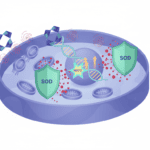

Your liver processes thousands of chemical reactions every single day. Most of them generate free radicals as a byproduct, which means your liver cells face constant oxidative stress. Left unchecked, this damage accumulates and drives liver disease. But here’s what’s interesting: plant compounds called flavonoids appear to give liver cells a specific defence mechanism that evolved long before humans ever studied biochemistry.
What are flavonoids
Flavonoids are a large family of polyphenolic compounds found in plants. Think of them as cellular signalling molecules that plants themselves use to manage oxidative stress from sunlight and environmental toxins. When you eat plants rich in flavonoids—berries, citrus, tea, dark chocolate, red wine—these compounds survive digestion well enough to reach your bloodstream and eventually your liver cells.
The liver is where flavonoids get metabolised and where they appear to do most of their protective work. Unlike generic “antioxidants,” flavonoids don’t just neutralise free radicals through simple chemistry. They actually interact with cellular signalling pathways. They activate transcription factors like NRF2, which acts as a master switch for antioxidant defence genes. They also modulate other signalling cascades that influence inflammation, cell survival, and detoxification enzyme production.
Different flavonoid subclasses work slightly differently. Catechins from green tea behave differently from anthocyanins in blueberries, which work differently from quercetin in apples. This specificity matters because it explains why you can’t just pick one flavonoid and expect it to solve everything.
What the research shows
Cell culture studies consistently demonstrate that flavonoids reduce oxidative damage markers in hepatocytes exposed to toxins or stress. Researchers expose liver cells to hydrogen peroxide or other oxidative stressors, add flavonoids, and measure downstream outcomes. They observe decreased lipid peroxidation, reduced protein carbonylation, and improved mitochondrial function. The effect appears dose-dependent, meaning more flavonoid exposure generally produces stronger protection up to a point.
Animal studies go further. Mice and rats fed flavonoid-rich diets show lower liver damage when exposed to hepatotoxins like acetaminophen or alcohol. Their livers produce more antioxidant enzymes like superoxide dismutase and catalase. Inflammatory markers decrease. Liver fibrosis development slows in models of chronic injury. The liver tissue itself shows better structural preservation and fewer signs of cell death.
Human observational research suggests people who consume flavonoid-rich foods have lower rates of liver disease, though establishing causation remains difficult. Dietary intake of flavonoids correlates with better liver enzyme profiles and lower cirrhosis risk in large cohort studies. The relationship holds across different populations and dietary patterns.
What’s notable is that the protection appears to extend beyond simple antioxidant chemistry. Flavonoids suppress inflammatory signalling pathways that damage liver tissue. They influence autophagy, the cellular cleaning process that removes damaged components. Some flavonoids activate sirtuins, proteins involved in cellular stress response and longevity pathways.
Why cells need this
The liver performs roughly 500 distinct metabolic functions. Its job is to transform potentially toxic molecules into forms the body can eliminate. This detoxification work generates enormous amounts of free radicals as a side effect. Oxidative stress isn’t a malfunction in liver cells; it’s an inevitable consequence of their actual work.
Liver cells evolved multiple layers of defence against this damage. They manufacture their own antioxidant enzymes. They contain high concentrations of glutathione, the cell’s primary defence molecule. They possess sophisticated DNA repair machinery. But these endogenous systems have limits. During periods of high metabolic demand, prolonged toxin exposure, or ageing, this internal capacity deteriorates.
This is where dietary compounds become relevant. Plants make flavonoids partly to protect themselves from oxidative stress. When herbivores eat plants, they acquire these protective compounds. The evolutionary logic is straightforward: any metabolic system that processes foreign chemicals and generates oxidative stress benefits from having multiple layers of defence. Flavonoids represent an external reinforcement to internal systems that can become overwhelmed.
What affects flavonoid protection
The amount of flavonoids you consume matters, obviously, but it’s not the only variable. Your individual genetics influence how efficiently you metabolise flavonoids. Some people carry genetic variants in enzymes responsible for processing these compounds, which changes how much active flavonoid reaches your liver cells.
Age affects the response. Older liver tissue generally shows reduced antioxidant capacity and less responsive signalling pathways. Flavonoids still provide protection in aged animals, but the magnitude of effect appears smaller. This might partly explain why dietary antioxidants seem more protective at preventing disease than reversing established damage.
Your existing metabolic state influences flavonoid effectiveness. Someone with alcohol-induced liver disease, non-alcoholic fatty liver disease, or chronic viral hepatitis has compromised hepatocytes with reduced capacity to activate protective genes. Flavonoids still reduce damage, but the starting point matters. Someone with healthy liver function gains benefit from maintaining that health; someone with damaged liver faces a larger deficit to overcome.
What you eat alongside flavonoids affects bioavailability. Fat improves absorption of lipophilic flavonoid compounds. Certain bacteria in your gut microbiome metabolise flavonoids into more readily absorbed forms. Your overall diet pattern, nutrient status, and even stress levels influence how effectively these compounds work.
What remains unknown
The optimal dose range for human flavonoid intake remains unclear. Cell culture and animal studies use concentrations that don’t directly translate to realistic human consumption. We don’t know whether consuming high amounts of flavonoids produces better outcomes than moderate amounts, or whether there’s a plateau effect. Most dietary studies are observational, making it impossible to definitively separate flavonoid benefits from overall diet quality.
The specificity question deserves more research. Which flavonoid subclasses best protect which liver cell types under which conditions? Do different flavonoids work synergistically in combination? Does the ratio of different flavonoid types matter? Most research treats flavonoids as a general category, but they’re biochemically diverse compounds with distinct mechanisms.
Long-term human studies would help establish whether flavonoid consumption actually prevents liver disease or merely improves intermediate markers. We also don’t fully understand how flavonoid metabolism changes across the lifespan, in disease states, or under chronic stress. The role of gut microbiota in flavonoid bioavailability needs clarification too. Different microbiota compositions might dramatically affect how much active compound reaches liver cells.
Finally, researchers haven’t thoroughly characterised what happens with very high flavonoid consumption. At some point more isn’t better, but the threshold and the mechanism of any negative effects remain poorly defined.
What emerges from this research is a picture of liver cells as metabolic engines that necessarily generate oxidative stress during normal operation. They possess remarkable internal defences, but these systems respond positively to external reinforcement from plant compounds. Understanding how flavonoids activate cellular protection pathways points toward broader principles of how cells maintain homeostasis under metabolic pressure.

Matt Elliott is the editor of Redox News Today, an independent publication covering peer-reviewed research on cellular health, redox signalling, and related biomedical science.