A marathon runner’s cells face a very different kind of stress than a weightlifter’s. Both athletes generate oxidative stress during training, but their cellular response systems activate in distinctly different ways. The key lies in how various forms of exercise trigger NRF2, the master regulator of cellular defence.
What is NRF2 activation through exercise
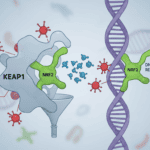
NRF2 stands for Nuclear factor erythroid 2-related factor 2. Think of it as your cell’s emergency coordinator. Under normal conditions, NRF2 sits quietly in the cytoplasm, bound to a protein called KEAP1 that keeps it inactive. When oxidative stress hits, KEAP1 releases its grip.
Free NRF2 then rushes into the cell nucleus and binds to DNA sequences called antioxidant response elements. This triggers the production of over 250 protective proteins. These include glutathione, catalase, and superoxide dismutase – the cell’s primary antioxidant enzymes.
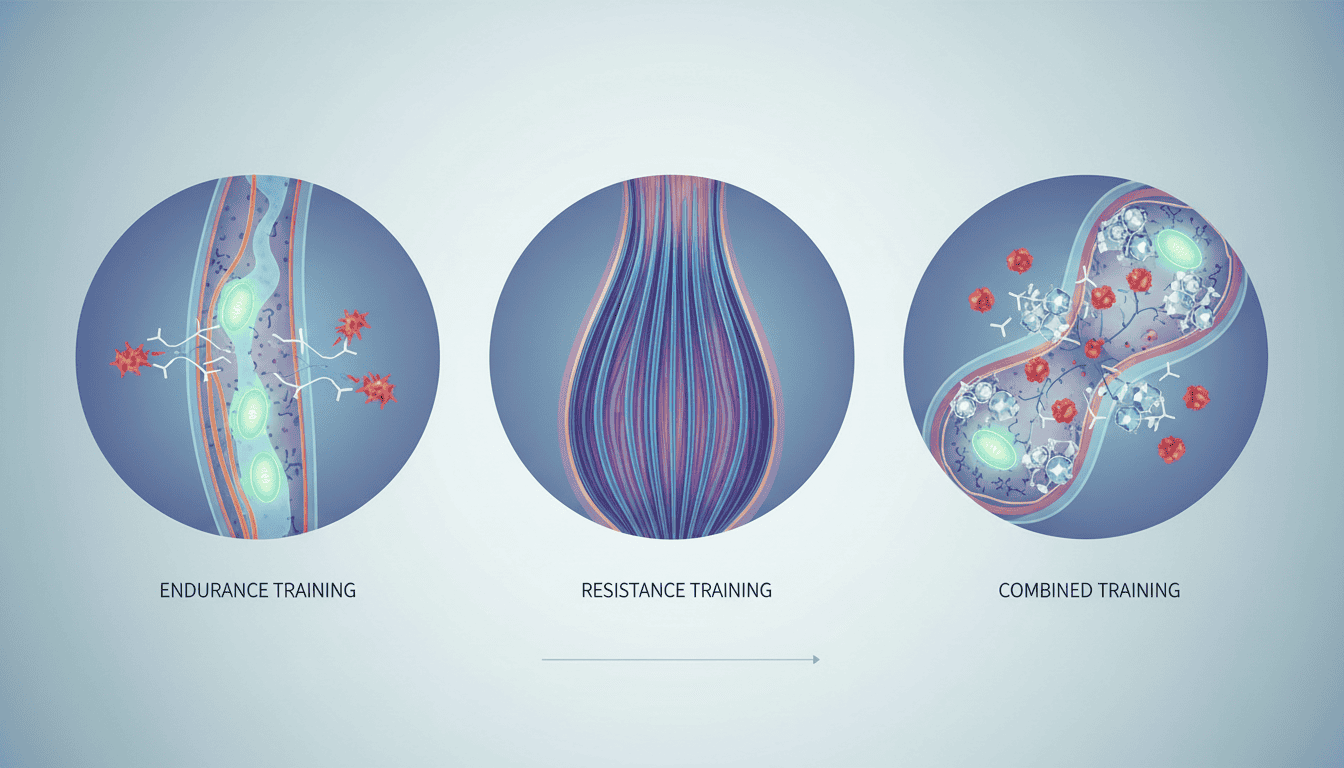
Exercise creates oxidative stress as muscles consume oxygen rapidly and mitochondria work overtime. But different types of physical activity create distinct patterns of cellular stress. Endurance training floods cells with sustained, moderate oxidative pressure. Resistance training delivers intense, short bursts. High-intensity intervals create rapid cycles of stress and recovery.
Each pattern appears to activate NRF2 through slightly different molecular pathways, leading to varying defensive responses.
What the research shows
Studies comparing exercise modalities reveal striking differences in how NRF2 responds. Endurance athletes show elevated baseline NRF2 activity even at rest. Their cells maintain higher levels of antioxidant enzymes, suggesting chronic adaptation to sustained oxidative stress.
Resistance training produces different results. Weightlifters show dramatic spikes in NRF2 activation immediately after training sessions, but this response fades quickly. The pattern mirrors the intense, intermittent nature of strength training itself.
High-intensity interval training creates perhaps the most complex NRF2 response. Researchers observe rapid cycling between oxidative stress and recovery phases. This appears to train the NRF2 system to respond more quickly and efficiently to cellular threats.
Sprint training activates NRF2 differently again. The explosive nature of sprinting creates massive, brief oxidative loads. Cells respond by rapidly ramping up NRF2 activity, then maintaining elevated defences for hours afterward.
Even within endurance training, intensity matters. Moderate steady-state cardio produces gradual, sustained NRF2 activation. Tempo runs and threshold training create sharper spikes in activity that persist longer than expected.
Why cells need this adaptive response
Evolution shaped this system over millions of years. Our ancestors faced varied physical challenges requiring different metabolic responses. Persistence hunting demanded sustained energy output. Escaping predators required explosive power. Carrying heavy objects needed strength endurance.
Each scenario created unique oxidative stress patterns. Cells that could adapt their defensive responses to match these patterns survived better. This explains why NRF2 doesn’t simply turn on or off – it modulates its response to match the type of challenge.
The adaptive benefit extends beyond immediate protection. Different NRF2 activation patterns prepare cells for similar future stresses. Endurance training primes the system for sustained oxidative loads. Interval training enhances rapid response capability.
This cellular memory helps explain why athletes perform better in their trained modalities. Their NRF2 systems become specialists, optimised for specific stress patterns.
What affects NRF2 response to exercise
Age significantly influences how exercise activates NRF2. Younger individuals show more dramatic responses to all exercise types. Older adults still activate NRF2 through exercise, but the magnitude and duration of response typically diminish.
Training status matters enormously. Untrained individuals show large NRF2 spikes even from moderate exercise. Well-trained athletes need higher intensities or volumes to achieve similar activation levels. Their systems adapt to routine stress.
Nutrition timing affects the response. Exercising in a fasted state appears to enhance NRF2 activation across all modalities. The absence of dietary antioxidants may force cells to rely more heavily on their internal defence systems.
Environmental factors play a role too. Heat stress amplifies NRF2 activation during exercise. Cold exposure creates different activation patterns. Altitude training combines hypoxic stress with exercise stress, creating unique NRF2 responses.
Recovery time between sessions influences how exercise affects NRF2. Insufficient recovery blunts the adaptive response. Too much recovery allows the system to return to baseline, reducing training adaptations.
What remains unknown
Scientists still puzzle over optimal exercise prescriptions for NRF2 activation. The dose-response relationship varies enormously between individuals. Some people show robust NRF2 responses to modest exercise loads while others need extreme stimuli.
The interaction between different exercise types remains unclear. Does combining endurance and resistance training enhance or interfere with NRF2 responses? Current research suggests complex interactions that researchers are still mapping.
Long-term adaptations present another mystery. Some studies suggest that chronic exercise eventually blunts NRF2 responses as cells become more efficient at handling oxidative stress. Others indicate that well-trained individuals maintain enhanced NRF2 sensitivity throughout their careers.
The role of genetics in exercise-induced NRF2 activation needs more investigation. Certain genetic variants appear to influence both baseline NRF2 activity and responsiveness to exercise stress.
Individual variation in NRF2 responses to exercise reveals something profound about human cellular biology. Our cells don’t just respond to physical stress – they learn from it, adapting their defensive strategies based on the specific challenges we face. This suggests that the type of exercise we choose shapes not just our fitness, but the fundamental way our cells protect themselves from damage. Understanding these patterns brings us closer to comprehending how physical activity influences cellular health at the molecular level.

Matt Elliott is the editor of Redox News Today, an independent publication covering peer-reviewed research on cellular health, redox signalling, and related biomedical science.