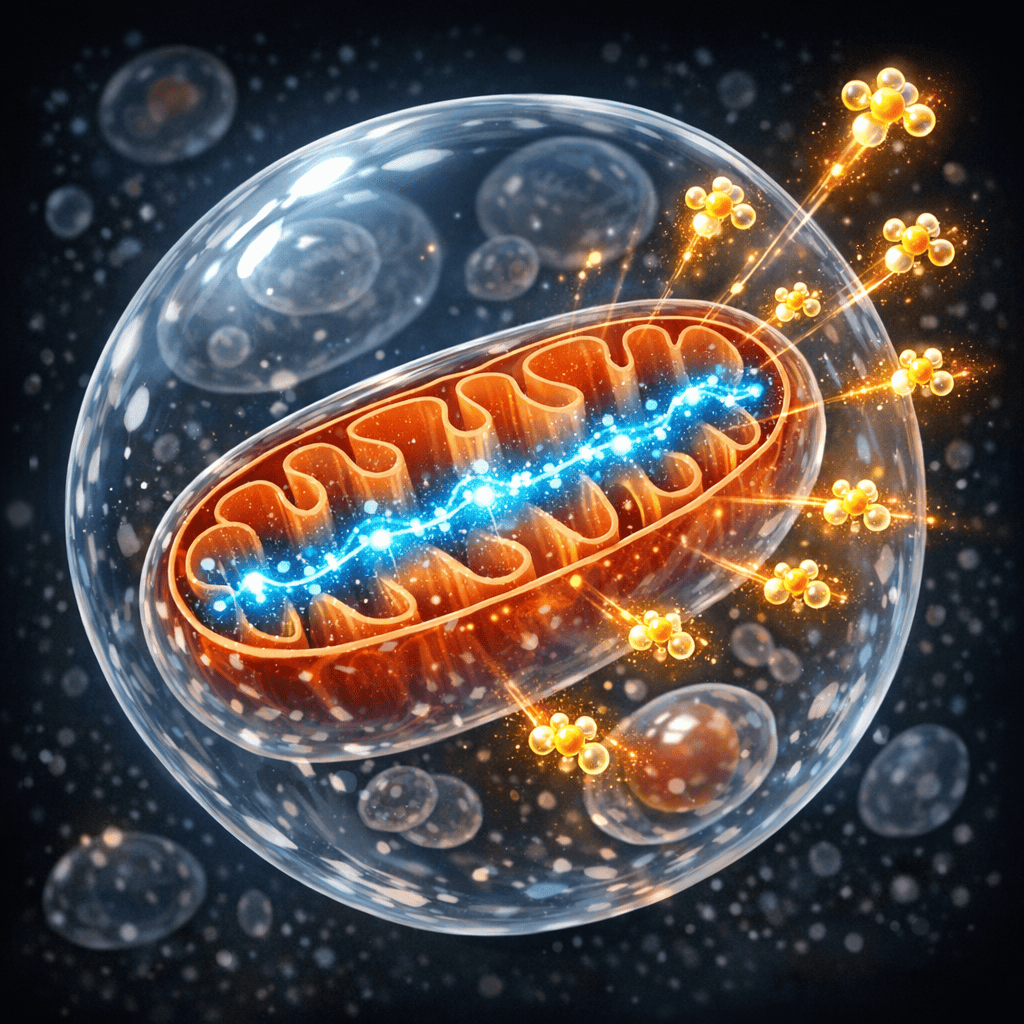
Your muscles are burning through energy right now, even as you sit reading this. That constant energy supply depends on mitochondria, the cellular power plants. But here’s the thing: mitochondria don’t stay as neat, isolated structures. They constantly fuse together and split apart. And one protein, called Drp1, acts like the scissors in this scissors-and-tape operation, constantly reshaping the mitochondrial network. When Drp1 goes wrong, muscle cells struggle.
What is Drp1
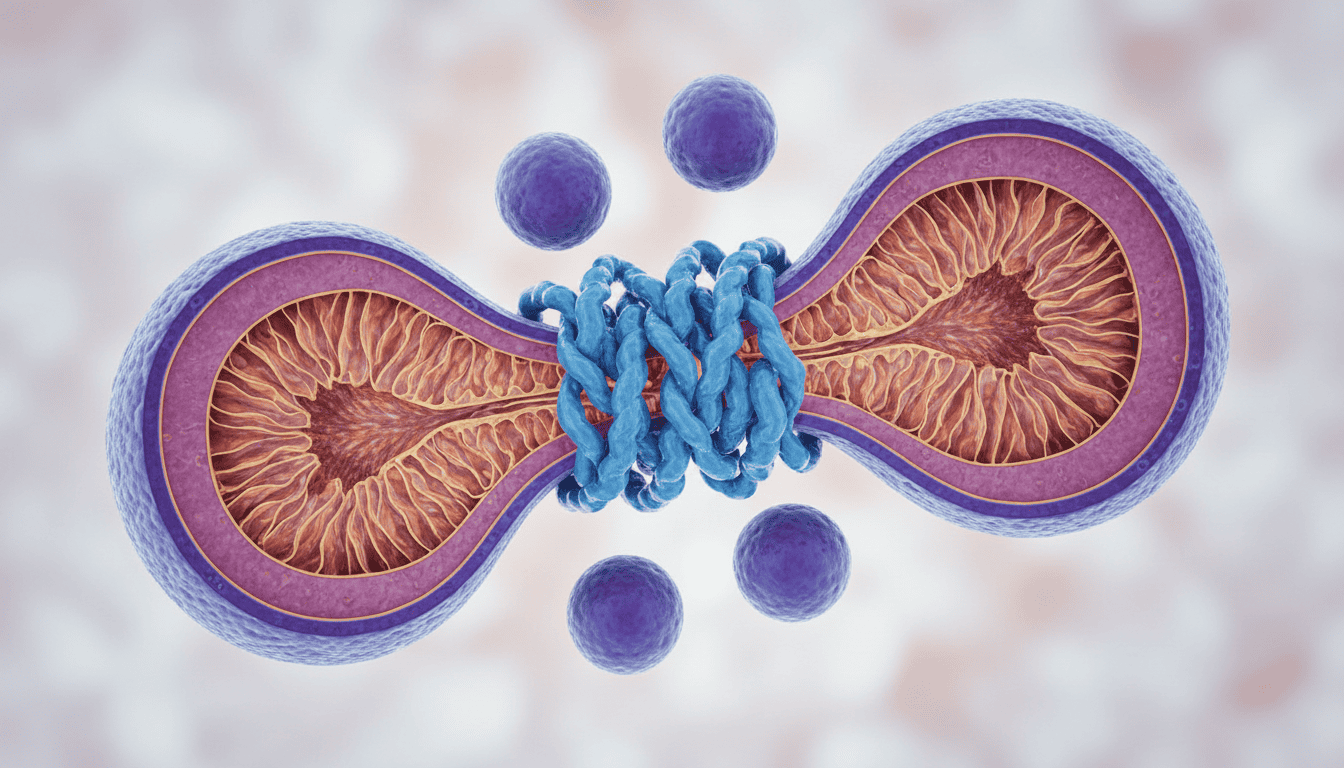
Drp1 stands for dynamin-related protein 1, though that name tells you almost nothing useful. Think of it as a molecular machine that sits on the outer membrane of mitochondria and pinches them in two. The protein wraps around a mitochondrion like a tourniquet, then tightens until the organelle splits into smaller pieces.
This process is called fission, and it’s not some random event. Drp1 recognises signals from the cell telling it when fragmentation is needed. Low energy, oxidative stress, or damaged mitochondrial regions all trigger Drp1 into action. The protein then recruits other machinery to complete the division. In skeletal muscle cells, which demand enormous quantities of ATP, Drp1 activity becomes absolutely critical to maintaining functional mitochondrial networks.
The opposite process, fusion, is handled by different proteins. Together, fission and fusion let cells dynamically reshape their mitochondrial population. When conditions favour it, mitochondria can merge into long filaments. When stress arrives, they fragment into smaller units. Drp1 is the gatekeeper of that fragmentation response.
What the research shows
Scientists have observed that Drp1 activity directly correlates with muscle function across multiple experimental systems. When researchers artificially increase Drp1 levels in muscle cells, mitochondria fragment more readily and cells maintain better energy production under stress. The opposite holds true: reducing Drp1 causes mitochondrial networks to become elongated and bloated. These cells then show impaired ATP generation and reduced capacity to handle metabolic demands.
In animal studies, mice engineered to lack functional Drp1 in skeletal muscle exhibit severe problems. Their muscle mitochondria become abnormally fused and swollen. The muscles tire quickly and accumulate damaged mitochondrial components that the cell can’t efficiently remove. Over time, these animals develop muscle weakness and metabolic dysfunction.
Research also reveals that Drp1 activity changes with exercise. During and after physical activity, muscle cells increase Drp1 signalling, suggesting the protein helps muscles adapt to increased energy demand. This dynamic regulation appears to be essential for the adaptive response that makes muscles stronger and more efficient with training.
Why cells need this
From an evolutionary perspective, the fission machinery in Drp1 solves a real problem. Mitochondria accumulate damage over time. Some sections develop mutations, lose their capacity to generate energy, or start leaking electrons that create harmful reactive oxygen species. If a mitochondrion stayed large and fused with others, the damage would spread.
By fragmenting mitochondria, Drp1 lets cells isolate the damaged sections. The cell can then target these broken organelles for selective destruction, a process called mitophagy. This quality control system keeps the mitochondrial population healthy and functional. In muscles, which work continuously and demand reliable energy supply, this quality control becomes essential.
The fission and fusion cycle also allows cells to respond rapidly to changing energy demands. When energy is plentiful, fused mitochondrial networks provide steady baseline function. When demand surges, fragmentation allows faster reorganisation and more efficient ATP production. Skeletal muscle, subject to enormous variation in workload throughout the day, depends on this flexibility.
What affects Drp1
Age clearly influences Drp1 function. As organisms age, Drp1 activity tends to decline and mitochondrial fission becomes less efficient. This contributes to age-related muscle weakness, a condition called sarcopenia. Older muscle cells struggle to maintain clean mitochondrial populations because they’re fragmenting damaged organelles less effectively.
Exercise exerts the opposite effect. Regular physical training increases Drp1 signalling and maintains robust fission capacity in muscle. This is one mechanism by which exercise protects muscles from ageing. Conversely, sedentary lifestyles allow Drp1 activity to drift downward, accelerating mitochondrial dysfunction.
Nutritional and metabolic states also regulate Drp1. When cells are energy-depleted, they activate signalling pathways that increase Drp1 activity, fragmentation increases, and quality control improves. Conversely, stable energy states may favour fusion. Glucose availability, lipid metabolism, and amino acid status all appear to tune Drp1 activity, allowing cells to match mitochondrial structure to metabolic conditions.
Environmental stress touches this system too. Heat stress, oxidative stress, and various toxins all trigger upregulation of Drp1, suggesting the cell recognises these threats and activates defensive fragmentation. Chronic stress that exceeds the cell’s ability to manage might exhaust this response, leaving mitochondrial networks damaged.
What remains unknown
Scientists still don’t fully understand the detailed signalling cascades that control when Drp1 gets activated. We know various cellular stresses trigger it, but the complete map of sensors and signal transduction pathways remains incomplete. Different muscle fibre types respond differently to the same stimuli, suggesting Drp1 regulation varies, but researchers are still mapping those differences.
The relationship between Drp1 activity and muscle performance in humans is also underexplored. Most knowledge comes from animal models and cell culture. Whether the same Drp1 regulation mechanisms that matter in mice translate directly to human physiology during ageing and exercise is still being determined.
There’s also genuine uncertainty about whether manipulating Drp1 could represent a useful approach to combating muscle-related conditions. The protein operates in such a complex system that simply increasing or decreasing it might have unintended consequences. Understanding those tradeoffs will require more research.
The field is moving toward understanding Drp1 not as an isolated regulator, but as one player in a larger game of mitochondrial quality control and energy homeostasis. Every new study reveals more connections to other cellular systems. That expanding picture makes the science more interesting but also more challenging to fully comprehend.

Matt Elliott is the editor of Redox News Today, an independent publication covering peer-reviewed research on cellular health, redox signalling, and related biomedical science.