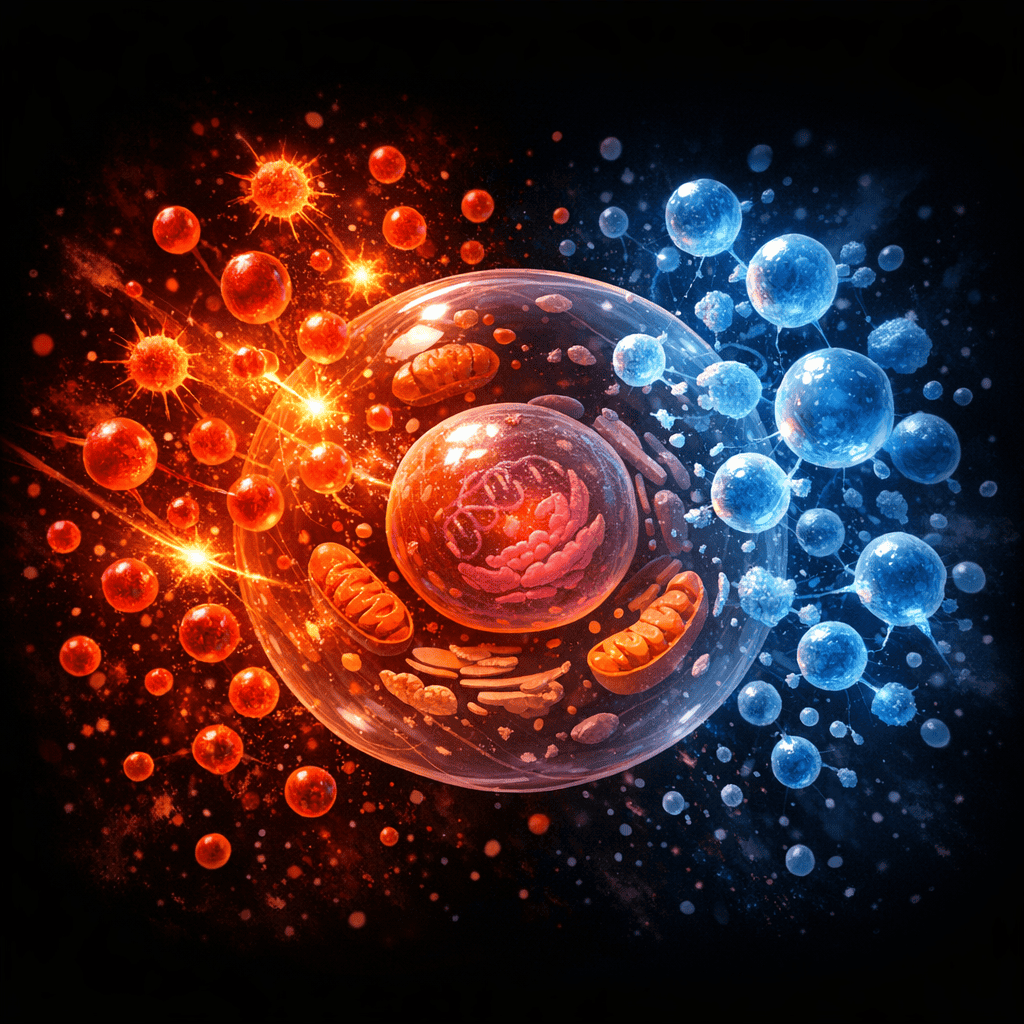

Your cells are burning fuel right now. Depending on what you ate for breakfast, that fuel is either glucose or fat. This choice matters more than most people realise, because different fuel sources create different amounts of cellular damage in the form of free radicals. In people managing diabetes, this distinction becomes a potential lever for controlling one of the most destructive processes happening inside their bodies: oxidative stress.
What is oxidative stress
Oxidative stress happens when cells produce too many free radicals and cannot neutralise them fast enough. Free radicals are unstable molecules with unpaired electrons that rip electrons from other molecules to stabilise themselves. This creates a chain reaction of damage. Cell membranes get punctured. DNA gets mutated. Proteins stop functioning properly. The cell’s machinery rusts from the inside out.
Your cells do have defences. Enzymes like superoxide dismutase and catalase act like cellular cleanup crews, converting free radicals into harmless water and oxygen. Antioxidants like glutathione patrol the cytoplasm hunting for stray radicals. But when free radical production outpaces these defence systems, oxidative stress wins. Over time, this imbalance contributes to inflammation, tissue damage, and accelerated ageing of organs.
In diabetes, the problem intensifies. High blood glucose generates extra free radicals through multiple pathways simultaneously. Mitochondria churn out more radicals when they burn excess sugar. Advanced glycation end products (AGEs) form when glucose attaches to proteins and create additional oxidative stress. The result is a vicious cycle: high blood sugar creates more free radicals, which damages cells and worsens metabolic dysfunction, which makes blood sugar control harder.
What the research shows
When people shift to ketogenic diets, the metabolic picture changes substantially. Instead of relying on glucose, cells burn ketones and fatty acids for energy. Research on these metabolic states reveals something interesting: ketone metabolism produces fewer free radicals per unit of energy generated compared to glucose metabolism.
Studies have observed that ketone bodies appear to have direct antioxidant properties. Beta-hydroxybutyrate, the most abundant ketone, seems to work like a signalling molecule, activating cellular defence pathways without consuming the cell’s main antioxidant machinery. Animal models show reduced oxidative stress markers in tissues when ketones become the primary fuel source. Blood measurements of oxidative damage (like malondialdehyde and protein carbonyls) decline during ketogenic feeding.
In people with diabetes specifically, ketogenic approaches have shown reductions in inflammatory markers and improved glycaemic control. The oxidative stress pathway appears to quieten down when blood glucose stabilises. Fewer glucose spikes mean fewer radical-generating events. The body’s own antioxidant enzymes get a break and can actually accumulate to higher levels.
Brain and liver tissue seem particularly responsive. These organs suffer especially from oxidative damage in diabetes, and research suggests they show the most dramatic shifts in oxidative stress markers when carbohydrate restriction begins. Mitochondrial function appears to improve, meaning the powerhouses of the cell generate energy more efficiently and produce fewer toxic byproducts.
Why cells need this
Evolution shaped our metabolism to handle fuel scarcity. For most of human history, carbohydrates were not reliably available. Our bodies developed sophisticated machinery to shift between fuel sources: glucose when food was plentiful, fat and ketones when it was scarce. This metabolic flexibility is not a quirk or a backup plan. It is a core survival mechanism.
The reason ketone metabolism generates less oxidative stress makes biochemical sense. Ketones enter the mitochondria through a different pathway than glucose. They bypass some of the glucose-specific steps that generate free radicals. More importantly, ketone metabolism appears to optimise the electron transport chain, the mitochondrial system that produces energy. When optimised, fewer electrons escape the chain and become free radicals.
For someone with diabetes, this matters because their glucose metabolism is already compromised. The normal regulatory systems that keep blood sugar stable have failed or degraded. By shifting fuel sources, cells can function in a state of lower metabolic chaos. The signalling goes quieter. The cellular damage rate drops.
What affects this response
The magnitude of oxidative stress reduction varies between individuals based on several factors. How severe the diabetes is matters. Someone with mild glucose dysregulation might see modest changes in oxidative stress markers. Someone with advanced diabetes might see dramatic shifts because their baseline oxidative stress is so much higher.
Duration of ketogenic feeding influences the response. Initial changes happen quickly, sometimes within days as cells shift their fuel preference. But deeper adaptations take weeks or months. Mitochondrial enzyme expression changes. The antioxidant system upregulates. These take time to manifest.
Genetic background plays a role too. Some people’s cells are more efficient at using ketones. Some have naturally higher antioxidant capacity. Age matters. Older cells often struggle more with metabolic switching, though they also stand to gain more from reducing oxidative stress since accumulated damage is a hallmark of ageing.
Importantly, ketogenic diet composition affects the outcome. A diet high in inflammatory seed oils will not produce the same antioxidant benefits as one emphasising whole fat sources. Physical activity status influences oxidative stress independently of diet. So does sleep quality, which affects mitochondrial function and free radical production.
What remains unknown
The precise mechanisms connecting ketones to antioxidant signalling pathways are still being mapped. Researchers know ketones activate certain defence genes, but which ketone bodies do this, and which receptors they bind to, is an active area of investigation. The picture is getting clearer but remains incomplete.
Long-term effects remain understudied in humans. Most research runs for weeks or months. What happens to oxidative stress pathways after years of ketogenic feeding? Do the benefits persist or plateau? Do different tissues respond differently over time? These questions need answers before we fully understand the long-term implications.
Individual variability is significant but poorly predicted. We cannot yet tell which people will respond robustly to ketogenic approaches and which will see modest changes. Biomarkers that predict responders do not exist yet. Understanding this variability would help match interventions to people more effectively.
The relationship between ketone metabolism and specific complications of diabetes needs more work too. Does reducing oxidative stress through ketogenic feeding specifically protect the eyes, kidneys, and nerves? Or do the benefits distribute across all tissues equally? Research is beginning to address this, but definitive answers remain elusive.
The bigger picture emerging from cellular biology is that fuel choice shapes cellular destiny. What your cells burn determines how they age, how much damage accumulates, and how well their defences function. In diabetes, where metabolic control has broken down, restoring metabolic flexibility by shifting fuel sources offers a way to reduce one of the most destructive processes happening inside the body. Understanding exactly how this works at the molecular level remains a rich frontier for research into how we might support cellular health.

Matt Elliott is the editor of Redox News Today, an independent publication covering peer-reviewed research on cellular health, redox signalling, and related biomedical science.