
A patient walks into a clinic with normal blood pressure and no chest pain. Their lipid levels look acceptable. Yet their cells are drowning in free radicals, a molecular chaos that will eventually corrode their arterial walls. Traditional blood tests miss this entirely. But machine learning algorithms, trained on thousands of molecular profiles, are starting to detect the fingerprints of oxidative stress long before a cardiologist could.
What is oxidative stress
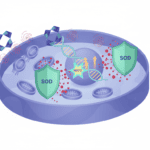
Your cells produce energy through chemical reactions that generate free radicals as waste products. These are molecules missing an electron, which makes them desperate and reactive. Normally, your body neutralises them with antioxidants like superoxide dismutase and glutathione. When free radicals outnumber your defences, oxidative stress takes hold.
In the cardiovascular system, this matters because free radicals attack the proteins that line blood vessel walls and damage the lipids in your bloodstream. They trigger inflammatory responses that weaken arterial structure. Over time, oxidative stress drives atherosclerosis forward. The problem is detecting it early. Your body leaves traces: modified proteins, damaged lipids, altered enzyme activity patterns. These traces exist in blood samples, but they’re buried in noise.
What the research shows
Researchers have started feeding machine learning systems data from patients with known cardiovascular disease alongside healthy controls. The algorithms look for patterns in biomarkers like oxidised LDL, malondialdehyde (a lipid peroxidation product), protein carbonyls, and markers of antioxidant enzyme activity. What’s remarkable is that AI systems can identify combinations of these markers that humans might never think to check together.
In recent studies, machine learning models trained on oxidative stress biomarkers have shown they can predict future cardiovascular events better than traditional risk scores. Not perfectly, but with enough accuracy to distinguish high risk individuals from low risk ones. The algorithms excel at recognising subtle patterns across multiple biomarkers simultaneously, something that would take a human researcher weeks to spot manually.
One finding that stands out: certain oxidative stress signatures appear in people without obvious risk factors. These individuals might have genetic variations that affect their antioxidant defence systems, or lifestyle factors that aren’t captured in routine questionnaires. AI picked up these hidden patterns by comparing thousands of samples.
Why cells need this detection
Oxidative stress is one of several mechanisms driving cardiovascular disease, alongside inflammation, dyslipidaemia, and hypertension. It’s not the only culprit, but it’s an early warning signal. If we could reliably detect oxidative stress before it causes visible arterial damage, we could intervene during the preventable stages of disease.
The biological logic is straightforward: cells evolved systems to monitor their own health and respond to threats. When oxidative stress becomes chronic, it shifts cells toward dysfunction. Blood vessels lose their ability to dilate properly. Immune cells become hyperactive. Atherosclerotic plaques accumulate. Early detection gives physicians a window to work with.
This is why researchers are interested in biomarkers at all. They’re windows into cellular processes that ultrasound and ECGs can’t see. A biomarker is essentially evidence that something harmful is already happening at the molecular level, even when tissue damage hasn’t yet appeared.
What affects oxidative stress
Several factors determine your oxidative stress burden. Smoking floods the bloodstream with free radicals directly. Poor diet, especially one high in ultra-processed foods and low in plant compounds, deprives cells of antioxidants while simultaneously generating more oxidative damage. Physical inactivity reduces your body’s ability to mount antioxidant defences.
Ageing is a powerful driver. Your mitochondria become less efficient over time and produce more free radical byproducts. Simultaneously, your antioxidant systems decline. This is why cardiovascular disease accelerates with age despite similar lifestyle habits.
Environmental exposures matter too. Air pollution, particularly fine particulates, enters the bloodstream and triggers oxidative stress responses. High stress and poor sleep quality impair antioxidant enzyme activity. Even certain medications and some infections can shift the oxidative balance.
Machine learning systems need to account for these variables when identifying oxidative stress signatures. An algorithm trained only on sedentary patients might miss the oxidative stress pattern that appears in active smokers. This is why researchers use data from diverse populations and try to ensure their training sets reflect real-world complexity.
What remains unknown
The biggest open question is whether detecting oxidative stress biomarkers actually changes outcomes. Finding a pattern is one thing; using it to prevent disease is another. We need long-term studies showing that people identified as high risk by AI, who then receive interventions, actually experience fewer heart attacks and strokes.
We also don’t fully understand which oxidative stress markers matter most for predicting cardiovascular events. Different markers reflect different aspects of cellular damage. Some appear early, others only in advanced disease. AI can identify statistical associations, but the biological meaning isn’t always clear.
There’s genuine uncertainty about how stable these biomarker signatures are over time. Do they fluctuate daily? Do they change with seasons? How quickly do they respond to lifestyle changes? These practical questions matter if oxidative stress biomarkers are going to become part of routine health monitoring.
Finally, we’re still working out how to validate AI predictions in independent populations. An algorithm that works brilliantly in the dataset it learned from often performs worse in new populations with different characteristics. Making oxidative stress detection reliable across diverse groups remains an active challenge.
The deeper significance here is that oxidative stress biomarkers represent a shift in how we approach cardiovascular disease: from waiting for damage to appear on imaging, to detecting cellular dysfunction early. Machine learning accelerates this shift by finding hidden patterns in the molecular noise that surrounds us. Whether these patterns become clinically useful depends on research that’s still underway.

Matt Elliott is the editor of Redox News Today, an independent publication covering peer-reviewed research on cellular health, redox signalling, and related biomedical science.