Imagine a hallway where packages get delivered. Most of the time, the system works fine. But sometimes a package gets stuck, then another, then another. The hallway backs up. The workers get stressed. The whole delivery system starts to malfunction. That’s roughly what happens in cystinuria, a genetic disorder where the amino acid cystine accumulates inside cells because the transport machinery that normally clears it breaks down. Now researchers are finding that natural antioxidants might help cells cope with the oxidative stress this buildup creates.
What is cystinuria and why oxidative stress matters
Cystinuria sounds obscure, but it’s rooted in a straightforward problem. The body needs special transporters in cell membranes to move cystine (the oxidised form of the amino acid cysteine) in and out of cells. When those transporters don’t work properly due to genetic mutations, cystine accumulates to dangerous levels. Inside the cell, this buildup triggers a cascade of metabolic problems. One major consequence is oxidative stress. The cystine-laden cells begin generating excessive reactive oxygen species, or ROS. These are chemically unstable molecules that ricochet through the cell, damaging proteins, fats, and DNA in their wake.
The body does produce its own antioxidant defences. Enzymes like catalase and superoxide dismutase work constantly to neutralise ROS before they cause harm. But when oxidative stress becomes severe, those natural systems get overwhelmed. That’s where external antioxidants, particularly those from plant sources, enter the picture. Researchers have noticed that certain natural compounds might bolster the cell’s ability to handle this oxidative load.
What the research shows
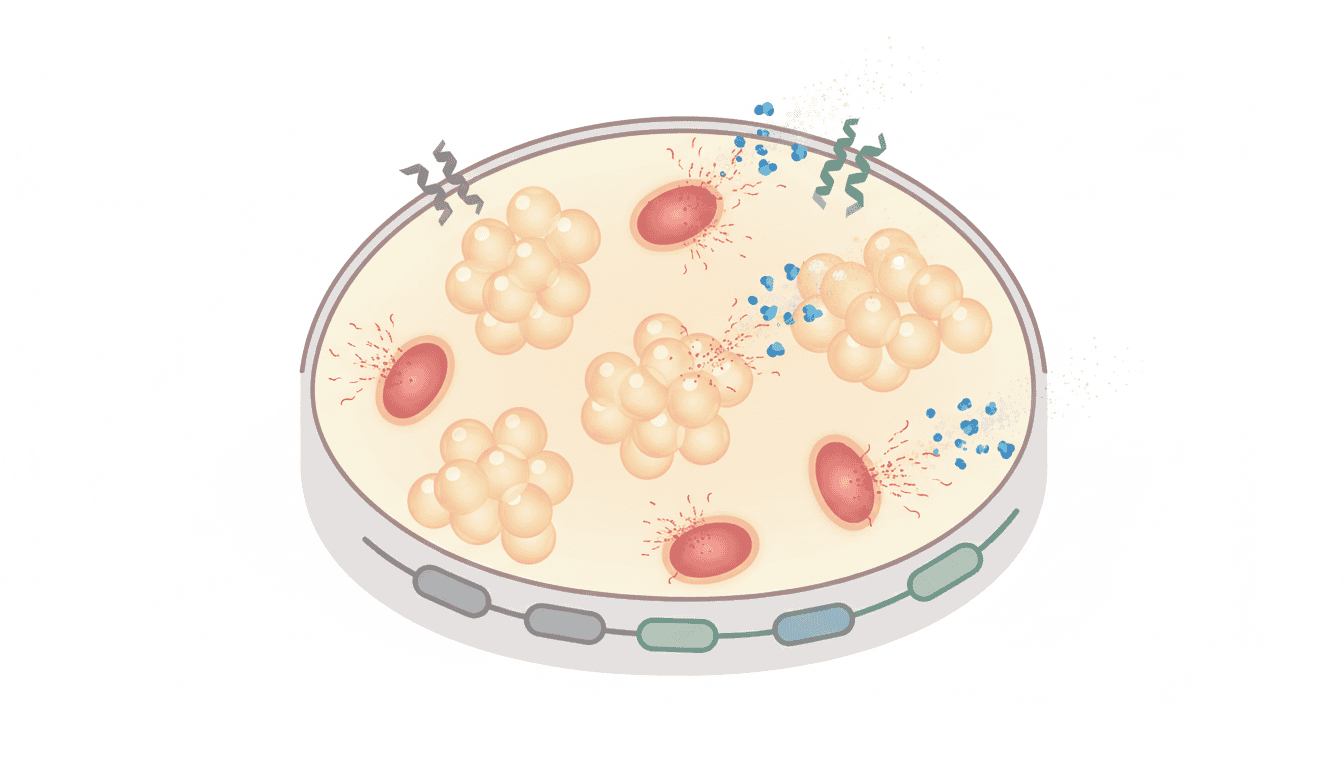
Studies examining cells affected by cystinuria have documented something interesting. When researchers expose these cells to natural antioxidants such as polyphenols, flavonoids, or vitamin E, the cells show measurable improvements in oxidative stress markers. ROS levels drop. Markers of cellular damage decrease. The cells maintain better membrane integrity and mitochondrial function.
One consistent observation is that these antioxidants don’t directly fix the underlying transport problem. The broken transporter still doesn’t work. Cystine still accumulates. What changes is how well the cell tolerates that accumulation. Think of it as giving the stressed workers better protective equipment rather than fixing the broken delivery system. The cells can function longer and more effectively under duress.
Research has also shown that different antioxidant sources have varying potency. Some plant extracts outperform others, and the mechanism isn’t always clear. This suggests that understanding which specific compounds do the most work remains an open question. Preliminary work indicates that antioxidants may work partly by stabilising cellular signalling pathways that coordinate the cell’s own defence response, particularly pathways like NRF2 that activate protective genes when oxidative stress is detected.
Why cells need this defence mechanism
The presence of sophisticated antioxidant defences in all cells points to something fundamental about biology. Reactive oxygen species aren’t just waste products. They’re actually generated during normal metabolism, especially during energy production in mitochondria. Evolution shaped cells to expect this challenge. Every cell has built-in antioxidant systems.
But those systems evolved for normal metabolic stress, not for the sustained cystine accumulation seen in cystinuria. The disorder pushes oxidative stress to abnormal levels. Cells can adapt somewhat, upregulating their own antioxidant production and increasing expression of stress-response proteins. External antioxidants may provide a buffer that gives the cell’s adaptation mechanisms time to activate and maintain the balance.
There’s also evidence that excessive ROS interferes with signalling pathways that normally coordinate cellular processes. Antioxidants might help restore these signalling conversations, allowing cells to communicate more clearly about their metabolic state and activate appropriate survival responses. This is why the effect of antioxidants often extends beyond simple ROS neutralisation.
What affects the antioxidant response
Several factors influence how effectively antioxidants work in cells dealing with cystinuria-related stress. Age matters. Younger cells generally maintain more robust antioxidant defence systems. As cells age, production of the cell’s own antioxidant enzymes declines, making external antioxidants potentially more valuable.
The specific type of cell also plays a role. Kidney cells, which handle much of the body’s cystine processing, show different antioxidant responses than other cell types. The severity of cystine accumulation itself affects outcomes. Cells under mild stress may benefit from antioxidants, whilst cells already damaged beyond a certain threshold may respond poorly.
Diet and lifestyle influence cellular antioxidant capacity. Cells from individuals consuming diets rich in plant compounds have been shown to maintain better baseline antioxidant defences. Chronic inflammation, which often accompanies genetic disorders, can reduce the effectiveness of antioxidant interventions. Physical activity affects mitochondrial function and ROS production, indirectly influencing how much oxidative stress cells experience.
What remains unknown
The most obvious gap is translating these cellular observations into clinical outcomes. Laboratory studies of isolated cells are neat and controlled. Real human bodies are messy. We don’t know yet whether administering natural antioxidants to people with cystinuria would produce the same protective effects observed in cultured cells. Drug delivery matters. Getting antioxidants to the right tissues in the right concentrations remains technically challenging.
Researchers also haven’t fully mapped which specific antioxidant compounds do the most work or why some appear more effective than others. The molecular mechanisms remain partially mysterious. Does the benefit come from direct ROS neutralisation, from activation of cellular defence genes, from stabilisation of proteins, or from some combination? Different antioxidants might work through different pathways, but this hasn’t been systematically characterised.
There’s also a knowledge gap around long-term effects. Short-term antioxidant treatment might help acutely stressed cells survive, but would chronic antioxidant administration change disease progression? Could it prevent some of the complications that people with cystinuria experience? These questions require sustained clinical research that hasn’t yet occurred.
Understanding cellular stress and how cells defend themselves against it sits at the heart of modern biomedical research. Cystinuria represents one specific scenario, but the principles apply broadly. Genetic disorders, environmental toxins, and ageing all challenge cellular antioxidant systems. Research exploring how natural compounds support cellular resilience illuminates something fundamental about how cells maintain function under pressure. This work doesn’t fix broken genes, but it highlights the possibility of supporting cellular survival strategies when damage occurs.

Matt Elliott is the editor of Redox News Today, an independent publication covering peer-reviewed research on cellular health, redox signalling, and related biomedical science.