
Your brain sits behind one of the body’s most selective security systems. The blood-brain barrier blocks roughly 98% of potential drugs from reaching neurons, creating a pharmaceutical nightmare for treating neurological conditions. But there’s a back door that evolution left wide open: your nose.
What is nasal-to-brain delivery
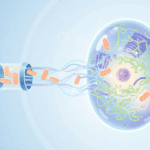
The olfactory system creates a unique highway between the outside world and your brain. When you breathe through your nose, molecules don’t just hit your olfactory receptors and stop there. They can travel along olfactory nerve pathways and slip directly into brain tissue, bypassing the blood-brain barrier entirely.
This route works because olfactory neurons are unusual. Unlike most neurons tucked safely inside your skull, these cells extend from your brain all the way to your nasal cavity. Their axons thread through tiny holes in the cribriform plate, a perforated bone that separates your nasal cavity from your brain. Molecules can hitch a ride along these neural highways.
The trigeminal nerve offers another pathway. This cranial nerve has branches that extend into nasal tissues and connect directly to brainstem regions. Together, these two routes create what researchers call the nose-to-brain pathway.
What the research shows
Studies using fluorescent tracers demonstrate just how quickly this system works. Molecules delivered nasally can appear in brain tissue within minutes, sometimes faster than intravenous injection reaches the same regions. The distribution isn’t random either. Compounds tend to accumulate first in areas closest to these nerve pathways: the olfactory bulb, hippocampus, and certain brainstem regions.
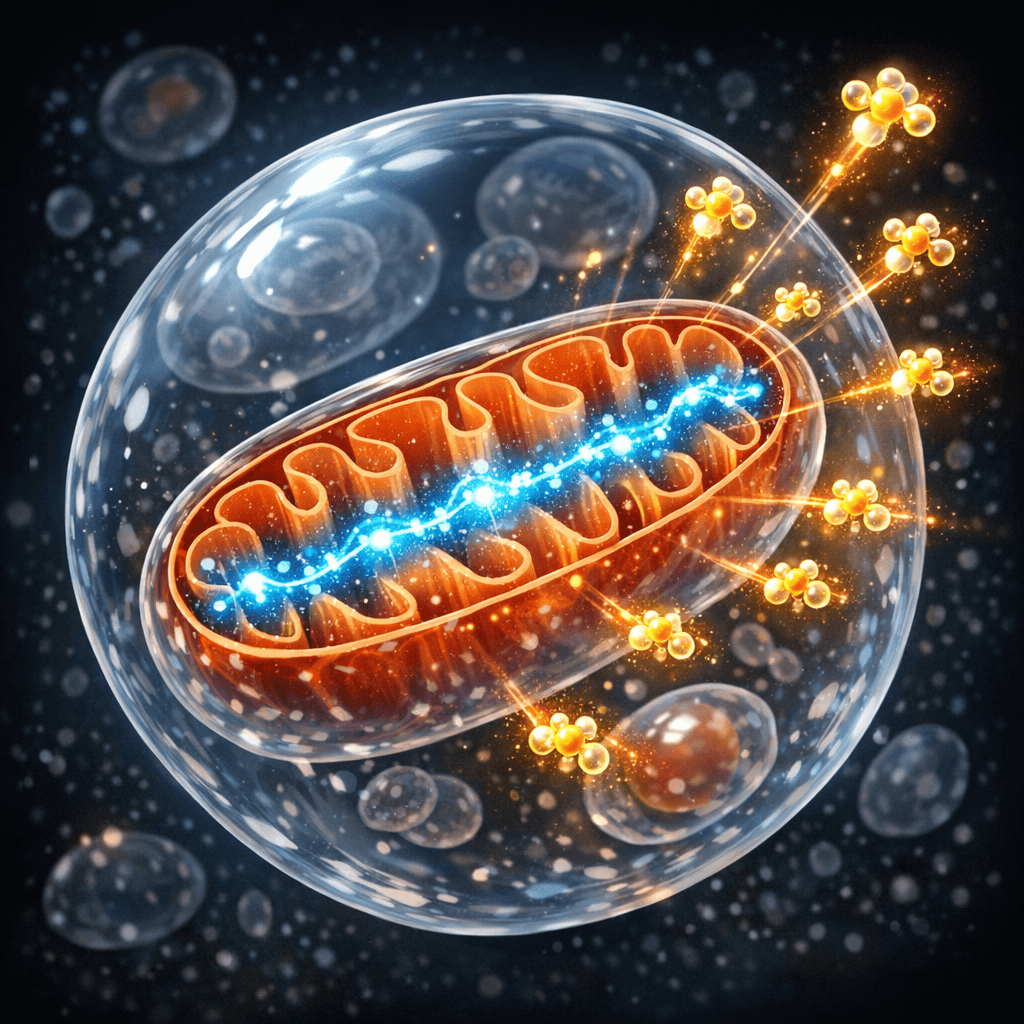
Research on antioxidant compounds shows particularly interesting patterns. When scientists deliver molecules that support mitochondrial function through the nasal route, they find higher concentrations in neurons compared to other delivery methods. The compounds seem to preferentially target areas where oxidative stress typically hits hardest.
Animal studies reveal that nasally delivered neuroprotective compounds can reduce markers of oxidative damage in brain tissue more effectively than systemic delivery. The concentrations achieved in neural mitochondria are often several times higher than what oral or injectable routes can deliver.
Why cells need this
Brain cells face unique metabolic challenges. Neurons consume about 20% of your body’s total energy despite making up only 2% of your body weight. This intense energy demand means mitochondria in brain cells work overtime, generating more reactive oxygen species as a natural byproduct.
The brain’s isolation behind the blood-brain barrier, while protective, creates a supply problem. Many antioxidant molecules that circulate freely in your bloodstream can’t cross this barrier to help overwhelmed neural mitochondria. The nasal pathway potentially solves this access problem.
Evolution likely preserved this route because smell requires direct neural contact with environmental molecules. But this same anatomy creates opportunities for therapeutic interventions. The system that lets you detect a rose’s fragrance also provides a potential delivery mechanism for supporting cellular health in brain tissue.
What affects nasal delivery
The effectiveness of nasal-to-brain transport depends heavily on molecular properties. Smaller molecules generally travel this route more easily than larger ones. Lipophilic compounds that can interact with cell membranes often show better uptake than water-soluble molecules.
Nasal physiology matters too. Conditions like allergies, infections, or chronic inflammation can impair transport along these pathways. The mucus layer in your nasal passages can either help or hinder delivery, depending on the molecule’s properties.
Age affects this system. Olfactory neurons are among the few that can regenerate throughout life, but this regenerative capacity declines with ageing. Older adults often show reduced transport efficiency along nose-to-brain pathways.
Formulation techniques significantly influence delivery success. Researchers experiment with different particle sizes, delivery devices, and chemical modifications to optimise transport along neural pathways.
What remains unknown
Scientists still debate the relative importance of different transport mechanisms. Some molecules might travel along nerve pathways, while others could move through lymphatic vessels or even cross nasal blood vessels that have more permeable barriers than those in the brain.
The long-term safety profile of repeated nasal delivery remains unclear. While the route offers therapeutic promise, researchers need to understand whether chronic use could affect olfactory function or cause other neural changes.
Individual variation represents another puzzle. People show dramatically different responses to nasally delivered compounds, but scientists don’t fully understand why. Genetic factors, nasal anatomy differences, and microbiome variations all likely play roles.
The precise cellular mechanisms that govern uptake and distribution in brain tissue need more investigation. How do molecules move from nerve pathways into surrounding brain regions? What determines which cell types take up nasally delivered compounds?
This direct connection between nose and brain highlights how anatomy shapes therapeutic possibilities. The same evolutionary adaptations that gave us our sense of smell might offer new approaches to supporting cellular health in the organ that consumes the most energy per gram in our entire body.

Matt Elliott is the editor of Redox News Today, an independent publication covering peer-reviewed research on cellular health, redox signalling, and related biomedical science.