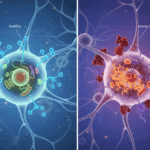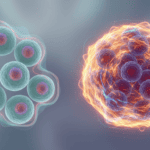
A cancer cell preparing to escape from a tumour faces the same basic challenge as any cell trying to move: it needs to reorganise its entire internal transport system. The difference is that while healthy cells migrate for wound healing or development, cancer cells are breaking the rules entirely, using hijacked cellular machinery to invade tissues where they don’t belong.
What is intracellular transport
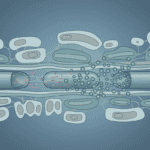
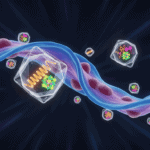
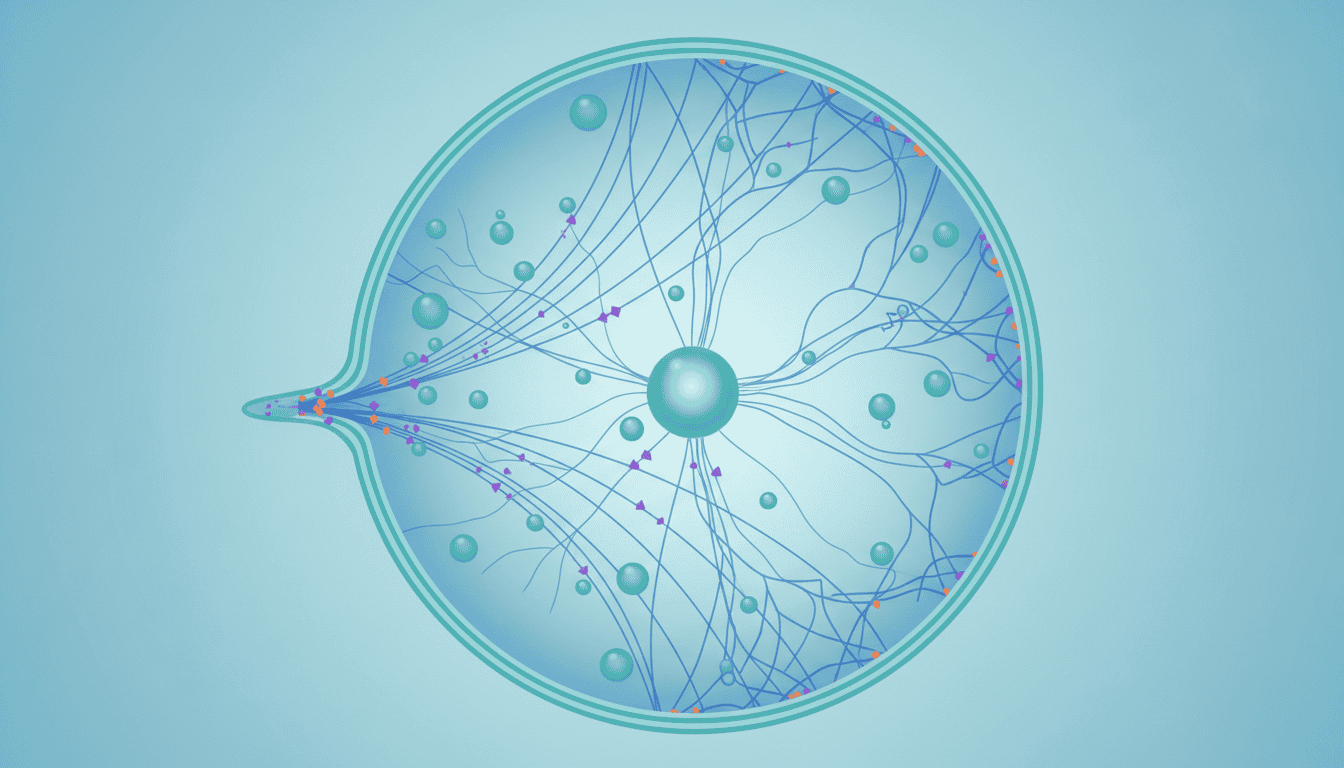
Think of a cell as a busy factory with an elaborate conveyor belt system. Proteins, organelles, and molecular cargo constantly move along networks of microtubules and actin filaments, guided by motor proteins that act like molecular trucks. This transport system keeps everything in the right place at the right time.
When cells need to move, they completely rewire this internal highway system. The normally stable microtubule network becomes dynamic and polarised. Motor proteins like dynein and kinesin shift their cargo loads. The cell literally rebuilds its infrastructure to support migration, concentrating transport machinery toward the leading edge where new cellular protrusions form.
Cancer cells take this normal process and amplify it. They upregulate transport proteins, reorganise their cytoskeleton more aggressively, and maintain this migratory state far longer than healthy cells would.
What the research shows
Scientists tracking individual cancer cells have observed how they coordinate transport with movement. Aggressive cancer cells show dramatically altered microtubule dynamics compared to their non-cancerous counterparts. The microtubules grow and shrink more rapidly, creating an unstable but highly adaptable internal scaffold.
Researchers have also found that cancer cells relocate their centrosomes, the organelles that organise microtubules, toward their leading edges. This repositioning redirects the entire transport network to support forward movement. It’s like moving the control centre of a railway system to better coordinate trains heading in one direction.
Studies using fluorescent markers reveal another key finding: cancer cells alter how they transport specific proteins needed for invasion. Matrix metalloproteinases, enzymes that break down surrounding tissue, get shuttled more efficiently to the cell surface. Meanwhile, adhesion molecules that would normally keep cells anchored in place are either not transported properly or get actively removed.
Perhaps most telling, cancer cells from metastatic tumours show more sophisticated transport coordination than cells from localised tumours. The most mobile cancer cells have essentially mastered the art of cellular logistics.
Why cells need this transport flexibility
Normal cell migration evolved for essential biological processes. During embryonic development, cells must travel long distances to form organs and tissues. Immune cells patrol the body, chasing down pathogens. Cells repair wounds by migrating into damaged areas and rebuilding tissue.
All of these processes require cells to rapidly reorganise their internal transport systems. A white blood cell detecting an infection signal needs to immediately redirect its machinery toward movement. The transport flexibility that cancer cells exploit exists because healthy cells genuinely need this capability.
Evolution preserved these migration mechanisms because they’re essential for multicellular life. The problem arises when cells activate migration programs inappropriately or fail to turn them off when the job is done.
What affects cellular transport in cancer
Oncogenes, the mutated genes that drive cancer, directly influence transport machinery. The RAS protein, mutated in about 30% of cancers, affects both microtubule dynamics and motor protein activity. When RAS goes wrong, it pushes cells toward a more migratory state.
The surrounding tissue environment also shapes how cancer cells organise their transport systems. Stiffer tissues, like those found in aged or fibrotic organs, seem to promote more aggressive transport reorganisation in cancer cells. The physical resistance actually trains cancer cells to become better at migration.
Inflammation creates another complicating factor. Inflammatory signals can enhance the transport mechanisms that cancer cells use for invasion. This helps explain why chronic inflammation increases cancer risk and promotes metastasis.
Oxygen levels matter too. Cancer cells in low-oxygen regions of tumours often show altered transport patterns, potentially preparing them for the journey to better-oxygenated tissues elsewhere in the body.
What remains unknown
Scientists still don’t fully understand how cancer cells coordinate transport changes with other aspects of invasion. The timing seems crucial, but researchers are still mapping out the molecular signals that tell a cancer cell when to reorganise its internal machinery for migration.
The role of transport in cancer dormancy poses another puzzle. Some cancer cells seem to maintain altered transport systems even when they’re not actively moving, suggesting these changes might prepare cells for future migration opportunities. Why some cells stay dormant while others become active remains unclear.
Researchers are also investigating whether different types of cancer cells use distinct transport strategies. Brain tumours face different physical constraints than liver tumours, but we don’t yet know how much this influences their internal organisation patterns.
The question of reversibility looms large too. Can cancer cells that have reorganised their transport systems be coaxed back to normal behaviour, or are these changes permanent once they occur?
Understanding how cancer cells manipulate their internal transport reveals something profound about cellular biology: the same mechanisms that enable life’s most essential processes can become tools of destruction when misregulated. Every cell carries within it both the machinery for healing and the potential for harm, separated only by the precise control systems that evolution spent millions of years perfecting.

Matt Elliott is the editor of Redox News Today, an independent publication covering peer-reviewed research on cellular health, redox signalling, and related biomedical science.