When you plunge into cold water, your body doesn’t just shiver. Within minutes, cellular garbage trucks start their engines. Cold exposure triggers autophagy, a process where cells literally eat their own damaged parts to survive the stress.
What is cold-induced autophagy
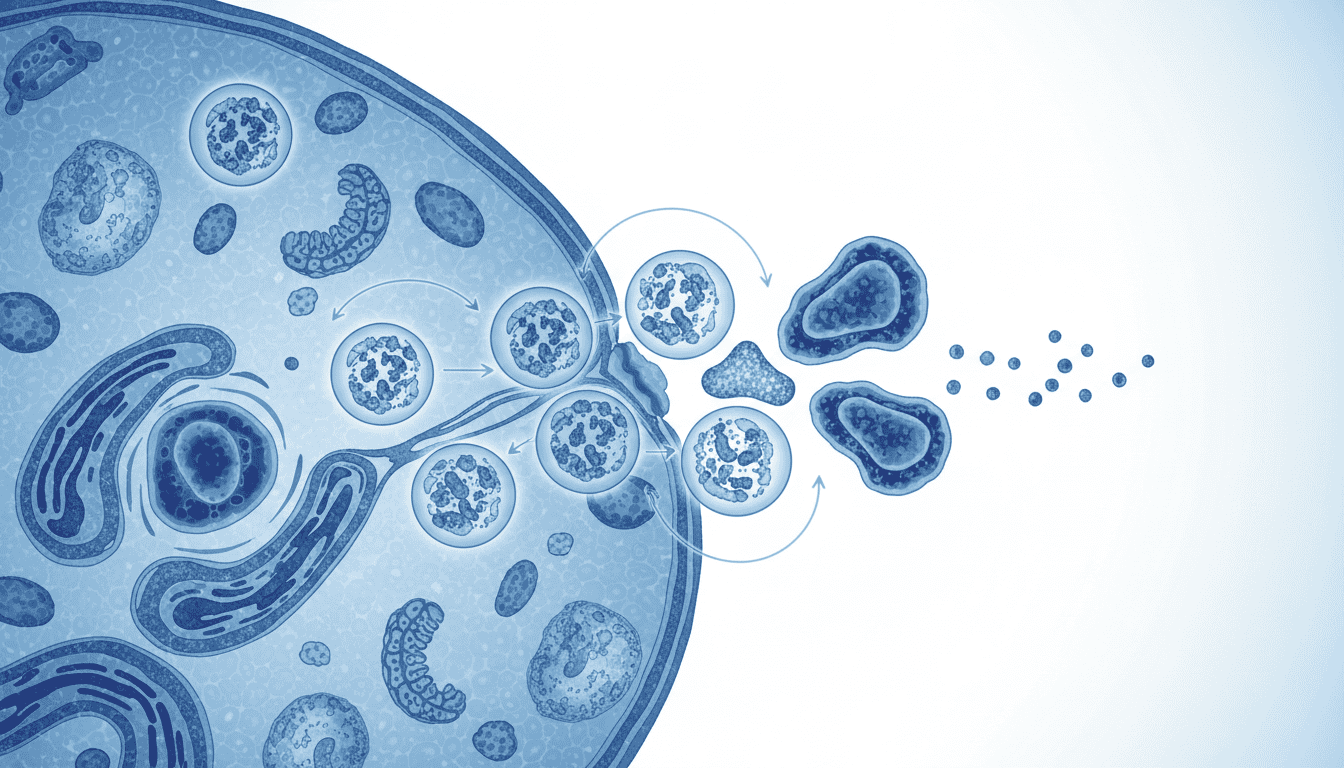
Autophagy means “self-eating” in Greek. It’s your cells’ recycling system. When cells detect stress like sudden cold, they wrap damaged proteins and worn-out organelles in membrane bubbles called autophagosomes. These bubbles fuse with lysosomes, cellular digestive chambers filled with enzymes that break everything down into reusable parts.
Cold water creates what researchers call hormetic stress. Unlike chronic stress that damages cells, hormetic stress is brief and manageable. It’s enough to flip cellular switches without overwhelming the system. The cold doesn’t just make you uncomfortable. It changes the chemistry inside every cell.
Temperature sensors in cell membranes detect the drop and send signals through protein networks. These networks activate transcription factors that turn on stress response genes. Some of these genes code for autophagy machinery. Others produce heat shock proteins that help refold damaged proteins or mark them for destruction.
What the research shows
Scientists have tracked what happens inside cells during cold exposure using fluorescent markers that light up autophagy activity. In laboratory studies, cells exposed to cold temperatures show increased autophagosome formation within 30 minutes. The effect peaks around two hours and can last for several hours after warming up.
Animal studies reveal similar patterns. Mice exposed to cold water swimming show elevated autophagy markers in muscle, liver, and brain tissue. The response varies by tissue type. Skeletal muscle shows the strongest autophagy activation, followed by the liver. Brain tissue responds more slowly but maintains elevated autophagy for longer periods.
Cold exposure also activates AMPK, a cellular energy sensor that acts like a fuel gauge. When AMPK detects energy stress from maintaining body temperature, it switches on autophagy and switches off energy-expensive processes like protein synthesis. This creates a cellular state focused on maintenance rather than growth.
Researchers have identified specific temperature thresholds too. Water temperatures below 15°C trigger the strongest autophagy response. Shorter exposures of 2-5 minutes can be enough to activate the process, though longer exposures up to 15 minutes show greater effects.
Why cells need this mechanism
Evolution shaped autophagy as a survival tool. When food was scarce or environmental conditions harsh, organisms that could efficiently recycle cellular components had better survival odds. Cold triggers the same ancient program that helped our ancestors survive ice ages and harsh winters.
The logic makes biological sense. Cold stress damages proteins by changing their shape and slows down cellular processes that normally clear waste. Rather than letting damage accumulate, cells activate emergency cleanup protocols. Autophagy removes the damaged parts before they can cause bigger problems.
This mechanism also prepares cells for future stress. After cold exposure, cells maintain higher levels of heat shock proteins and antioxidant enzymes for days. It’s like a cellular vaccination. The brief stress creates a memory that helps cells respond faster to future challenges.
The energy recycling aspect matters too. Breaking down damaged components provides amino acids and other building blocks that cells can use to make new proteins. During stress, when normal protein production slows down, this recycling becomes crucial for maintaining essential cellular functions.
What affects cold-induced autophagy
Age changes how cells respond to cold stress. Young animals show robust autophagy activation after cold exposure. Older animals show weaker responses, and their cells take longer to clear damaged components. This decline in autophagy efficiency is one reason why ageing cells accumulate more cellular debris.
Physical fitness influences the response too. Regular exercise primes autophagy pathways, making them more responsive to additional stressors like cold. Trained individuals show stronger autophagy activation and faster recovery after cold exposure compared to sedentary people.
Nutritional status plays a role as well. Cells that are already stressed from overeating or high blood sugar show blunted autophagy responses to cold. Fasting, on the other hand, sensitises autophagy pathways and amplifies the response to cold stress.
The timing of cold exposure matters. Cells follow circadian rhythms that influence stress responses. Cold exposure during the active phase of the circadian cycle triggers stronger autophagy than exposure during rest phases. Even the season affects the response, with winter-acclimatised animals showing different autophagy patterns than summer-acclimatised ones.
What remains unknown
Scientists still debate optimal exposure protocols. How cold is cold enough? How long should exposure last? Does gradual cooling work better than sudden plunges? Different studies use different protocols, making it hard to compare results.
The long-term consequences of repeated cold exposure remain unclear too. Does regular cold stress enhance cellular resilience or eventually exhaust stress response systems? Some studies suggest benefits from regular exposure, while others warn about potential negative effects from chronic stress activation.
Researchers are also investigating individual variation in cold responses. Why do some people show strong autophagy activation while others show minimal responses to the same cold stimulus? Genetic factors likely play a role, but scientists haven’t identified all the relevant genes yet.
The interaction between cold-induced autophagy and other cellular processes needs more study too. How does enhanced cleanup affect cellular growth, immune function, and tissue repair? The answers could reshape our understanding of how environmental stress influences cellular health.
Cold water does more than wake you up. It wakes up ancient cellular programs that clean house and prepare for challenges ahead. Understanding these mechanisms reveals how brief environmental stresses can flip switches that influence cellular behaviour for hours or days. As research continues, we’re learning that the shiver you feel is just the surface of a deep cellular response that connects temperature, stress, and the fundamental processes that keep cells healthy.

Matt Elliott is the editor of Redox News Today, an independent publication covering peer-reviewed research on cellular health, redox signalling, and related biomedical science.