Your muscle cells house thousands of mitochondria, each one a microscopic power plant churning out the energy needed for every contraction. But as we age, these cellular engines start to falter. The surprise is that one protein, ATF5, appears to be working overtime to keep them running smoothly, especially in skeletal muscle where energy demands never let up.
What is ATF5
ATF5 belongs to a family of proteins called transcription factors. Think of it as a molecular foreman that tells cells which genes to switch on and when.
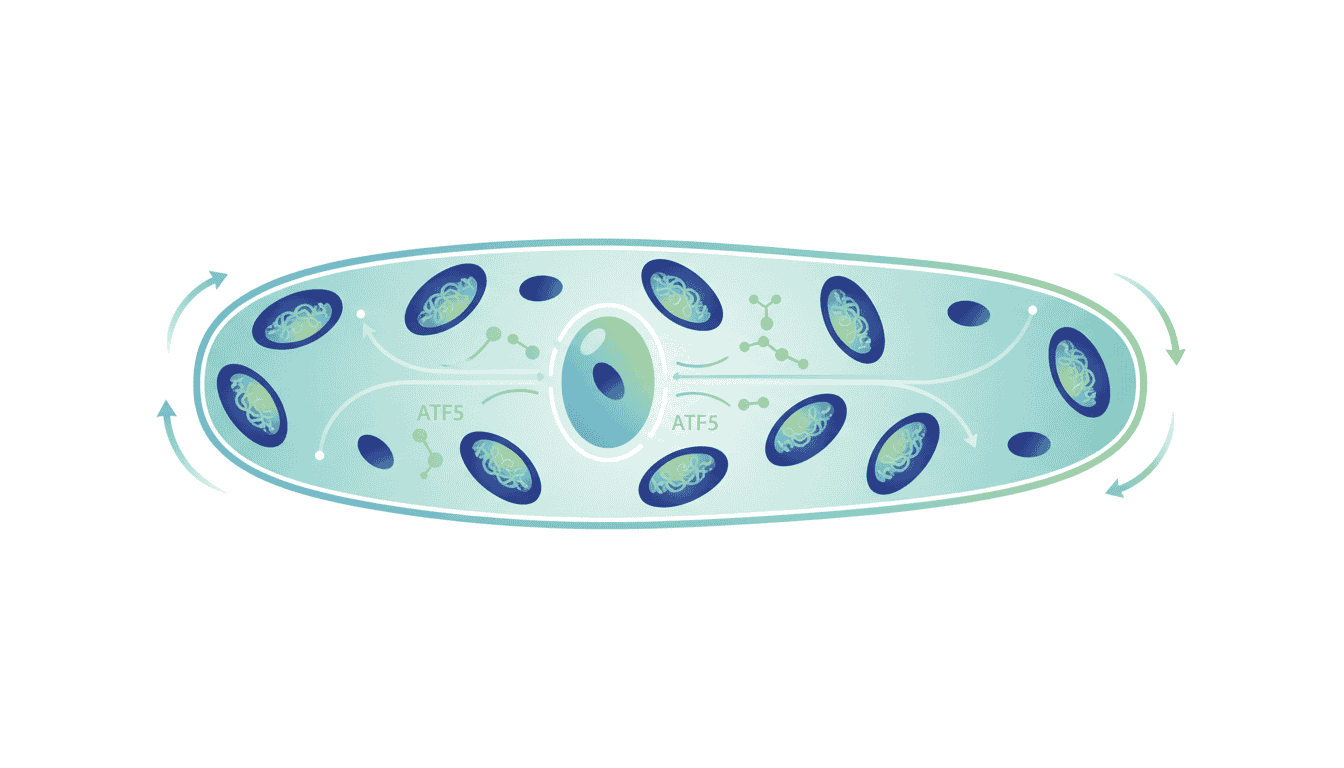
Unlike some transcription factors that stay put in the nucleus, ATF5 shuttles between the cell’s command centre and its mitochondria. This dual location gives it a unique role in coordinating cellular responses. When mitochondria send distress signals indicating they’re struggling to maintain function, ATF5 responds by activating specific gene programmes designed to support these energy factories.
The protein recognises particular DNA sequences and binds to them like a key fitting into a lock. Once attached, it recruits other molecular machinery to ramp up production of proteins that mitochondria desperately need. This includes enzymes for energy production, quality control systems, and structural components that keep mitochondrial membranes intact.
What the research shows
Studies tracking ATF5 activity in aging muscle tissue reveal some compelling patterns. Researchers have observed that ATF5 levels actually increase in older muscle cells, suggesting the protein is working harder to maintain mitochondrial function as other cellular systems begin to decline.
When scientists experimentally reduced ATF5 in muscle cells, mitochondrial function dropped dramatically. The organelles produced less ATP, showed signs of structural damage, and had trouble clearing out damaged components. Conversely, boosting ATF5 activity helped preserve mitochondrial respiratory capacity even in aged muscle tissue.
The protein appears particularly active during periods of metabolic stress. Exercise, caloric restriction, or cellular damage all trigger increased ATF5 signalling. This suggests the protein acts as a stress response coordinator, helping mitochondria adapt to challenging conditions rather than simply maintaining baseline function.
Muscle fibres with higher ATF5 activity show better preservation of mitochondrial networks and more efficient energy production. They also demonstrate improved ability to remove damaged mitochondria through a quality control process called mitophagy.
Why cells need this
Skeletal muscle faces unique energetic challenges that explain why ATF5 proves so vital. Unlike other tissues that can throttle their energy demands, muscles must deliver massive bursts of power on command while maintaining baseline metabolic functions around the clock.
Mitochondria in muscle cells also live unusually long lives compared to those in other tissues. This longevity means they accumulate more damage over time and need robust maintenance systems to stay functional. ATF5 helps coordinate these maintenance programmes, ensuring that aging mitochondria get the molecular tools they need for repair and regeneration.
The protein likely evolved as a safeguard mechanism. As organisms age, multiple cellular systems start to fail simultaneously. Having a transcription factor that can sense mitochondrial distress and respond with targeted gene activation provides a buffer against age-related energy decline.
ATF5 also helps muscle cells adapt their mitochondrial populations to match energy demands. During periods of high activity, the protein can trigger programmes that increase mitochondrial number and improve their efficiency. This adaptive capacity becomes increasingly important as aging reduces the cell’s overall regenerative capacity.
What affects ATF5
Age itself appears to be a major driver of ATF5 activity. Research shows the protein becomes more active in older muscle tissue, likely as a compensatory response to declining mitochondrial function.
Physical activity strongly influences ATF5 signalling pathways. Regular exercise triggers the molecular stress signals that activate this protein, helping explain why active individuals often maintain better mitochondrial function as they age. The type of exercise matters too, with endurance activities showing particularly strong effects on ATF5-related pathways.
Nutritional factors also play a role. Caloric restriction and certain dietary compounds can influence ATF5 activity through metabolic signalling pathways. Inflammation, whether from chronic disease or acute injury, appears to suppress some ATF5 functions while potentially overactivating others.
Genetic variation affects how well different individuals can mount ATF5 responses. Some people naturally produce more of this protein or have variants that work more efficiently, which might contribute to differences in how gracefully people age at the cellular level.
What remains unknown
Scientists are still working out exactly how ATF5 decides which genes to activate and when. The protein clearly responds to mitochondrial stress signals, but the precise molecular conversations happening between struggling mitochondria and nuclear transcription machinery remain murky.
The relationship between ATF5 and other longevity pathways needs clarification. Many different molecular systems influence aging, and researchers are still mapping how ATF5 fits into this larger network. Does it work independently, or does it coordinate with other age-related signalling pathways?
There’s also uncertainty about whether ATF5 activity can be safely enhanced in humans. While boosting the protein shows promise in laboratory studies, researchers don’t yet understand the long-term consequences of manipulating these pathways. Could there be trade-offs or unintended effects?
The tissue-specific roles of ATF5 remain unclear too. Most research focuses on skeletal muscle, but the protein exists throughout the body. Understanding how it functions in different cell types could reveal broader principles about cellular maintenance and aging.
This research points to something profound about how our cells fight the effects of time. Rather than simply succumbing to age-related decline, muscle tissue actively deploys molecular guardians like ATF5 to preserve function as long as possible. Understanding these cellular defence systems doesn’t just satisfy scientific curiosity, it reveals the elegant biological machinery that keeps us moving through decades of life. The more we learn about proteins like ATF5, the clearer it becomes that aging isn’t just about things breaking down, but about the remarkable cellular efforts to keep them working.

Matt Elliott is the editor of Redox News Today, an independent publication covering peer-reviewed research on cellular health, redox signalling, and related biomedical science.