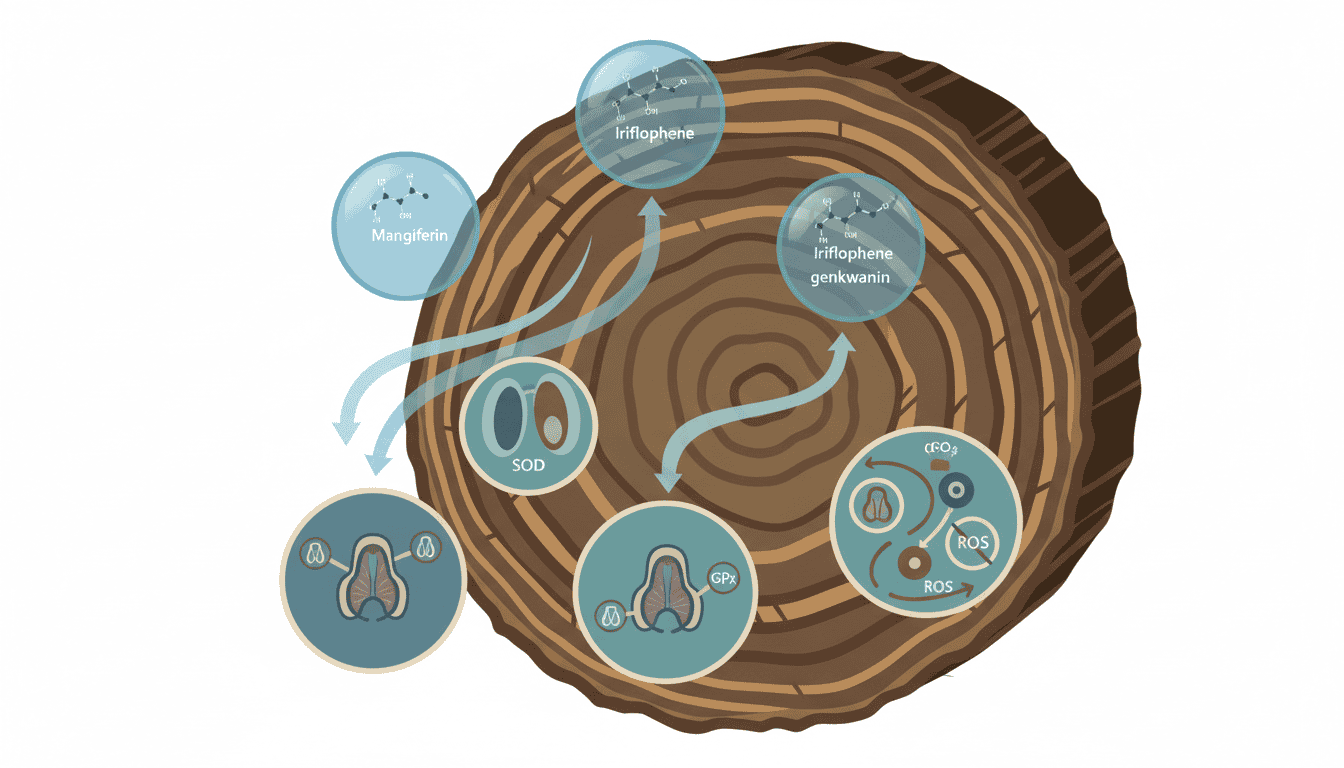
Deep in the heartwood of Aquilaria trees, something remarkable happens when the wood becomes infected with a specific type of mould. The tree responds by producing a dark, resinous material called agarwood, packed with unusual phenolic compounds that researchers are now finding may influence how cells handle oxidative damage.
What are agarwood phenolics
Agarwood forms when Aquilaria trees get infected by Phialophora parasitic fungi. The tree’s defence system kicks into overdrive, producing a complex mix of aromatic compounds and phenolics to protect itself. These molecules include chromones, benzophenones, and sesquiterpenes that give agarwood its distinctive properties.
Phenolic compounds are molecules with one or more hydroxyl groups attached to aromatic rings. Plants use them as chemical weapons against pathogens and environmental stress. In agarwood, these phenolics appear in concentrations far higher than in healthy wood, suggesting they serve as the tree’s last line of defence against infection.
The specific phenolics in agarwood differ from those in other plants. Researchers have identified compounds like 2-(2-phenylethyl)chromone derivatives that don’t appear widely elsewhere in nature. These unique molecular structures may explain why agarwood phenolics interact differently with cellular pathways compared to more common plant antioxidants.
What the research shows
Laboratory studies reveal that agarwood phenolics can modulate several key cellular stress pathways. When researchers expose cultured cells to oxidative stress and then treat them with agarwood extracts, the cells show increased activity in their antioxidant defence systems.
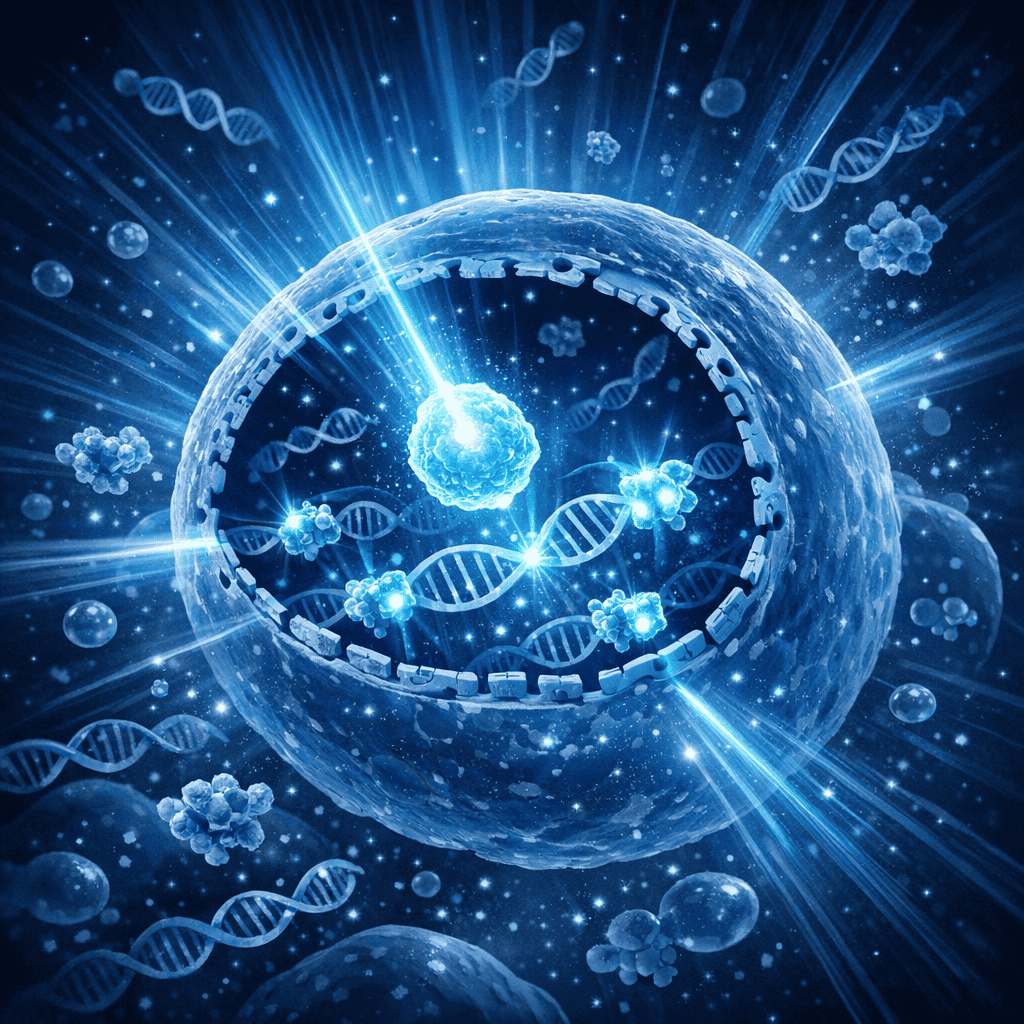
The compounds appear to influence the NRF2 pathway, a master regulator of cellular antioxidant responses. When oxidative stress threatens a cell, NRF2 moves from the cytoplasm into the nucleus and switches on genes that produce protective enzymes like glutathione peroxidase and catalase. Agarwood phenolics seem to enhance this signalling cascade.
Other research shows these compounds may affect mitochondrial function. Mitochondria generate most of the reactive oxygen species that cause oxidative damage, but they’re also essential for energy production. Agarwood phenolics appear to help mitochondria maintain their protective antioxidant systems without compromising their ability to produce ATP.
Some studies suggest the compounds can modulate inflammatory signalling pathways like NF-κB, which links oxidative stress to immune responses. This connection makes sense because oxidative damage often triggers inflammation as cells attempt to clear damaged components and repair tissue.
Why cells need this protection
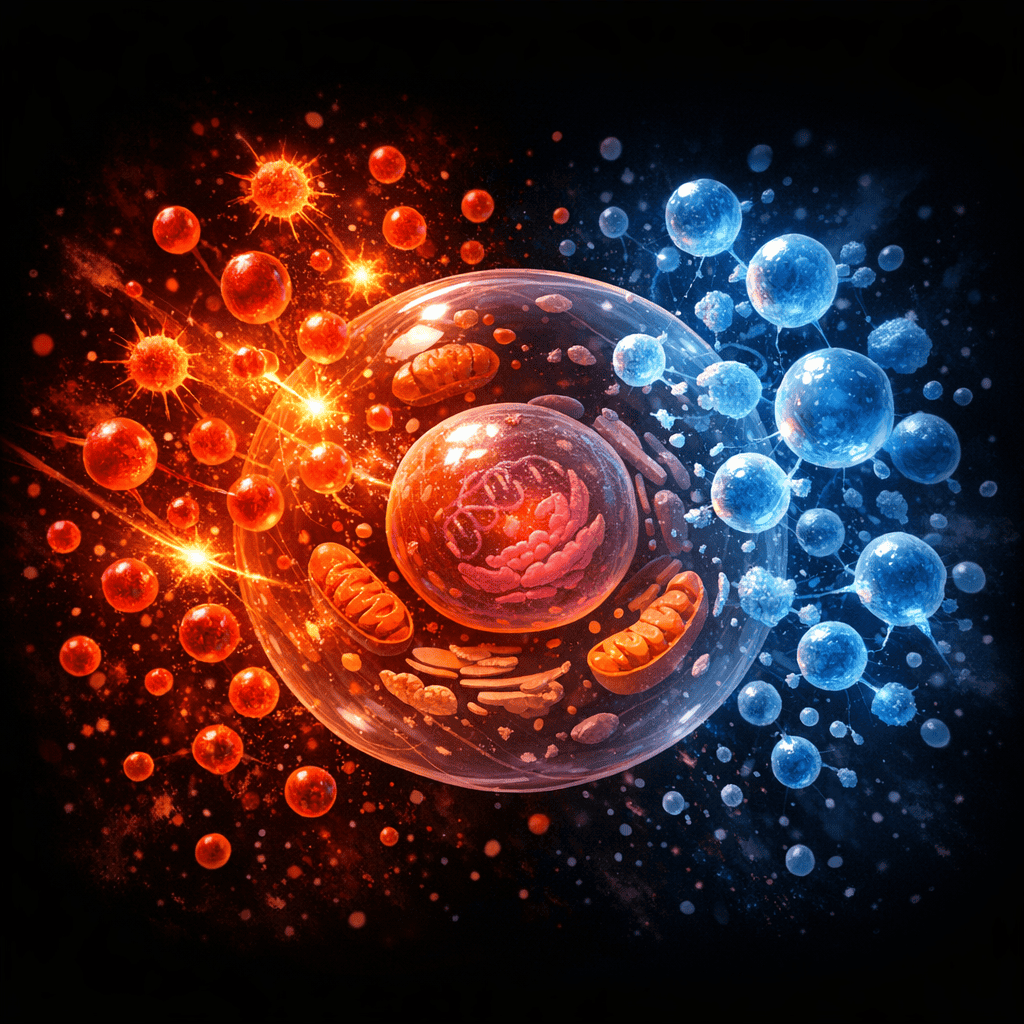
Every cell in your body faces constant attack from reactive oxygen species. These molecules form naturally during normal metabolism, especially in mitochondria where oxygen gets converted to water during energy production. The process isn’t perfect, and some oxygen molecules pick up extra electrons, becoming highly reactive.
These reactive species can damage virtually any cellular component. They oxidise lipids in cell membranes, creating holes that disrupt cellular integrity. They attack proteins, changing their shape and destroying their function. Most seriously, they damage DNA, potentially causing mutations that lead to cancer or cell death.
Cells evolved sophisticated antioxidant systems to handle this constant threat. Enzymes like superoxide dismutase convert dangerous superoxide radicals into less harmful hydrogen peroxide. Catalase then breaks down hydrogen peroxide into water and oxygen. Glutathione, one of the cell’s most important antioxidants, directly neutralises various reactive species.
But these systems can become overwhelmed during times of high stress, illness, or ageing. When antioxidant defences fail to keep pace with reactive species production, oxidative stress results. This imbalance contributes to cellular damage that accumulates over time.
What affects agarwood phenolic activity
The concentration and type of phenolic compounds in agarwood varies dramatically depending on how the wood forms. Trees infected with different fungal strains produce different chemical profiles. The duration of infection also matters, with older agarwood generally containing higher concentrations of bioactive compounds.
Environmental factors influence phenolic production too. Trees growing in stressful conditions, with poor soil or extreme weather, often produce more defensive compounds when infected. This suggests the tree’s overall health status affects its ability to mount a chemical defence response.
Processing methods significantly impact the bioavailability of these compounds. Traditional preparation methods, including specific heating and extraction techniques, may concentrate certain phenolics while degrading others. The way agarwood gets harvested, stored, and prepared determines which compounds remain active.
In laboratory studies, the cellular effects of agarwood phenolics depend on concentration, timing, and the specific type of oxidative stress being tested. Some compounds show dose-dependent effects, working better at moderate concentrations but becoming less effective at very high doses.
What remains unknown
Researchers still don’t fully understand how individual agarwood phenolics work compared to the complex mixture found in natural extracts. Many studies use crude extracts containing dozens of different compounds, making it difficult to determine which molecules contribute most to the observed cellular effects.
The bioavailability question remains largely unanswered. Laboratory studies typically expose cells directly to agarwood compounds, but it’s unclear how well these molecules get absorbed and distributed in living organisms. The digestive system and liver metabolism might significantly alter these compounds before they reach target tissues.
Timing questions persist too. Most cellular studies examine acute exposure to agarwood phenolics, but the effects of long-term exposure remain unclear. Some antioxidant compounds can become pro-oxidant under certain conditions, potentially causing the very damage they’re supposed to prevent.
The interaction between agarwood phenolics and other cellular stress pathways needs more investigation. Cells use interconnected networks of signalling molecules to coordinate stress responses, and disrupting one pathway might have unexpected consequences for others.
Understanding how agarwood phenolics influence cellular oxidative stress pathways offers a window into the sophisticated chemical warfare plants use to survive environmental challenges. These ancient defence mechanisms, refined over millions of years of evolution, continue to reveal new insights about how cells protect themselves from damage. As researchers decode these molecular interactions, they’re uncovering fundamental principles about cellular resilience that extend far beyond any single plant compound.

Matt Elliott is the editor of Redox News Today, an independent publication covering peer-reviewed research on cellular health, redox signalling, and related biomedical science.