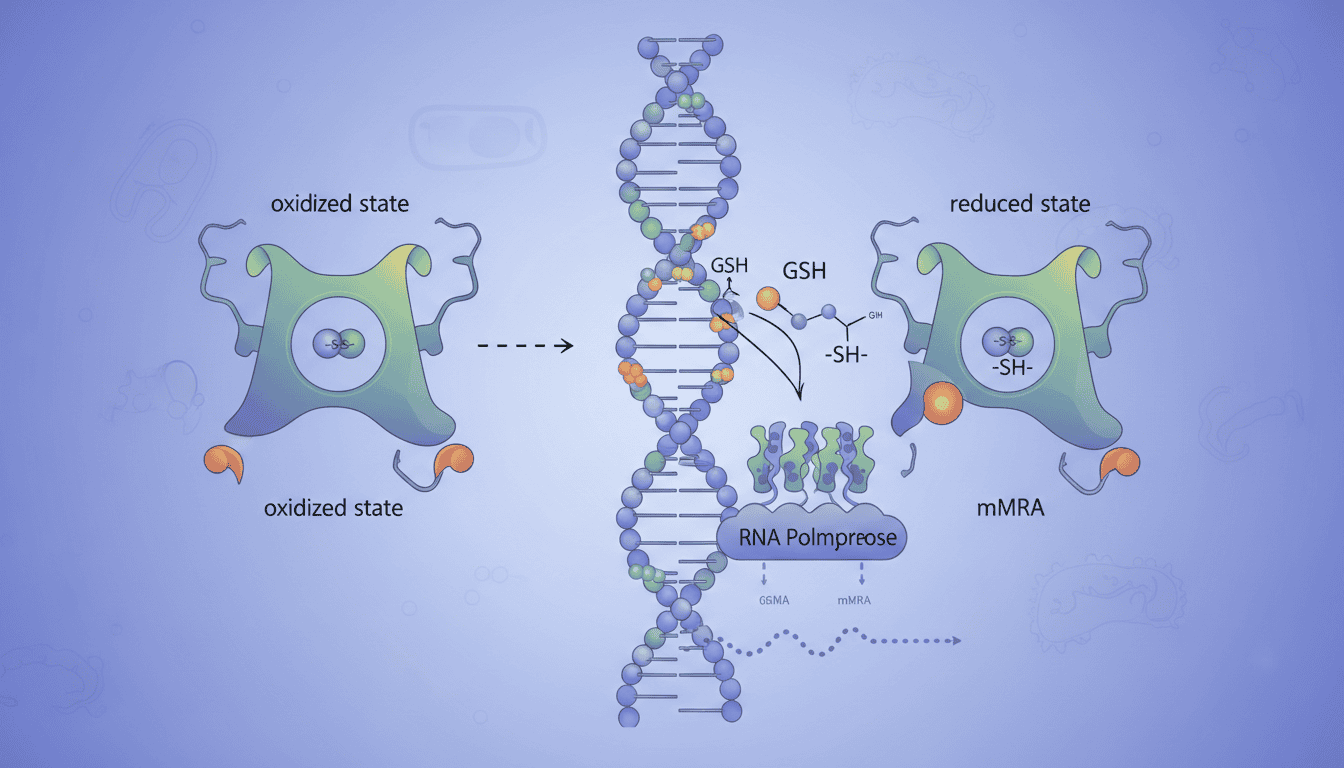
Your cells face a constant choice: keep running normal operations or switch to emergency mode. This decision happens millions of times each day, triggered by molecular switches that sense the chemical environment inside each cell. These switches are redox sensitive transcription factors, proteins that detect changes in oxidation and reduction reactions, then flip entire genetic programs on or off in response.
What is redox sensitive transcription
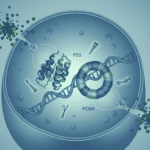
Transcription factors are proteins that bind to DNA and control which genes get turned into proteins. Think of them as genetic switchboard operators. Redox sensitive transcription factors add another layer: they change their behaviour based on the oxidation state of their environment.
When electrons get stripped away from molecules, that’s oxidation. When molecules gain electrons, that’s reduction. Cells constantly balance these opposing forces, and redox sensitive transcription factors monitor this balance.
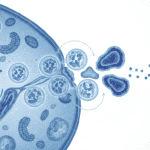
Take NRF2, probably the most studied redox sensitive transcription factor. Under normal conditions, a protein called KEAP1 keeps NRF2 locked away in the cytoplasm. But when oxidative stress hits, KEAP1’s cysteine residues get modified. This releases NRF2, which rushes to the nucleus and switches on hundreds of protective genes. The whole system works like a smoke detector for cellular stress.
Other major players include NF-κB, which responds to inflammatory oxidative signals, and HIF-1α, which activates when oxygen levels drop. Each uses different chemical sensors but follows the same basic principle: detect redox changes, then alter gene expression accordingly.
What the research shows
Scientists have mapped out how these molecular switches respond to different types of cellular stress. When researchers expose cells to hydrogen peroxide, NRF2 translocates to the nucleus within minutes. Once there, it binds to antioxidant response elements in DNA and cranks up production of glutathione, catalase, and other defensive molecules.
The timing matters enormously. Studies show that brief oxidative pulses activate protective pathways, while chronic oxidative stress can jam the switches entirely. Cells from older organisms often show blunted NRF2 responses, suggesting the sensing mechanism deteriorates with age.
Research has revealed that these factors don’t work in isolation. They form complex networks where one transcription factor’s activity influences others. When NF-κB gets activated by oxidative stress, it can suppress NRF2 in some cell types. This creates a regulatory web where the cell’s response depends on which signals arrive first and how strong they are.
Laboratory experiments demonstrate that different tissues use these switches differently. Liver cells, which handle constant detoxification work, maintain high baseline NRF2 activity. Brain cells, protected behind the blood-brain barrier, show more dramatic responses when their redox switches do activate.
Why cells need this
Evolution preserved these redox switches because cellular environments change constantly. Metabolism produces reactive oxygen species as a byproduct. Immune responses generate oxidative bursts. Environmental toxins create chemical stress. Without rapid response systems, cells would either waste energy running defensive programs constantly or get caught unprepared when threats arrive.
The redox sensitivity provides elegant efficiency. Instead of blindly churning out protective proteins, cells can scale their response to match the threat level. A small oxidative challenge triggers a proportional response. A major assault activates the full defensive arsenal.
These systems also enable cellular communication. When one cell experiences stress and releases signalling molecules, neighbouring cells detect those signals through their redox sensitive transcription factors. This allows coordinated tissue responses to threats.
The switches help cells adapt to changing conditions over time. Muscle cells that regularly experience exercise-induced oxidative stress develop enhanced NRF2 responses. This biochemical adaptation underlies much of what we call conditioning or hormesis.
What affects redox sensitive transcription
Age significantly dampens these switching mechanisms. Older cells show reduced NRF2 activation in response to oxidative challenges. The proteins themselves may get damaged over time, or the cellular machinery that processes them becomes less efficient.
Environmental factors constantly influence these systems. Air pollution activates NRF2 pathways in lung cells. UV radiation triggers redox responses in skin. Heat shock, cold exposure, and physical stress all engage different combinations of redox sensitive transcription factors.
Nutritional compounds can modulate these pathways. Sulforaphane from broccoli activates NRF2 by modifying KEAP1’s cysteine residues. Curcumin, resveratrol, and other plant compounds work through similar mechanisms. The effects vary dramatically between individuals, suggesting genetic differences in pathway sensitivity.
Sleep and circadian rhythms also regulate redox sensitive transcription. Studies show that NRF2 activity follows daily patterns, with peak sensitivity occurring at times when cells typically experience metabolic stress. Disrupted sleep patterns can desynchronise these rhythms.
What remains unknown
Scientists still debate how cells integrate multiple redox signals simultaneously. When several transcription factors compete for the same DNA binding sites, which takes priority? The answer likely depends on signal strength, timing, and cell type, but researchers are still mapping these interactions.
The role of location puzzles researchers too. Some redox sensitive transcription factors work primarily in the nucleus, others in mitochondria, still others shuttle between compartments. How cells coordinate responses across these different locations remains unclear.
Individual variation presents another mystery. Why do some people show robust NRF2 responses while others barely react to the same stimuli? Genetic polymorphisms explain some differences, but environmental and epigenetic factors probably contribute too.
Researchers are also grappling with the dark side of these pathways. Cancer cells often hijack NRF2 signalling to resist chemotherapy. Understanding when protective responses become harmful requires much more investigation.
The field of redox sensitive transcription reveals how cells navigate an unpredictable chemical world. These molecular switches represent millions of years of evolutionary problem solving, creating systems that can sense danger, coordinate responses, and adapt to changing conditions. As researchers decode these pathways, they’re uncovering fundamental principles about how living systems maintain stability in chaotic environments. Every cell in your body runs on this ancient logic: sense the chemical weather, then respond accordingly.

Matt Elliott is the editor of Redox News Today, an independent publication covering peer-reviewed research on cellular health, redox signalling, and related biomedical science.