Your muscle cells are home to hundreds of mitochondria, tiny power plants that burn glucose and fat to fuel your body. When these cellular engines start sputtering, your muscles struggle to absorb glucose from your bloodstream. The result? Blood sugar levels climb, and type 2 diabetes takes hold.
What is mitochondrial dysfunction in diabetes
Mitochondria convert the food you eat into ATP, the energy currency that powers every cellular process. Think of them as microscopic combustion engines. They take in glucose and fatty acids, combine them with oxygen, and produce energy through a process called oxidative phosphorylation.
In healthy cells, this process runs smoothly. Mitochondria communicate with the cell nucleus, adjusting their energy production based on demand. They even replicate themselves when cells need more power.
But mitochondria can malfunction in several ways. Their inner membranes might become leaky, allowing protons to escape and reducing energy output. The protein complexes that drive ATP production can become damaged. The mitochondria themselves might lose their ability to change shape and move around the cell, a process called mitochondrial dynamics.
When mitochondrial function deteriorates, cells struggle to meet their energy needs. This is particularly problematic in muscle tissue, which relies heavily on mitochondrial energy production. Muscle cells with poorly functioning mitochondria become insulin resistant, unable to efficiently absorb glucose even when insulin levels are high.
What the research shows
Scientists have documented clear differences in mitochondrial function between people with and without type 2 diabetes. Muscle biopsies reveal that diabetic patients have fewer mitochondria per cell, and those mitochondria produce less ATP.
Researchers using magnetic resonance spectroscopy can actually watch mitochondria work in living human tissue. These studies show that people with type 2 diabetes have roughly 30% lower rates of mitochondrial ATP production in their muscles compared to healthy individuals.
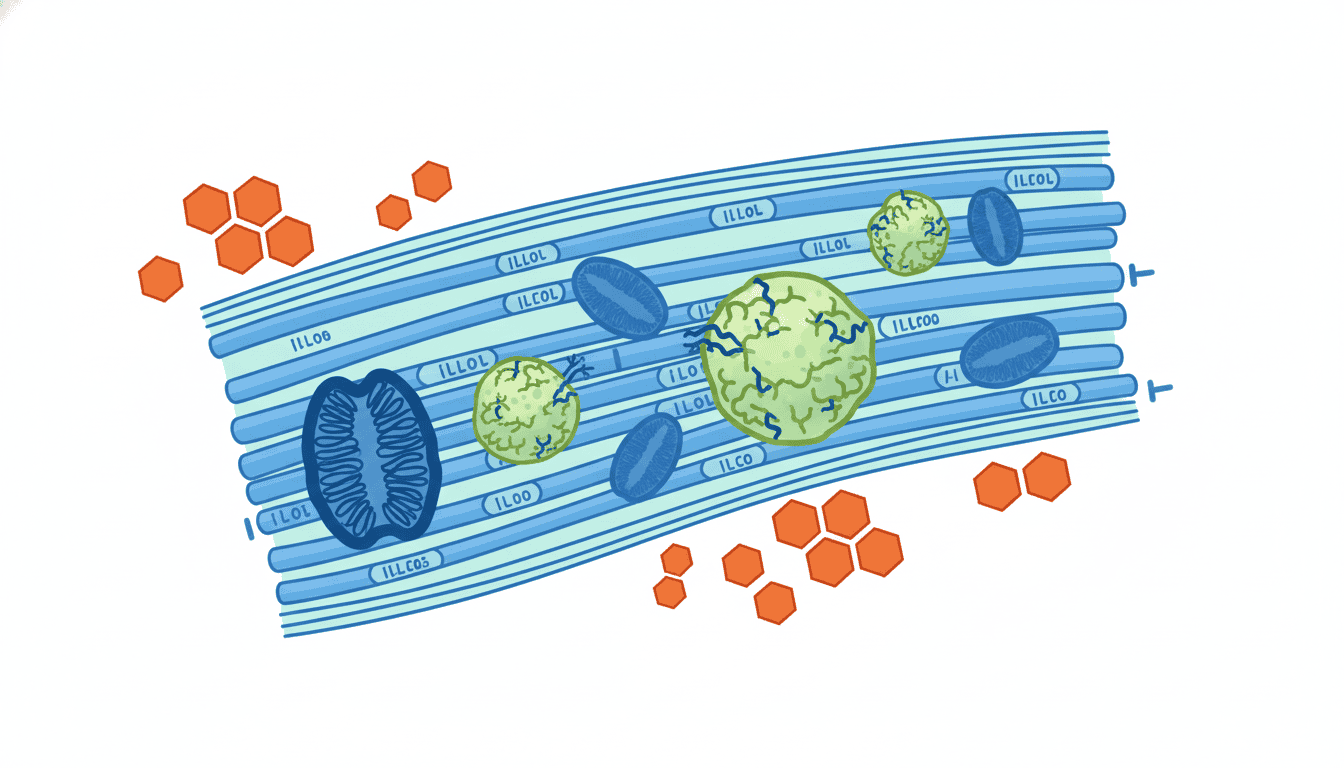
The mitochondria in diabetic muscle tissue also show structural abnormalities. Electron microscopy reveals swollen mitochondria with damaged cristae, the folded inner membranes where energy production occurs. These structural changes correlate directly with reduced insulin sensitivity.
Animal studies provide even more detailed insights. When researchers genetically engineer mice to have defective mitochondria specifically in muscle tissue, these animals develop insulin resistance and glucose intolerance. The reverse is also true: treatments that improve mitochondrial function often restore insulin sensitivity.
Scientists have also identified specific molecular pathways linking mitochondrial dysfunction to diabetes. When mitochondria struggle to process fatty acids properly, they produce toxic lipid byproducts that interfere with insulin signalling. Meanwhile, dysfunctional mitochondria generate excess reactive oxygen species, creating oxidative stress that further damages cellular machinery.
Why cells need healthy mitochondria
Evolution shaped our metabolism around the assumption that mitochondria would function efficiently. Muscle cells, in particular, evolved to be metabolically flexible, switching between glucose and fat as fuel sources depending on availability and energy demands.
This flexibility requires healthy mitochondria. When you exercise, your muscles need to rapidly increase ATP production. When you eat, muscle cells must quickly switch to glucose metabolism and store excess energy. When you fast, they need to efficiently burn stored fat.
Mitochondria also serve as cellular sensors, detecting changes in nutrient availability and energy demand. They communicate this information to the cell nucleus through various signalling pathways, triggering appropriate metabolic responses. This communication system breaks down when mitochondria malfunction.
The relationship between mitochondria and insulin sensitivity makes evolutionary sense. Insulin evolved as a signal of nutrient abundance, directing cells to take up glucose and store energy. But this only works if cells have the mitochondrial capacity to process that glucose efficiently. When mitochondria fail, the entire system becomes imbalanced.
What affects mitochondrial function
Age is perhaps the strongest factor influencing mitochondrial health. Mitochondrial DNA accumulates mutations over time, and the cellular quality control systems that remove damaged mitochondria become less efficient. This explains why type 2 diabetes risk increases with age.
Physical activity has profound effects on mitochondrial function. Exercise triggers mitochondrial biogenesis, the process by which cells create new mitochondria. Regular physical activity also improves mitochondrial efficiency and promotes the removal of damaged mitochondria through a process called mitophagy.
Diet composition influences mitochondrial health in complex ways. Chronic overfeeding can overwhelm mitochondrial capacity, leading to oxidative stress and dysfunction. High levels of saturated fats appear particularly problematic, while certain nutrients like magnesium and B vitamins are essential for mitochondrial enzyme function.
Sleep disruption and chronic stress can also impair mitochondrial function through hormonal pathways. Cortisol, the primary stress hormone, can suppress mitochondrial biogenesis and promote oxidative stress. Circadian rhythm disruption affects the daily cycles of mitochondrial activity that normally help maintain metabolic health.
Environmental factors play a role too. Exposure to certain toxins, air pollution, and electromagnetic fields may interfere with mitochondrial function, though the clinical significance of these effects remains under investigation.
What remains unknown
The chicken and egg question persists: does mitochondrial dysfunction cause insulin resistance, or does insulin resistance damage mitochondria? Most evidence suggests mitochondrial problems come first, but the relationship is likely bidirectional, with each problem worsening the other.
Researchers are still working out the precise molecular mechanisms linking mitochondrial dysfunction to diabetes. Multiple pathways seem involved, but their relative importance and interactions remain unclear. Understanding these mechanisms could reveal new therapeutic targets.
The role of mitochondrial genetics in diabetes risk is another active area of research. Mitochondria have their own small genome, separate from nuclear DNA. Certain mitochondrial genetic variants appear to influence diabetes susceptibility, but the clinical implications are still being explored.
Scientists are also investigating whether mitochondrial dysfunction in other tissues, beyond muscle, contributes to diabetes. The liver, pancreas, and fat tissue all depend on mitochondrial function, and problems in these organs could affect glucose metabolism in different ways.
The connection between mitochondrial function and diabetes reveals how cellular health underpins metabolic disease. These tiny organelles, inherited from ancient bacterial symbionts, remain central to human health billions of years later. Understanding their role in diabetes opens new perspectives on why this disease develops and how cellular energy systems maintain the delicate balance of human metabolism.

Matt Elliott is the editor of Redox News Today, an independent publication covering peer-reviewed research on cellular health, redox signalling, and related biomedical science.