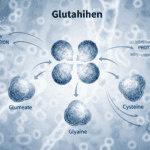

In 1888, a French chemist named J. de Rey-Pailhade noticed that a substance in yeast cells could react with elemental sulphur. He named it philothion, from the Greek for sulphur-loving, and published a short paper describing its properties. The compound did not receive a proper chemical characterisation for another forty years. When it did, the finding was modest-sounding: a tripeptide made from three amino acids, glutamine, cysteine, and glycine, present in nearly every living cell.
The modesty was misleading. That tripeptide turned out to be the most abundant low-molecular-weight antioxidant in the human body, the primary substrate for a family of detoxification enzymes, a regulator of immune cell function, and a key participant in cellular signalling. The label it eventually acquired — the master antioxidant — reflects a genuine position in cellular biology rather than marketing language.
What Glutathione Does
Glutathione exists in two forms inside cells: reduced (GSH) and oxidised (GSSG). The ratio between them is a sensitive indicator of the cell’s oxidative state. A healthy cell maintains a high GSH-to-GSSG ratio, meaning most of its glutathione is in the active, reduced form and ready to donate electrons to neutralise reactive species.
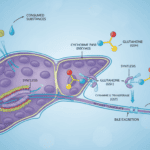
The functions glutathione performs are unusually broad for a single molecule. It directly neutralises hydrogen peroxide and lipid peroxides, which are damaging reactive species produced during normal metabolism. It is the primary substrate for glutathione peroxidase enzymes, which handle a large share of the cell’s hydrogen peroxide burden. It regenerates oxidised vitamin C and vitamin E back to their active forms, effectively recycling two other antioxidants that would otherwise be consumed. It conjugates to toxic compounds in the liver, making them water-soluble and excretable — this conjugation pathway is central to how the liver processes drugs, pollutants, and metabolic waste products. And it participates in protein folding, DNA synthesis, and the regulation of several transcription factors.
No single supplement replicates this range of functions. The breadth is part of why glutathione occupies the position it does.
Why Oral Supplementation Is Largely Ineffective
The obvious response to declining glutathione levels — take a glutathione supplement — runs into a practical problem. Glutathione is a peptide, and the digestive tract breaks peptides into their component amino acids. Swallowing glutathione means swallowing a molecule that will be dismantled before it reaches the bloodstream in intact form. Clinical studies measuring plasma glutathione after oral supplementation have consistently found modest or negligible increases in intracellular glutathione, which is where it actually functions.
Liposomal glutathione formulations, which encapsulate the molecule in lipid vesicles to protect it during digestion, show more promise in some studies. N-acetylcysteine (NAC), a precursor that supplies cysteine — the rate-limiting amino acid in glutathione synthesis — has a better evidence base for raising intracellular glutathione than glutathione itself. Intravenous glutathione bypasses the digestion problem entirely and is used clinically in specific contexts. But for most people, the practical route to higher glutathione levels runs through supporting the body’s own synthesis rather than supplementing the end product.
The NRF2 Connection
Glutathione synthesis is regulated by the NRF2 pathway. When NRF2 is activated by cellular stress, one of the genes it upregulates codes for gamma-glutamylcysteine ligase, the enzyme that performs the first and rate-limiting step in glutathione synthesis. More NRF2 activation means more of this enzyme, which means more glutathione production capacity.
This is why the lifestyle factors that activate NRF2 — exercise, sulforaphane-containing vegetables, intermittent fasting — also tend to raise glutathione levels. They are activating the same upstream pathway. The implication for anyone interested in glutathione is that supporting NRF2 is more effective than attempting to supply glutathione directly.
What Age Does to Glutathione Levels
Glutathione levels decline with age. The mechanisms are multiple: NRF2 pathway responsiveness decreases, mitochondrial function declines, and cysteine availability may fall due to changes in diet and protein metabolism. Research has documented substantial reductions in glutathione in older adults compared to younger controls, with the decline appearing in both blood and tissue measurements.
The liver is particularly relevant here. Hepatic glutathione is essential for the conjugation and clearance of toxins, drugs, and metabolic byproducts. As liver glutathione falls, detoxification capacity falls with it. This is one of the reasons older adults are more sensitive to medications and take longer to clear certain compounds — the detoxification infrastructure is running at reduced capacity.
Brain glutathione is also worth noting. The brain produces significant reactive oxygen species as a byproduct of its high metabolic activity, and glutathione is a primary defence. Reduced brain glutathione has been measured in Parkinson’s disease, Alzheimer’s disease, and other neurodegenerative conditions. Whether the decline is causative, consequential, or both remains an active research question.
What Remains Unknown
The clinical implications of glutathione decline are not fully resolved. Large observational studies have associated low glutathione with a wide range of conditions, but association does not establish causation, and intervention studies — showing that raising glutathione levels actually improves outcomes — are far less conclusive than the mechanistic research might suggest.
The question of which supplementation strategies meaningfully raise intracellular glutathione in healthy adults remains contested. Study populations, delivery methods, outcome measures, and timeframes vary considerably across trials, making direct comparisons difficult. The field would benefit from larger, more standardised trials.
The relationship between glutathione and immune regulation is also more complicated than early research suggested. Glutathione influences T-cell proliferation and natural killer cell activity, but the directionality of that influence depends on the immune context. Understanding when and how glutathione modulates immunity is an open question with direct relevance to autoimmunity and infection.
The Practical Takeaway
Glutathione is not a supplement story. It is a cellular infrastructure story. The molecule sits at the intersection of oxidative stress management, detoxification, immune regulation, and cellular signalling. Its levels reflect the overall health of the systems that produce and regenerate it. Supporting those systems — through exercise, nutrient-dense diet, quality sleep, and limiting unnecessary toxin exposure — is the most evidence-supported approach to maintaining glutathione where it matters, inside the cell.

Matt Elliott is the editor of Redox News Today, an independent publication covering peer-reviewed research on cellular health, redox signalling, and related biomedical science.