
In 1994, a team of researchers studying a protein involved in red blood cell development stumbled onto something larger than they were looking for. The protein, which they named NRF2, turned out to regulate not just one or two protective genes but hundreds of them. It sat at the top of the cell’s defence hierarchy, capable of switching on the entire suite of antioxidant and detoxification machinery in response to stress. The discovery was significant enough that NRF2 research has since generated more than 10,000 peer-reviewed publications.
The informal label that attached itself to NRF2 — the master switch of cellular protection — is not hyperbole. It reflects what the evidence actually shows.
What NRF2 Does Inside the Cell
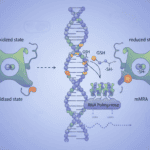
NRF2 is a transcription factor, a protein whose job is to enter the cell nucleus and switch genes on or off. When activated, NRF2 binds to a specific DNA sequence called the antioxidant response element (ARE) and initiates transcription of the genes downstream. The number of genes under NRF2 control is estimated at over 200. They include the enzymes that produce glutathione (the cell’s primary antioxidant), superoxide dismutase, catalase, heme oxygenase-1, and a suite of detoxification enzymes that process and eliminate harmful compounds.
The significance of this is that NRF2 does not supply antioxidants directly. It activates the cell’s own manufacturing capacity. This is fundamentally different from taking an antioxidant supplement, which delivers a fixed quantity of a single compound. NRF2 activation turns on an entire production system, calibrated to the level of threat the cell is actually facing.
The KEAP1 Lock and How It Opens
Under resting conditions, NRF2 never reaches the nucleus. It is captured almost immediately after it is synthesised by a protein called KEAP1, which tags it for destruction. NRF2 has a half-life of roughly 20 minutes under normal cellular conditions. The protein is produced, grabbed, labelled for the cellular recycling system, and degraded before it can act. This is not a malfunction. It is a control mechanism. Running the full antioxidant defence programme continuously would be metabolically expensive and unnecessary.
KEAP1 acts as the sensor. It contains cysteine residues that are chemically sensitive to oxidants and electrophiles — precisely the molecules that indicate cellular stress. When these residues are modified by reactive species, KEAP1’s structure changes. It can no longer hold NRF2. The transcription factor escapes degradation, accumulates in the cytoplasm, and travels to the nucleus where it activates its target genes.
When the threat resolves and oxidative conditions normalise, newly synthesised KEAP1 resumes capturing NRF2 and the system returns to baseline. The sensitivity of KEAP1 to oxidative signals means the pathway responds proportionally — a mild stress produces a modest activation, a severe stress produces a stronger one.
How NRF2 Activity Changes With Age
Several research groups have documented a consistent pattern: NRF2 pathway activity declines with age across multiple species and tissue types. The mechanism is not fully resolved, but evidence points to increased activity of proteins that suppress NRF2, reduced availability of the signalling molecules that trigger KEAP1 release, and changes in the epigenetic landscape that affect NRF2 gene expression.
The practical consequence is a widening gap between the oxidative challenges an ageing cell faces and its capacity to mount a defence. Older cells accumulate more oxidative damage not only because they face more oxidants but because their NRF2-regulated defences are less responsive. A 2018 analysis published in Ageing Research Reviews described declining NRF2 activity as a key contributor to the loss of stress resistance that characterises the ageing process across tissues.
What Activates NRF2
The pathway responds to a range of stimuli, some of which can be influenced through ordinary behaviour.
Exercise is the most consistently documented natural activator. Physical activity generates reactive oxygen species that modify KEAP1 and trigger NRF2 release. The post-exercise upregulation of antioxidant enzymes is well established in the literature and is one of the reasons regular exercise produces lasting improvements in cellular stress resistance — not despite causing oxidative stress but partly because of it.
Sulforaphane, a compound released when cruciferous vegetables like broccoli and Brussels sprouts are chewed or chopped, is one of the most studied dietary NRF2 activators. It directly modifies KEAP1 cysteine residues and triggers NRF2 release. Curcumin from turmeric and various polyphenols have also shown NRF2-activating properties in cell and animal studies, though translating these findings to human dietary intake remains an area of active research.
Intermittent fasting and caloric restriction activate NRF2 through multiple mechanisms, including increased production of ketones and changes in the cellular energy sensing pathways that feed into KEAP1-NRF2 regulation.
What Remains Unknown
NRF2 is clearly important. Its precise role in human ageing and disease is less clear. Most of the longevity research connecting NRF2 activity to lifespan extension comes from animal models — worms, flies, and mice — where experimental manipulation is straightforward. Whether those findings translate proportionally to humans is an open question.
The therapeutic picture is also complicated. NRF2 has anti-tumour effects in some contexts and pro-tumour effects in others — established cancers sometimes exploit NRF2 to protect themselves from chemotherapy-induced oxidative stress. Developing NRF2-targeted drugs that produce consistent benefits requires understanding this context dependency more precisely than current research allows.
There is also the question of what NRF2 decline in ageing actually reflects. Is it a primary driver of cellular deterioration, or a downstream consequence of other processes? Answering that question would significantly clarify the potential value of NRF2-targeted interventions.
Why It Matters
NRF2 is where lifestyle behaviour and cellular biology connect most directly. Exercise, diet, sleep quality, and fasting all influence NRF2 activity through documented molecular mechanisms. The pathway translates the inputs you give your body into the defensive capacity of your cells.
Understanding NRF2 does not require a biochemistry background to be useful. It explains why the same behaviours that appear in longevity research keep appearing in cellular health research. They are activating the same systems. The master switch metaphor holds up because the pathway genuinely sits at the centre of how cells protect and maintain themselves under stress.

Matt Elliott is the editor of Redox News Today, an independent publication covering peer-reviewed research on cellular health, redox signalling, and related biomedical science.