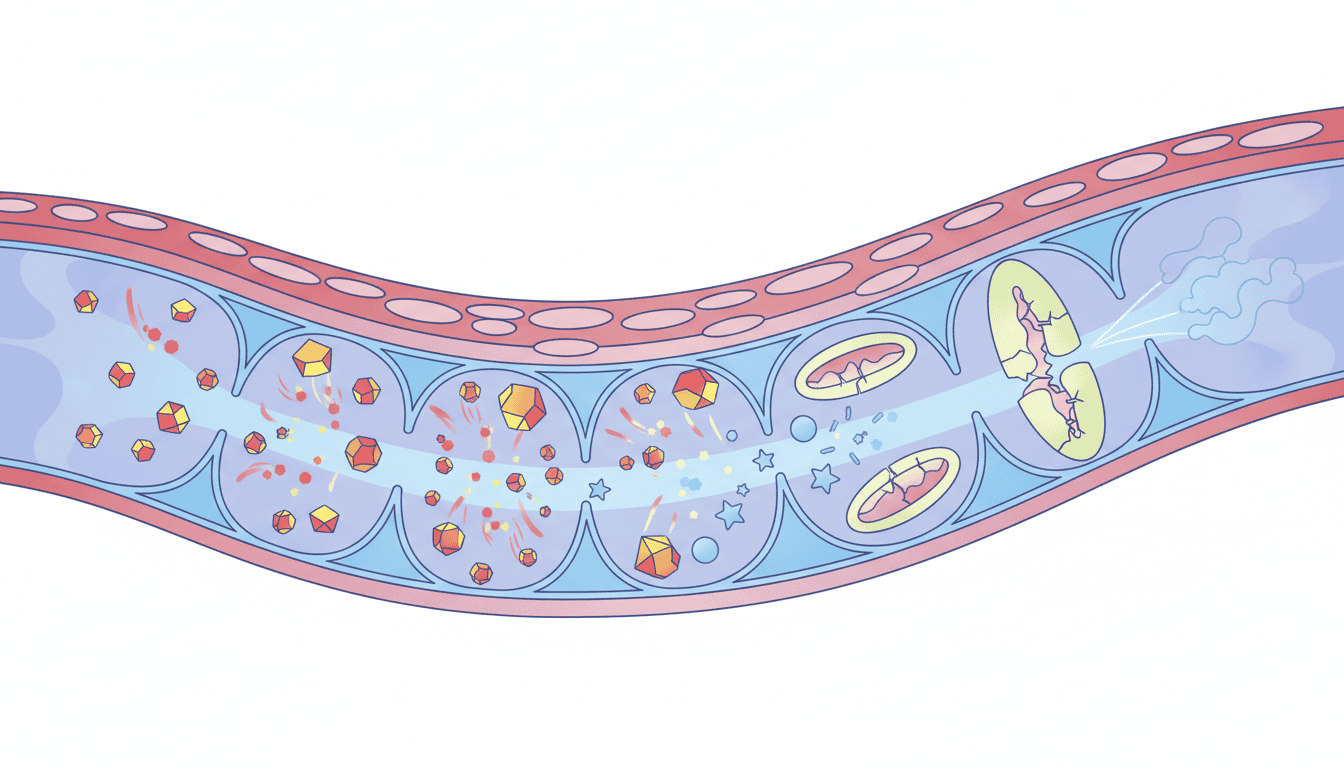
Your blood vessels are lined with a single layer of cells called the endothelium. These cells are gatekeepers, controlling what enters your bloodstream and what gets filtered out. They’re also exquisitely sensitive to chemical damage. When homocysteine, an amino acid byproduct of protein metabolism, accumulates in the blood, it triggers a cascade of oxidative stress that batters these protective cells from the inside.
What is homocysteine and endothelial oxidative stress
Homocysteine is produced when your cells break down the amino acid methionine. Normally, your body recycles homocysteine back into methionine or converts it into other compounds. But sometimes this recycling fails. Folate and vitamin B12 deficiencies, genetic variations, kidney disease, or simply ageing can leave homocysteine accumulating in your blood. When endothelial cells encounter elevated homocysteine, it triggers oxidative stress: a mismatch between harmful free radicals being generated and the cell’s ability to neutralise them.
The endothelium produces nitric oxide, a molecule that keeps blood vessels relaxed and blood flowing smoothly. Homocysteine interferes with this process. It simultaneously increases free radical production while depleting the antioxidant systems that normally defend against them. Think of it as cutting the fire alarm while pouring fuel on the fire.
What the research shows
Scientists culturing endothelial cells in elevated homocysteine have observed consistent patterns. Free radical production increases markedly. The cells’ antioxidant defence enzymes, particularly superoxide dismutase and catalase, become overwhelmed. Glutathione, the cell’s main antioxidant workhorse, gets depleted faster than the cell can replenish it.
The damage cascades outward. Oxidative stress activates inflammation signalling pathways inside endothelial cells. The cells begin expressing adhesion molecules that allow immune cells to stick to the vessel wall. Endothelial function deteriorates: nitric oxide production drops while endothelin, a molecule that constricts blood vessels, increases. In animal models with elevated homocysteine, researchers observe impaired blood vessel relaxation and increased vascular stiffness. The endothelium becomes leakier, and oxidised lipoproteins accumulate more readily in the vessel wall.
Homocysteine also triggers mitochondrial dysfunction. The cell’s energy factories begin generating excessive reactive oxygen species before they can produce adequate ATP. This creates a vicious cycle: energy-depleted cells can’t maintain their antioxidant defences, so oxidative stress worsens.
Why cells need protection from this damage
The endothelium isn’t just a passive lining. It’s a metabolically active barrier performing continuous surveillance and maintenance work. When oxidative stress damages endothelial cells, the consequences ripple throughout the cardiovascular system.
Evolution shaped multiple layers of antioxidant defence because free radical damage accumulates irreversibly. Proteins get cross-linked and malfunction. DNA accumulates mutations. Lipids in cell membranes become oxidised and rigid. These damaged components can trigger cell death or push cells toward dysfunctional states like senescence, where they stop dividing but keep producing inflammatory signals.
For endothelial cells specifically, maintaining antioxidant capacity is survival. These cells sit at the interface between blood and tissue, constantly exposed to reactive species. If the endothelium fails, blood clots form, vessels constrict inappropriately, and atherosclerosis accelerates. The body evolved redundant antioxidant systems precisely because endothelial health is non-negotiable.
What affects homocysteine and endothelial oxidative stress
Diet shapes homocysteine levels significantly. B vitamins, particularly B6, B12, and folate, serve as cofactors for the enzymes that metabolise homocysteine. Low dietary intake of these vitamins allows homocysteine to accumulate. People eating plant-based diets without adequate fortified sources sometimes run low on B12. Older adults often show reduced B vitamin absorption regardless of intake.
Kidney function matters substantially. The kidneys filter homocysteine from blood and excrete it. Chronic kidney disease disrupts this clearance, allowing homocysteine to rise even when dietary intake is normal. This creates a particularly vicious problem: the kidneys are themselves vulnerable to endothelial damage from elevated homocysteine.
Physical inactivity appears to worsen endothelial oxidative stress in the context of elevated homocysteine. Exercise stimulates endothelial nitric oxide production and enhances antioxidant enzyme expression. Conversely, sedentary behaviour allows endothelial defences to atrophy. Smoking and elevated blood sugar both accelerate oxidative stress in endothelial cells, potentially amplifying homocysteine’s effects.
Ageing itself reduces endothelial antioxidant capacity. Older people produce less superoxide dismutase and maintain lower glutathione levels. This age-related decline in antioxidant defence makes the endothelium more vulnerable to homocysteine’s effects.
What remains unknown
Researchers still don’t fully understand why some people with modestly elevated homocysteine experience minimal endothelial damage while others with similar levels show marked dysfunction. Genetic variations in antioxidant enzymes clearly matter, but the complete picture remains murky. Some individuals might carry polymorphisms that boost their endothelial defences specifically.
The precise threshold at which homocysteine starts causing endothelial damage also remains debated. Laboratory studies typically use concentrations higher than normal physiological levels. It’s unclear how chronic mild elevation compares to acute high exposure in terms of actual cellular consequences.
Scientists are still mapping the intersection between homocysteine and other sources of endothelial oxidative stress. How does elevated homocysteine interact with inflammation, environmental pollutants, or metabolic dysfunction? Does it amplify their effects or does the endothelium have distinct defence strategies for each? The mechanisms regulating endothelial mitochondrial function during homocysteine exposure also need clarification. Understanding why mitochondria become dysfunctional might reveal intervention points.
Closing thoughts
Homocysteine’s effect on endothelial cells illustrates a fundamental principle of cellular biology: metabolic waste products aren’t truly waste if they accumulate beyond the cell’s capacity to handle them. Homocysteine itself is a normal, necessary byproduct of amino acid metabolism. The problem emerges when clearance mechanisms fail and concentration builds up. This pattern repeats throughout biology. Cells evolved multiple redundant defence systems precisely because they can’t prevent all potentially harmful byproducts from forming, only manage them. Understanding how homocysteine overwhelms endothelial defences reveals not just a specific metabolic problem, but how cellular stress systems work and what happens when they become insufficient.

Matt Elliott is the editor of Redox News Today, an independent publication covering peer-reviewed research on cellular health, redox signalling, and related biomedical science.