Your cells are constantly under attack from unstable molecules called free radicals. They damage DNA, proteins, and fats if left unchecked. But cells have evolved sophisticated defence mechanisms to fight back, and a growing body of research suggests that manganese dioxide nanoparticles can amplify these defences by triggering the genes that produce protective antioxidants.
What is cellular oxidative stress
Oxidative stress happens when free radicals accumulate faster than your cells can neutralise them. This is not some abstract biochemical problem. It happens every single day as a side effect of normal metabolism, and it accelerates during inflammation, exercise, or exposure to environmental toxins.
Cells defend themselves through antioxidant proteins like superoxide dismutase, catalase, and glutathione peroxidase. These enzymes act like molecular cleanup crews, converting dangerous free radicals into harmless water and oxygen. But cells need to produce enough of these enzymes to keep pace with the threat. That production depends on gene expression, the process by which cells read their DNA blueprints and manufacture new proteins.
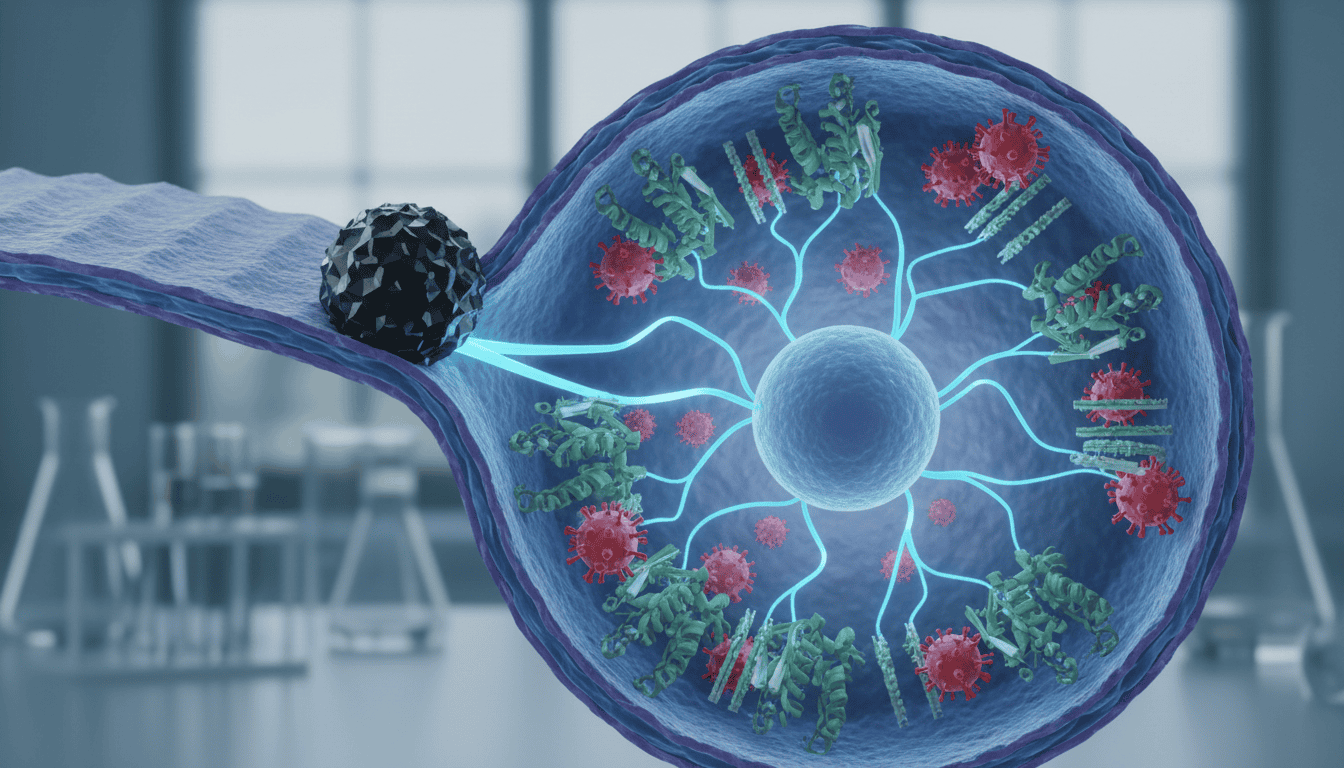
This is where manganese dioxide enters the picture. MnO2 nanoparticles are tiny structures, roughly 50 to 100 nanometres across. Researchers have observed that when these particles interact with cells, they can trigger the signalling pathways that activate antioxidant genes, essentially putting cells on high alert to produce more defensive proteins.
What the research shows
Scientists studying MnO2 nanoparticles have documented a consistent pattern. When cells encounter these particles, antioxidant gene expression increases measurably within hours. Specifically, genes encoding superoxide dismutase and catalase show elevated activity. Researchers observe this effect across different cell types, from fibroblasts to immune cells, suggesting a fairly universal mechanism.
The particles appear to work through a two-step process. First, they generate a mild oxidative stress signal themselves, which acts like an alarm bell. Second, this alarm activates transcription factors like NRF2, a protein that binds to DNA and switches on the antioxidant genes. It is rather elegant: a small amount of controlled stress triggers the cell’s own repair machinery into overdrive.
What makes this interesting is the dose-response relationship researchers have observed. At very low concentrations, MnO2 nanoparticles stimulate protective gene expression without damaging cells. At higher concentrations, they can cause the opposite problem, overwhelming cellular defences. This narrow therapeutic window suggests that the effect depends on precise conditions, not just on throwing more particles at the problem.
Why cells need this
The ability to sense and respond to oxidative stress is one of evolution’s most durable survival strategies. Cells that cannot activate their antioxidant defences die. Those that activate them too slowly suffer accumulated damage. Natural selection has therefore preserved this signalling system across billions of years of evolution.
The genes that code for antioxidant enzymes are not constantly switched on. That would waste energy. Instead, they sit dormant until cells detect a threat. MnO2 nanoparticles essentially mimic that threat signal, fooling cells into activating their defence genes. In a biological sense, this is the cell doing what it evolved to do. The particles are just providing a novel trigger.
This mechanism matters because ageing and chronic disease both involve progressive decline in cellular antioxidant capacity. As we get older, our cells produce fewer antioxidant enzymes even when they need them most. If external stimuli could reliably boost antioxidant gene expression, they might help cells maintain their defensive capabilities longer.
What affects MnO2 nanoparticle efficacy
Particle size matters enormously. Nanoparticles smaller than 50 nanometres penetrate cells more readily than larger ones. Researchers have found that the most effective particles sit in a sweet spot around 50 to 100 nanometres. Too small and they may cause excessive cellular damage. Too large and they cannot reach the subcellular compartments where antioxidant signalling occurs.
Surface chemistry also influences activity. The exact composition and coating of the MnO2 particles affects how cells recognise them and respond. Researchers can manipulate these properties to enhance or reduce the antioxidant gene response.
Cell type plays a role as well. Immune cells and liver cells, which are naturally exposed to oxidative stress, respond differently than other cell types. A particle that powerfully activates antioxidant genes in one cell type might have modest effects in another. This explains why researchers cannot simply test MnO2 nanoparticles in a single cell line and predict universal effects.
Environmental factors matter too. Cells already under oxidative stress respond differently than cells in a stable state. Temperature, pH, and the presence of other molecules in the surrounding medium all influence how nanoparticles interact with cellular signalling pathways.
What remains unknown
Researchers still cannot explain exactly why MnO2 nanoparticles work better than other manganese compounds at triggering antioxidant gene expression. The mechanism involves the particle structure itself, not just manganese chemistry, but the precise details remain unclear. This is not a gap in the research so much as an invitation for better experiments.
Long-term effects remain largely uncharted. Most studies observe cells over hours or days. What happens over weeks or months of repeated exposure to MnO2 nanoparticles? Do cells develop tolerance to the signalling effect? Does chronic activation of antioxidant genes produce unexpected consequences? These questions have not been adequately addressed.
The translational path is also foggy. Even if MnO2 nanoparticles reliably boost antioxidant gene expression in a cell culture dish, moving this into living organisms introduces complications. How would particles be delivered to target tissues? How much would accumulate in organs over time? What immune responses might they trigger? The leap from cellular biology to functional treatments requires solving problems that pure research has not yet tackled.
The study of MnO2 nanoparticles and their effects on cellular stress responses points toward a larger scientific question: can we develop external triggers that amplify cells’ own defence systems rather than replacing them? This represents a subtle but important shift in thinking about cellular health. Instead of adding antioxidants from outside, researchers are learning to make cells produce their own protective proteins more efficiently. That distinction might matter more than we currently understand.

Matt Elliott is the editor of Redox News Today, an independent publication covering peer-reviewed research on cellular health, redox signalling, and related biomedical science.