Your liver can regrow itself after injury or surgery. Within weeks, what remains of the organ expands to restore full function. But this regeneration demands enormous metabolic effort, flooding cells with reactive oxygen species that can cause serious damage. A single microRNA molecule, miR122, acts as a molecular brake pedal during this chaotic process, preventing the liver from destroying itself while it heals.
What is miR122
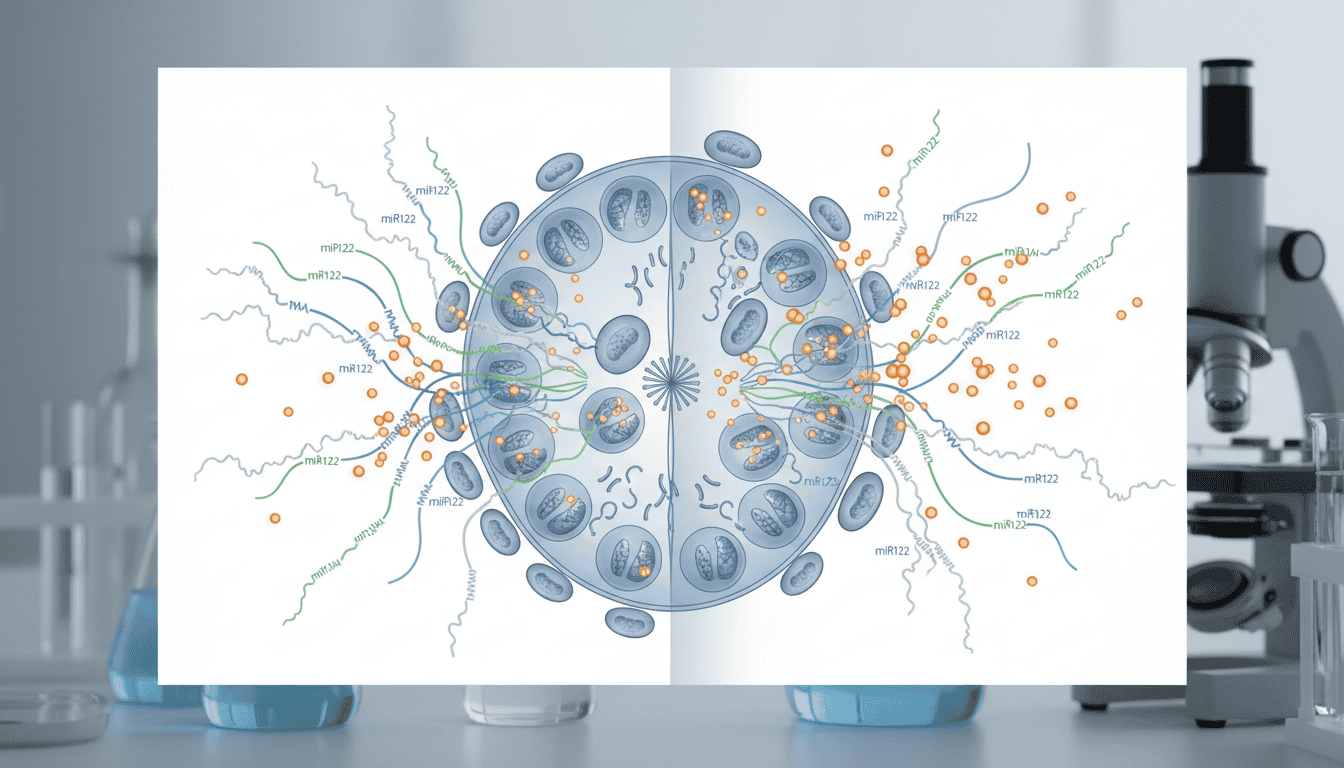
MicroRNAs are short snippets of RNA, typically around 22 nucleotides long, that regulate gene expression by binding to messenger RNAs and silencing them. MiR122 is one of the liver’s most abundant microRNAs, making up about 70 percent of all microRNA in hepatocytes. Think of it as a specialised traffic controller that exists almost exclusively in liver cells.
The molecule works through a simple mechanism. Once miR122 binds to a target messenger RNA, it either prevents that mRNA from being translated into protein or marks it for degradation. This gives liver cells a rapid way to dial down the production of specific proteins without waiting for slower transcriptional controls to kick in. During regeneration, when the liver needs to make rapid decisions about which proteins to produce and which to suppress, this speed matters enormously.
What the research shows
Studies examining liver regeneration have revealed that miR122 levels shift significantly during the healing process. When hepatocytes sense they need to divide and expand, they dynamically adjust how much miR122 they produce. Researchers studying partial hepatectomy, where a portion of the liver is surgically removed, observed that miR122 expression patterns change in specific waves during the first few days after surgery.
The key insight came from examining what happens when miR122 is depleted. Livers without adequate miR122 during regeneration experience elevated oxidative stress, accumulating more reactive oxygen species than normal livers undergoing the same regeneration process. This extra oxidative burden correlates with slower recovery and impaired hepatocyte function. Conversely, maintaining miR122 at appropriate levels during regeneration allows cells to manage the oxidative load while still achieving rapid growth.
Researchers also identified some of miR122’s direct targets. The molecule suppresses genes involved in oxidative stress generation and lipid metabolism, two processes that naturally escalate during tissue regeneration. By keeping these processes in check, miR122 prevents the liver from accidentally poisoning itself during repair.
Why cells need this
Liver regeneration is metabolically expensive. Hepatocytes must synthesise vast amounts of new proteins, assemble new membranes, and divide rapidly. All this activity demands intense mitochondrial respiration, which naturally produces reactive oxygen species as a byproduct. The more energy a cell burns, the more oxidative stress accumulates.
Without some defence mechanism, this oxidative stress would activate cell death pathways and stall regeneration just when the liver needs to heal fastest. MiR122 provides targeted protection by modulating specific metabolic pathways. It doesn’t simply shut down all reactive oxygen species production, which would be counterproductive and dangerous. Instead, it fine-tunes the balance, allowing enough metabolic activity for growth whilst preventing the system from spiralling into dangerous oxidative conditions.
This makes evolutionary sense. The liver faces regeneration challenges more frequently than most organs. Damage from toxins, infections, or surgery means hepatocytes evolved sophisticated mechanisms to heal quickly without self-destruction. MiR122’s specific abundance in liver tissue suggests it evolved partly to solve this particular problem.
What affects miR122
MiR122 levels vary with age. Older livers often show reduced miR122 expression compared to younger livers, and this correlates with slower regeneration and increased oxidative stress during healing. Some research suggests this age-related decline contributes to delayed liver recovery in elderly patients undergoing surgery or experiencing liver injury.
Diet and metabolic health also influence miR122 regulation. Livers experiencing fatty infiltration or metabolic dysfunction show altered miR122 patterns. High-fat feeding in animal models reduces miR122 expression and impairs the liver’s ability to manage oxidative stress during regeneration. Conversely, caloric restriction appears to maintain miR122 at levels that support efficient regeneration.
Viral hepatitis and liver disease substantially disrupt miR122 signalling. The hepatitis C virus specifically targets miR122, hijacking the molecule for its own replication. This interference with normal miR122 function contributes to both viral persistence and oxidative stress in infected livers. Similarly, other forms of chronic liver disease show abnormal miR122 patterns alongside impaired regenerative capacity.
What remains unknown
Researchers still don’t fully understand how hepatocytes regulate miR122 expression during regeneration. What signals trigger the dynamic changes in miR122 levels during the hours and days after liver injury? The transcription factors and upstream regulators controlling miR122 production remain incompletely mapped.
The full catalogue of miR122 targets during regeneration also needs clarification. Scientists have identified some key targets, but miR122 likely influences many other genes in context-dependent ways. Determining all these interactions would require more sophisticated approaches to studying microRNA function in living livers.
The relationship between miR122 and other stress-response pathways deserves closer investigation. How does miR122 coordinate with transcription factors like NRF2 that activate antioxidant defences? Do they work synergistically or in opposition? These questions touch on fundamental biology of how cells integrate multiple stress signals to mount proportionate responses.
Understanding how a molecule so abundant in liver tissue regulates regeneration and oxidative balance reveals something important about cellular biology. Organs don’t regenerate through brute force. Instead, they employ sophisticated molecular governors that allow growth whilst preventing self-destruction. MiR122 represents just one piece of this regulatory machinery, yet it demonstrates how even tiny RNA molecules can have outsized importance when the stakes involve tissue survival and recovery. As we age and organs regenerate less efficiently, understanding these molecular controllers becomes increasingly relevant to explaining why healing slows and mistakes accumulate.

Matt Elliott is the editor of Redox News Today, an independent publication covering peer-reviewed research on cellular health, redox signalling, and related biomedical science.