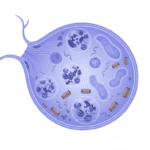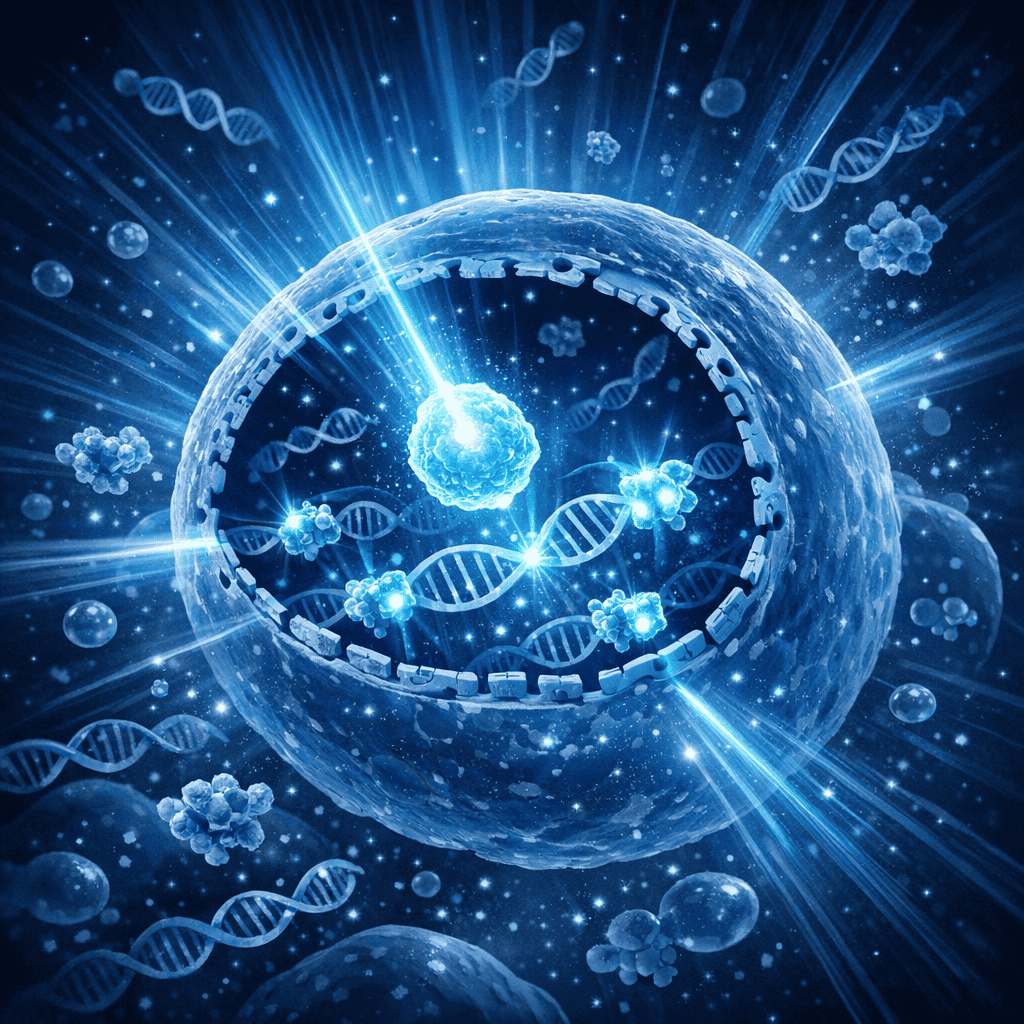

Your neurons are constantly making mistakes. Not typos in the genetic code, but in the way proteins fold after they’re built. A misfolded protein is like a piece of machinery with bent gears. Leave it alone and it will jam up the cell. Stack enough of them together and you get the tangled, sticky accumulations that define diseases like Alzheimer’s and Parkinson’s. But your cells have a solution that’s been refined over billions of years of evolution: molecular chaperones. These are proteins that work like tiny repair specialists, grabbing hold of newly made proteins and coaxing them into the right shape. When this system fails, neurodegeneration begins.
What is a cellular chaperone system
Chaperone proteins aren’t mechanics who fix broken machines. They’re more like yoga instructors for proteins, guiding them through the contortions required to reach their final form. Every protein in your cells exists as a long chain of amino acids that must fold into a precise three-dimensional shape to work properly. This folding process is thermodynamically difficult. The chain has to navigate through thousands of possible wrong shapes before settling into the one correct configuration.
Cells employ several classes of chaperones to manage this. Heat shock proteins (named because cells produce more of them when overheated) are the most well-studied. These include Hsp70 and Hsp90, which work like molecular clamps, using energy from ATP molecules to pull and guide protein chains into position. Another group, the chaperonins, are barrel-shaped structures that enclose proteins in a protected chamber where they can fold safely. When a protein is successfully folded, the chaperone releases it and moves on to the next job. When folding fails despite these efforts, another set of proteins tags the damaged protein with ubiquitin molecules, marking it for destruction through a process called proteasomal degradation. This is quality control at the molecular level.
What the research shows
Scientists studying neurodegenerative disease have uncovered a consistent pattern: chaperone systems lose capacity with age and disease progression. In Alzheimer’s disease, researchers found that the levels of certain heat shock proteins decline in affected brain regions. More revealing, the chaperones that remain are often overwhelmed. They can’t keep pace with the accumulation of misfolded proteins, particularly tau and amyloid beta. These proteins stick to each other, forming aggregates that chaperones cannot unfold or assist into proper shape.
In Parkinson’s disease, the picture is similar but the protagonist is different. Alpha-synuclein, a protein normally involved in neurotransmitter release, misfolds and polymerises into rigid Lewy bodies. Chaperones attempt to prevent this aggregation and can even break apart early stage clumps, but once the aggregates reach a certain size and stability, the system gives up. The protein becomes resistant to unfolding.
Research on cellular models shows something encouraging: when scientists artificially increase chaperone expression in neurons, misfolded protein accumulation slows. In some experimental systems, even established aggregates can be partially broken down if chaperone capacity is boosted. This suggests the system isn’t permanently broken in disease, just temporarily overwhelmed. The machinery for quality control remains functional, even if it can’t quite keep up with demand.
Why cells need this
Protein folding is not a solved problem in biology. Even under ideal conditions, many proteins fold incorrectly on their first attempt. Without chaperones, cells would be clogged with useless protein debris within minutes. The chaperone system emerged early in cellular evolution because any organism that could recover from folding errors had a massive survival advantage.
In the nervous system, this becomes even more critical. Neurons are among the longest-lived cells in the human body. A neuron in your cortex might exist for 80 years or more. Over that timespan, the probability of protein damage accumulates exponentially. Your cortex can’t simply divide and discard damaged cells like your gut lining can. It needs robust, durable quality control mechanisms. This is why neurons express unusually high levels of chaperone proteins compared to other cell types. They’re built for longevity.
The chaperone system also serves a second purpose: it buffers against genetic variation. Many proteins encoded by genes with slightly altered sequences will still fold properly, just slowly or inefficiently, if chaperones assist them. This flexibility allowed evolution to explore new protein sequences without immediate fitness costs. But it also means neurons can tolerate certain genetic variants that might cause disease under stress conditions. Chaperone capacity is a hidden variable affecting disease penetrance.
What affects cellular chaperone systems
Ageing is the primary factor. Heat shock protein expression and activity decline steadily across the lifespan, particularly after age 60. This isn’t because the genes switch off, but because the signalling pathways that trigger their expression become less responsive. Cells are simply less alarmed by misfolded proteins as they age.
Temperature influences chaperone activity in obvious ways. Heat stress activates the heat shock response and increases chaperone production. Chronic exposure to elevated temperatures, as in fever or inflammation, keeps chaperones busy. But chronic moderate stress can also deplete them if production can’t match demand.
Oxidative stress accelerates protein damage. When cells accumulate reactive oxygen species from metabolism, environmental toxins, or metabolic dysfunction, proteins misfold faster. Antioxidant systems and mitochondrial health therefore indirectly affect chaperone burden. Cells with poor antioxidant defences generate more damaged proteins than chaperones can handle, regardless of how many chaperones they have.
Sleep and circadian rhythm also matter. Many chaperones are produced on a circadian schedule. Chronic sleep disruption and circadian misalignment reduce peak chaperone expression. Exercise appears protective, partly because it mildly activates the heat shock response and keeps chaperone systems primed for action. Dietary factors, particularly protein intake and the balance of essential amino acids, affect the raw materials available for both protein synthesis and chaperone production.
What remains unknown
We still don’t fully understand why specific proteins like amyloid beta and alpha-synuclein misfold so readily in some people and not others. Genetic variation in chaperone genes themselves likely contributes, but the effect sizes are modest. Environmental factors matter, but we can’t yet predict who will develop neurodegeneration based on measured chaperone capacity.
The question of whether aggregated proteins can be rescued remains partly open. In laboratory systems, chaperones can dissolve small aggregates. But large, cross-linked aggregates appear mechanically resistant to unfolding. Whether hybrid approaches combining different chaperone systems could overcome this barrier is still being investigated. Similarly, we don’t know if boosting chaperone expression in aged brains is practical, or whether cells have regulatory safeguards that prevent excessive chaperone production for reasons we haven’t identified.
The temporal relationship between chaperone decline and disease onset is another puzzle. Many people with substantial amyloid or tau accumulation in their brains never develop dementia. Chaperone differences might explain this variation, but the evidence is still circumstantial. And we have only sketches of how chaperone systems interact with neuroinflammation, which clearly contributes to neurodegeneration but works on different timescales than protein folding problems.
The emerging picture of neurodegeneration is one where the cell’s maintenance systems gradually fall behind accumulated damage. Chaperones remain central to this story because they represent the cell’s first line of defence against misfolded proteins. Understanding when and why this defence fails, and whether it can be reinforced without triggering unintended consequences, represents one of the most concrete targets in neuroscience research. The mechanisms are increasingly clear. The translation to human biology remains the frontier.

Matt Elliott is the editor of Redox News Today, an independent publication covering peer-reviewed research on cellular health, redox signalling, and related biomedical science.