
Red blood cells are among the busiest factories in your body, churning out roughly 2 million cells per second. Each one needs millions of haemoglobin molecules to ferry oxygen, and each haemoglobin needs a heme group at its core. That heme has to be built somewhere, delivered somewhere else, and integrated into proteins with precision. The surprising part? Mature red blood cells have no mitochondria at all, yet they still need to synthesise heme. Understanding how this happens reveals something fundamental about cellular logistics and how cells solve seemingly impossible problems.
What is heme transport in red blood cells
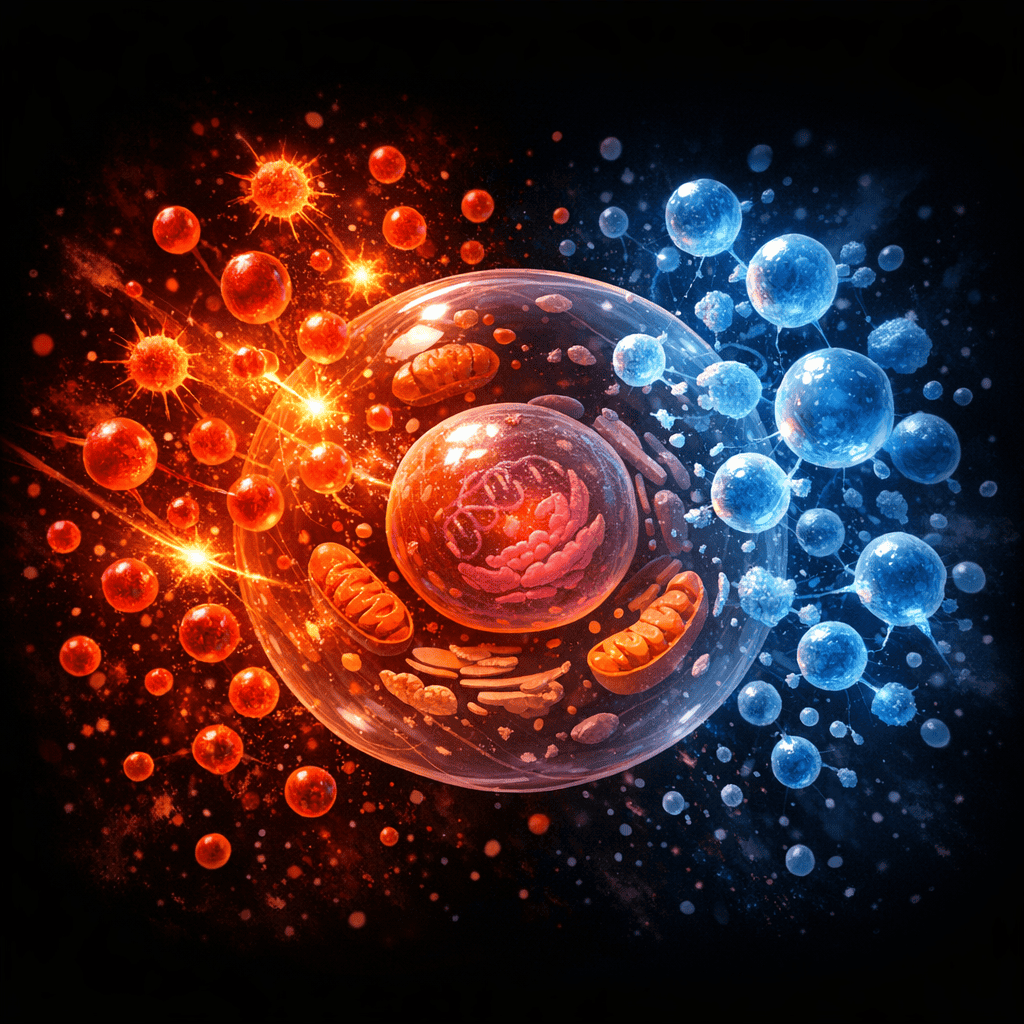
Heme is an iron-containing organic molecule that binds oxygen like a magnet attracts metal. Its synthesis happens in two cellular compartments: mitochondria handle the early and late stages of the pathway, whilst the cytoplasm manages the middle section. For young red blood cells that still possess mitochondria, heme is made inside the mitochondrial matrix and outer membrane, then needs to move into the cytoplasm where it meets the developing haemoglobin proteins waiting to use it.
The actual transport mechanism involves specialised carrier proteins and transport channels embedded in the mitochondrial membrane. These aren’t random shuffling operations. Cells have evolved specific molecular machinery to recognise heme and ferry it across lipid barriers that would otherwise block its passage. Once in the cytoplasm, additional proteins shepherd heme molecules to their destination: the waiting globin chains that will form mature haemoglobin.
What the research shows
Studies of red blood cell development reveal that heme transport is tightly regulated and remarkably efficient. When researchers track isotope-labelled heme molecules, they watch them move from mitochondria into the cytoplasm within minutes, then rapidly incorporate into developing haemoglobin. The process doesn’t happen by accident. Cells detect heme levels and adjust transport rates accordingly, preventing toxic accumulation whilst ensuring sufficient supply for haemoglobin production.
Research on transport proteins has identified several key players. Certain mitochondrial carriers recognise heme’s chemical structure and bind it specifically. Their activity increases when heme demand rises, such as when red blood cells are ramping up haemoglobin synthesis. When these transporters are disrupted in experimental systems, heme accumulates in mitochondria whilst haemoglobin production falters. The opposite occurs too: block heme synthesis early, and transport activity decreases, a neat feedback loop that prevents waste.
What’s remarkable is the speed. From synthesis to incorporation into haemoglobin takes only a few minutes. This rapid turnover keeps heme levels balanced. Too much heme is toxic, triggering cellular damage through reactive oxygen species. Too little, and haemoglobin output drops below what developing red blood cells need.
Why cells need this
Red blood cells face a biological paradox: they need massive quantities of haemoglobin to carry oxygen efficiently, yet haemoglobin synthesis must be coordinated with heme availability. If heme were allowed to accumulate freely, excess iron would generate dangerous free radicals that damage cell components. If heme transport was sluggish, developing red blood cells couldn’t make enough haemoglobin to function properly.
The transport system solves both problems simultaneously. By regulating the movement of heme from mitochondria to cytoplasm, cells maintain the tight stoichiometry needed: just enough heme to match globin chain production, nothing wasted. This is particularly important in bone marrow, where red blood cell factories operate at extraordinary rates. A single developing red blood cell might synthesise 280 million haemoglobin molecules during its maturation period. Every one needs a heme group.
Evolution has also wired heme transport to respond to cellular iron status. When iron is scarce, heme transport slows automatically. When iron floods in, transport ramps up. This prevents the synthesis of incomplete haemoglobin molecules that lack heme, and also prevents the buildup of free haemoglobin chains that would precipitate and kill the cell.
What affects heme transport
Iron availability is the primary regulator. Research shows that iron-sensing proteins in the cell monitor intracellular iron stores and adjust heme synthesis and transport rates in response. When body iron runs low, such as during blood loss, the entire pathway downregulates to preserve precious iron. When iron is abundant, transport and synthesis accelerate.
Oxygen levels also matter. Hypoxia, the condition of insufficient oxygen, triggers signalling cascades that increase red blood cell production and, by extension, boost heme transport capacity. This is why people living at high altitude or dealing with chronic lung disease develop elevated red blood cell counts. Their cells are essentially ramping up all the machinery involved in producing haemoglobin, including heme transport.
Genetic variation plays a role too. Different human populations carry variants in genes encoding heme transport proteins, and these variants can subtly affect transport efficiency. Some rare genetic disorders stem from mutations that disrupt heme transport specifically, causing anaemia despite normal iron levels.
Age-related changes occur as well. Young red blood cells in development show robust heme transport capacity, which declines as cells mature and eventually lose their mitochondria. Once mitochondria disappear, all heme transport ceases since there’s no source of synthesis. The mature red blood cell is locked into its haemoglobin content for its 120-day lifespan.
What remains unknown
Scientists still don’t fully understand all the heme transporters involved. Researchers have identified several candidate proteins, but the complete roster of transport machinery remains unclear. Some evidence suggests redundancy, where multiple pathways can move heme, providing backup if one transporter fails. Confirming this requires more detailed investigation.
The regulation of transport is also incompletely understood. Cells clearly sense heme abundance and adjust transport rates, but the precise molecular sensors involved aren’t completely mapped. Several signalling pathways appear to converge on transport regulation, but their relative contributions remain fuzzy.
There’s also the question of how transport proteins avoid simply leaking heme into the mitochondrial membrane, where it could cause damage. The mechanisms protecting the mitochondrial interior whilst still allowing rapid heme export need more research. Understanding this could reveal general principles about how cells transport small molecules that are both useful and potentially dangerous.
Red blood cells are deceptively simple in appearance but extraordinarily sophisticated in their internal organisation. The system for moving heme from where it’s made to where it’s needed exemplifies cellular ingenuity: specificity, speed, regulation, and backup systems all working together. As research continues, it becomes clearer that even the most straightforward cellular processes emerge from intricate molecular choreography, fine-tuned by evolution to handle extraordinary metabolic demands.

Matt Elliott is the editor of Redox News Today, an independent publication covering peer-reviewed research on cellular health, redox signalling, and related biomedical science.