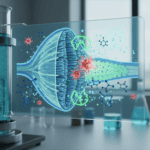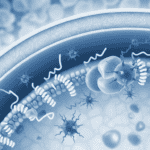

Your retina sits at the back of your eye doing one of the most metabolically demanding jobs in your body. It’s converting light into electrical signals, millions of times per second, and that process generates waste products that can damage cells if left unchecked. The retinal pigment epithelium (RPE) is the layer that sits just behind the light-sensitive photoreceptors, essentially acting as a cleanup crew and life-support system. When oxidative stress overwhelms this layer, the entire vision system starts to fail. This is where macular degeneration enters the picture.
What is oxidative stress in the RPE
Oxidative stress happens when cells produce reactive oxygen species (ROS) faster than they can neutralise them. Think of ROS as unstable chemical fragments left behind when cells burn fuel for energy. They’re like sparks from a forge, and if too many accumulate, they’ll burn through everything nearby. The RPE is particularly vulnerable because photoreceptors sitting on top of it are constantly exposed to light, which accelerates ROS production. The RPE then has to manage not just its own metabolic waste but also the overflow from these light-exposed cells.
The RPE cells have multiple defence systems. They produce antioxidant enzymes like superoxide dismutase and catalase, which convert dangerous ROS into harmless molecules. They also accumulate protective compounds in their cells. But here’s the problem: the RPE sits in a harsh microenvironment. It’s tucked between the blood supply below and the metabolically intense photoreceptors above. As we age, or when certain environmental factors intervene, these antioxidant systems gradually weaken or get overwhelmed.
What the research shows
When scientists expose RPE cells to increased oxidative stress in laboratory conditions, several things happen in quick succession. First, the cells’ mitochondria start malfunctioning. Mitochondria are the powerhouses of cells, but they’re also the main source of ROS production. Under stress, damaged mitochondria create a vicious cycle, producing more ROS while losing the ability to generate energy efficiently. The cells respond by trying to activate protective signalling pathways like NRF2, a protein that acts as a master switch for antioxidant genes.
But oxidative stress has a time limit on this defence. If ROS levels stay elevated, the protective mechanisms exhaust themselves. Calcium starts leaking into the cells where it shouldn’t be, triggering apoptosis, which is essentially programmed cell death. The RPE cells begin shedding their tight junctions, the connections that keep them glued together in a functional barrier. This barrier is critical because it’s what prevents toxic substances from reaching the photoreceptors above. Once it breaks down, photoreceptors deteriorate rapidly.
Research also shows that oxidative stress triggers changes in how RPE cells handle lipids. These cells naturally accumulate lipofuscin, an indigestible waste product that builds up over decades. Under oxidative stress, this accumulation accelerates, and the waste products themselves generate more ROS in a self-amplifying process. Simultaneously, the cells struggle to maintain their phagocytic function, the ability to engulf and digest the outer segments of photoreceptors that naturally shed each day.
Why cells need this system to work
The RPE exists in an evolutionary sweet spot between two competing demands. On one hand, the retina is metabolically expensive. Photoreceptors consume energy constantly to maintain their light-sensitivity, and this generates waste. The RPE has to continuously remove dead photoreceptor segments, recycle useful components, and neutralise the oxidative byproducts. It’s like running a waste processing facility inside your eye.
On the other hand, the RPE can’t be too thick or dense because light needs to reach the photoreceptors below. So evolution created a single layer of cells that’s incredibly busy but incredibly thin. Those cells developed robust antioxidant systems because they had to survive this environment. The fact that macular degeneration involves RPE failure isn’t an accident. It’s what happens when the system that keeps this single layer alive finally breaks down.
The ROS neutralisation machinery in RPE cells represents millions of years of selection pressure. These cells live for decades, exposed to continuous light and metabolic stress. They need to maintain their barrier function, their phagocytic activity, and their ability to support photoreceptors all at once. When oxidative stress tips the balance, everything cascades.
What affects oxidative stress in the RPE
Age is the primary driver. RPE cells accumulate damage over time, their antioxidant enzyme production declines, and their mitochondrial function deteriorates. This isn’t inevitable decline though; research shows the rate varies significantly between individuals. Light exposure matters. The retina’s constant work processing light generates ROS as a byproduct, which is why outdoor light exposure correlates with retinal health outcomes in some populations but shows complex patterns in others.
Diet influences RPE health substantially. Antioxidant compounds from food like lutein, zeaxanthin, and vitamin E appear in the retina’s tissues and contribute to ROS defence. Conversely, high glycaemic diets and oxidative stress from inflammation elsewhere in the body seem to accelerate RPE damage. Smoking is a major accelerant. Tobacco smoke generates systemic oxidative stress and directly reduces antioxidant enzyme activity in the eye.
Genetic variations affect how well individuals produce protective enzymes and handle oxidative stress. Some people have more efficient NRF2 signalling or produce higher levels of superoxide dismutase. These variations don’t determine destiny, but they do influence how quickly oxidative stress accumulates with age. Sleep disruption, chronic inflammation, and metabolic conditions all seem to affect the RPE’s capacity to manage ROS, though the exact mechanisms are still being worked out.
What remains unknown
Scientists still don’t fully understand why oxidative stress triggers macular degeneration in some people but not others who have similar age and environmental exposure. There are clearly genetic modifiers at play, but researchers haven’t mapped them completely. The relationship between systemic oxidative stress and retinal oxidative stress is still being clarified. Does systemic inflammation drive eye problems, or is the retina a relatively isolated system?
The threshold question remains unanswered. How much oxidative stress can RPE cells tolerate before they start dying? Is there a tipping point, or is it a gradual decline? And once RPE cells die, can other cells in the eye compensate, or is that damage permanent? Researchers are also exploring whether certain interventions might enhance the RPE’s antioxidant defences, but this remains speculative territory.
The timeline of events is still not completely clear either. Do RPE cells die first, triggering photoreceptor death, or do damaged photoreceptors stress the RPE beyond recovery? It’s probably both at different times, but the sequence and relative contributions aren’t fully mapped.
Understanding how oxidative stress damages the RPE points to a broader truth about cellular ageing. Your cells don’t fail catastrophically. They fail because the systems that protect them from daily damage gradually weaken, and at some point the damage accumulates faster than repair can manage. The eye is particularly revealing because vision loss is easily measured and early changes are observable. But the same oxidative stress processes that damage the retina are happening in your brain, heart, and joints. The RPE is simply less forgiving of system failures than most tissues because it has to maintain perfect function or you lose vision entirely.

Matt Elliott is the editor of Redox News Today, an independent publication covering peer-reviewed research on cellular health, redox signalling, and related biomedical science.