
Your father’s breakfast choices before you were conceived may have influenced how efficiently your cells produce energy right now. This isn’t mystical thinking. It’s epigenetics at work: the emerging evidence that what a man eats alters chemical tags on his DNA that get passed to his offspring, subtly reshaping how their mitochondria function throughout life.
It’s a disorienting idea at first. We think of nutrition as something that affects us directly, immediately. But researchers studying animals with carefully controlled diets have found something stranger and more interesting: a father’s nutritional status before reproduction leaves molecular fingerprints on his children’s cells that persist for years.
What is paternal epigenetic inheritance
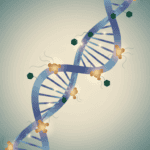
To understand this, you need to know that DNA itself isn’t the only thing you inherit from your parents. Your genes come wrapped in chemical decorations called epigenetic marks, mostly methyl groups that attach to DNA like tiny switches controlling which genes turn on or off. These marks don’t change the DNA sequence. They change what that DNA does.
When a sperm cell forms, it carries epigenetic marks shaped by the father’s health, environment, and diet. Some of these marks survive the brutal erasure that happens after fertilisation, when most epigenetic information gets wiped clean before being rewritten. A subset persists. And if those marks affect genes involved in mitochondrial function or cellular energy production, they can influence how the child’s cells behave for decades.
This happens through several mechanisms. Nutrients like folate, methionine, and choline directly provide the chemical building blocks for creating those methyl marks. Oxidative stress in the father’s cells can alter which genes get marked. Even caloric restriction or overfeeding triggers shifts in epigenetic patterns before sperm even form.
What the research shows
Animal studies have revealed concrete patterns. When male mice were fed a low protein diet before mating, their offspring showed altered expression of genes encoding mitochondrial proteins. The mitochondria in these offspring’s cells produced less ATP, the universal energy currency. Their metabolic flexibility decreased, meaning their cells struggled to switch efficiently between burning different fuel sources.
The effect wasn’t subtle. Researchers measured mitochondrial function directly using oxygen consumption assays and found significant reductions in oxidative phosphorylation capacity. These weren’t sickly animals. But their cells were fundamentally less efficient at converting nutrients into usable energy.
High fat paternal diets produced different patterns but equally notable changes. Offspring showed altered expression of genes involved in mitochondrial biogenesis (the process of making new mitochondria) and mitochondrial dynamics (the fission and fusion that keeps mitochondria healthy). Some studies observed impaired mitochondrial calcium handling, which affects muscle contraction and neuronal signalling.
What’s striking is the specificity. Paternal nutrition didn’t trigger random chaos in offspring mitochondria. Instead, particular nutrients correlated with particular changes in particular genes. This suggests the mechanism isn’t accidental but genuinely regulated.
Why cells need this capacity
The question becomes: why would evolution preserve a system where fathers’ nutritional status shapes children’s mitochondria? The answer likely involves prediction and preparation. In unstable environments where food availability fluctuates, offspring that inherit mitochondrial function patterns matching their parents’ nutritional situation would have advantages.
If your father survived a period of food scarcity, the epigenetic marks he passed on might have prepared your cells to function efficiently on limited calories. That’s adaptive when resources remain scarce. It becomes a liability only when the environment changes and abundant food arrives.
This is sometimes called developmental plasticity. Rather than having one fixed mitochondrial blueprint, organisms inherit a flexible programme that tunes itself based on parental circumstances. The mitochondria you’re born with reflect not just your genes but your father’s pre-conception environment.
What affects paternal mitochondrial signalling
Nutrient status matters most. Deficiencies in one-carbon metabolism donors (folate, B12, choline, methionine) consistently alter epigenetic patterning of mitochondrial genes. Iron status influences this too. Even moderate iron deficiency in fathers before conception altered offspring mitochondrial iron handling genes.
Age affects the system significantly. Older men show accumulated DNA damage and altered epigenetic patterns generally. When they father children, those patterns carry through. Sperm from older males contain different proportions of epigenetic marks even before considering nutrition.
Stress and physical activity also reshape epigenetic landscapes. Sedentary fathers show different mitochondrial gene marking patterns in sperm compared to active ones. Chronic psychological stress alters methylation patterns on genes regulating mitochondrial fission and fusion proteins.
Environmental toxins complicate things further. Exposure to certain chemicals can disrupt normal epigenetic patterning of mitochondrial genes independently of nutrition, and combined exposures show additive effects.
What remains unknown
The big unknowns centre on duration and reversibility. How long do these paternal effects persist? Most research tracks offspring through adolescence or early adulthood, but few studies follow them into middle age. Does the effect fade, persist indefinitely, or get reinforced by the offspring’s own environment?
We also don’t fully understand which specific epigenetic marks matter most. Methylation gets studied most often, but histone modifications and RNA-based inheritance mechanisms probably contribute too. Untangling these overlapping systems in humans (most research uses animals) remains technically challenging.
The clinical relevance remains unclear. Yes, animal studies show measurable mitochondrial dysfunction. But do these changes meaningfully affect human health outcomes, disease susceptibility, or longevity? That requires longitudinal human studies that track both paternal nutrition and offspring health over decades. Such studies barely exist.
There’s also the question of intervention. If we identified men at risk of passing on suboptimal mitochondrial signalling patterns, could targeted nutrition before conception improve outcomes? The science suggesting this is possible runs ahead of the evidence actually proving it works.
The research into paternal nutrition and mitochondrial inheritance points toward a larger shift in how we understand cellular inheritance. Your mitochondria aren’t just tiny power plants running on fixed specifications passed down unchanged. They’re dynamically tuned instruments, shaped by your father’s diet, his activity level, his health in the months before you were conceived. Understanding these epigenetic mechanisms might eventually reshape how we think about metabolic health, not as something entirely determined by your own choices, but as something negotiated between your genes and the environment your parents inhabited.

Matt Elliott is the editor of Redox News Today, an independent publication covering peer-reviewed research on cellular health, redox signalling, and related biomedical science.